

This article in similar form originally appeared on www.matthewbaininc.com in October, 2025.
Introduction
The Patek ref. 565 with its Taubert-designed screw-back case continues to capture serious vintage Patek collector attention. Made in steel, yellow and rose gold, it features a modernist design that has a timeless appeal and wears well on most wrists at 35mm in diameter. The steel examples in particular seem to be quite popular, despite the fact they had the highest production numbers, with rose being the rarest and yellow gold next rarest in numbers produced. The Patek ref. 565 was produced from 1938 - 1952, when it was succeeded by the ref. 2533 (also Taubert-designed case).
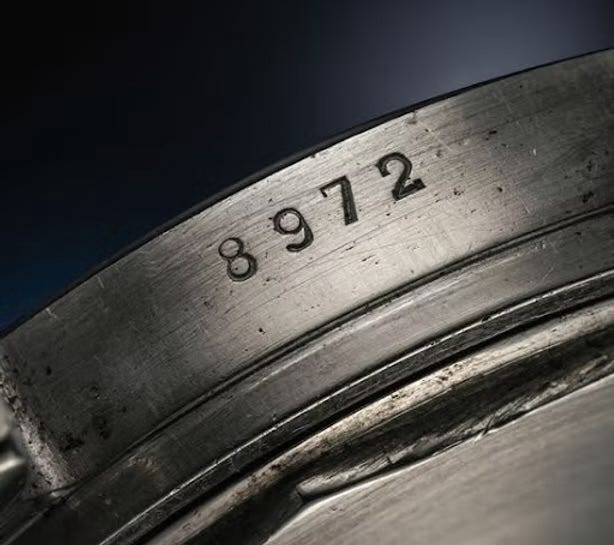
Some of these early steel examples are known with a four digit serial number stamped between the six o’clock lugs. I’ve heard conjecture that these serial stamps should be viewed with concern and a sign the case is a swapped Doxa case, as those cases also featured serial number stampings and had a very similar design to the ref. 565 cases Taubert made for Patek during the era.
In this quick take, I present for your consideration, several known examples that question this theory as being an absolute truth. Now, that’s not to say that a less than honest seller may pair a rare Patek dial and movement into a similarly designed Taubert case for Doxa and attempt to represent it as original, or that there are even some in the market that have been put together.
But are these stampings really fact or fiction? Are they a ruse and definitive indication of case shenanigans? A contrarian could point to a lack of publicly posted proof that the stamping didn’t get later placed between the lugs on a Doxa case to make a match with the Patek extract — and that would be a potential theory, yet one that would require some unnecessary case work to pull off correctly in addition to raising the question of why even do it in the first place? I can’t imagine a logical reason, as it’s not a value-add feature to have a serial stamped between the lugs of a ref. 565. Let’s assume another scenario; the case was swapped as-is. In this scenario, what stroke of extraordinary luck would it take for the correct numbers to exactly match the last four serial numbers confirmed by a Patek extract? Finally, if the serials had to be removed from a Doxa case and then re-stamped to match the extract, it seems they would just be removed entirely, as the vast majority of Patek ref. 565 cases have no stampings anyway.
Case Study
There are signs that some Patek ref. 565A cases deemed original, appear to have featured four-digit serial stampings on some early examples. For consideration, we can look at several known examples. Let’s start with an example from 1939 that was auctioned by Phillips in the Nov. 2022 Geneva sale and achieved a result of CHF176,400.
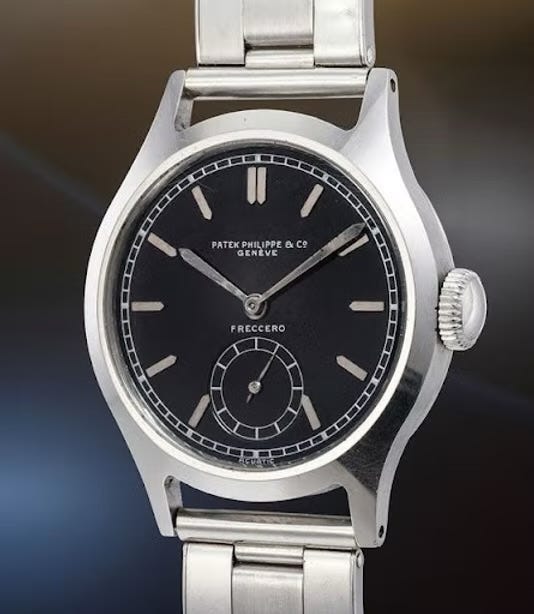
The example shown above is noteworthy not only for its very rare black dial, but also for an added bonus of the famed retailer “Freccero” printed on the lower portion and the unique “Acuatic” print at the very bottom. It is one of two black dial Freccero + Acuatic ref. 565 known, with the other later short signature example being discovered at a small auction earlier in 2025. I previously wrote about both of these examples separately here at www.aircooltime.com.
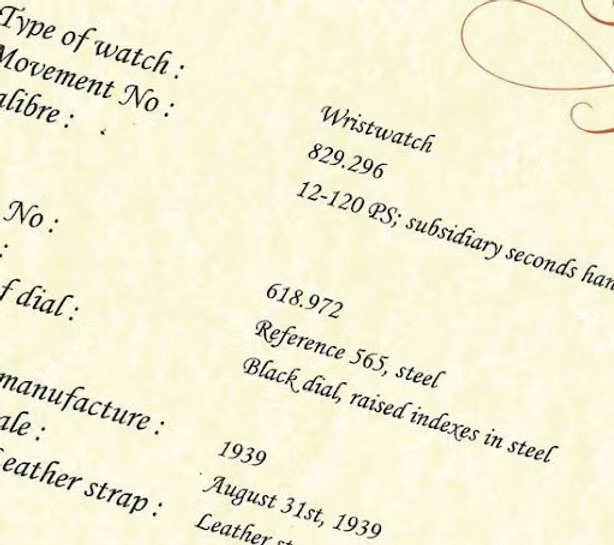
As noted in the Phillips lot, the extract pictured shows the serial number of the case that matches the last four digits seen between the lugs. Knowing a bit about the provenance of this particular piece, I’m confident it’s original to the case made for Patek.
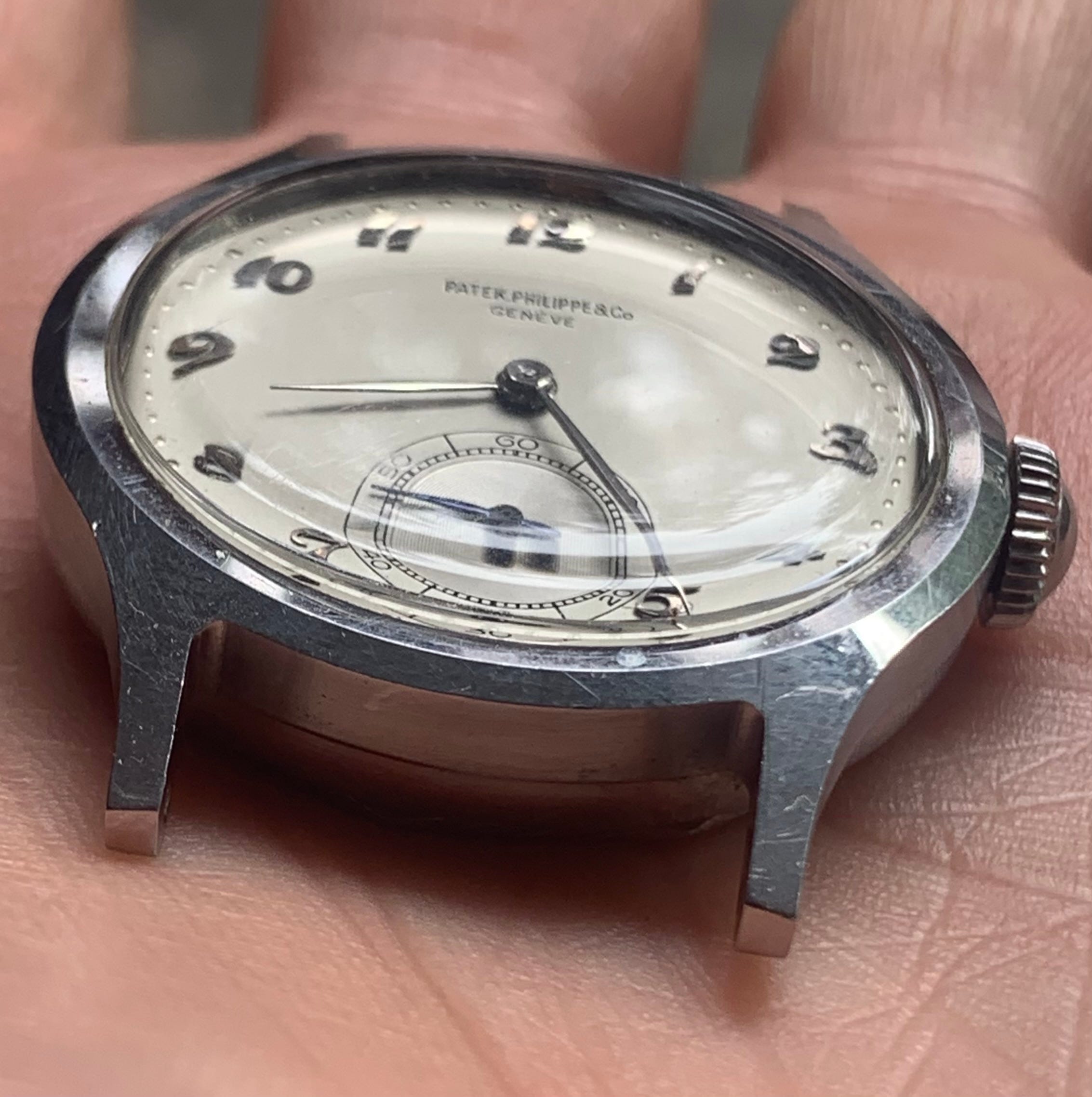
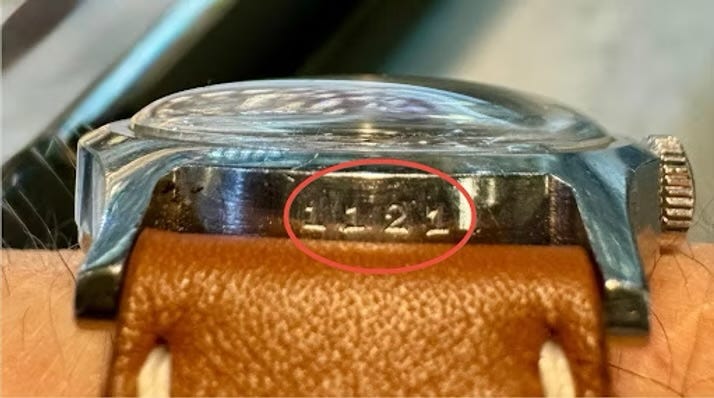
Another early and rare ref. 565A example I personally had in my hands last year in Miami, also had a four digit stamping between the lower lugs. It was fitted with the rare 12-120 SCi indirect seconds movement. According to data presented by Tortella & Sons, the numbers of known steel 565 references with the 12-120 SCi movement are in the range of approximately twenty with this featured example included.
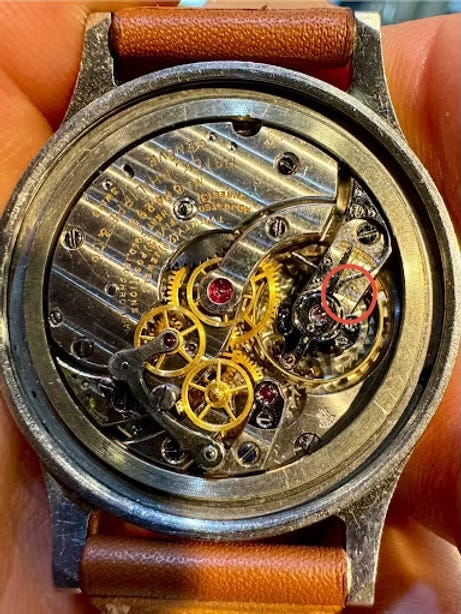
The dial on this example also features an applied, printed Swiss at the bottom. Examining the movement, a PXP stamping on the balance cock (shown in later image) is noted. This was the predecessor import marking on Patek examples to the HOX stamp. Together these features are signs denoting this example was made for the US market.
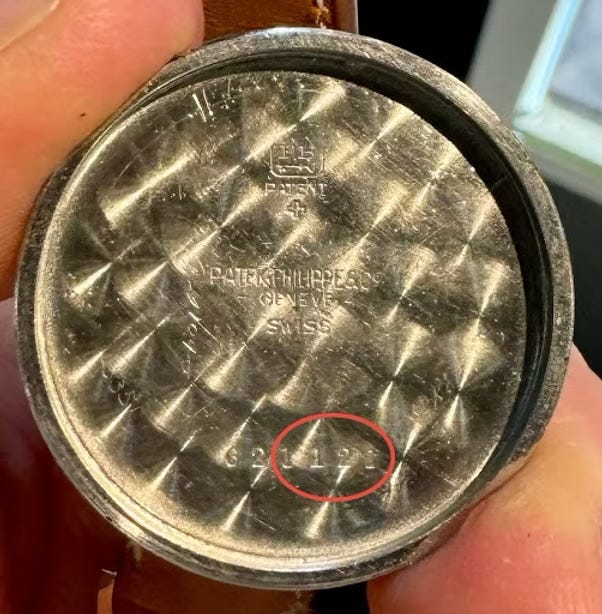
This example also has a four digit stamping between the lower lugs. The digits match the last four of the serial number on the extract, similar to the Phillips example.
Some additional evidence of this correctness is seen on the inside case back stamping, which confirms the stamping between the lugs to match the last four serial numbers of the case back.
In John Goldberger’s “Steel Patek” publication, there are an additional three ref. 565A examples shown with four digit numbers stamped between the lower lugs; one each from 1939, 1940 and 1943. Two of the three feature the 12-120SCi movement. All are shown with matching serial numbers on the inner case back in the publication. I’m not aware of any examples seen past the date of 1943 with similar serial stampings.
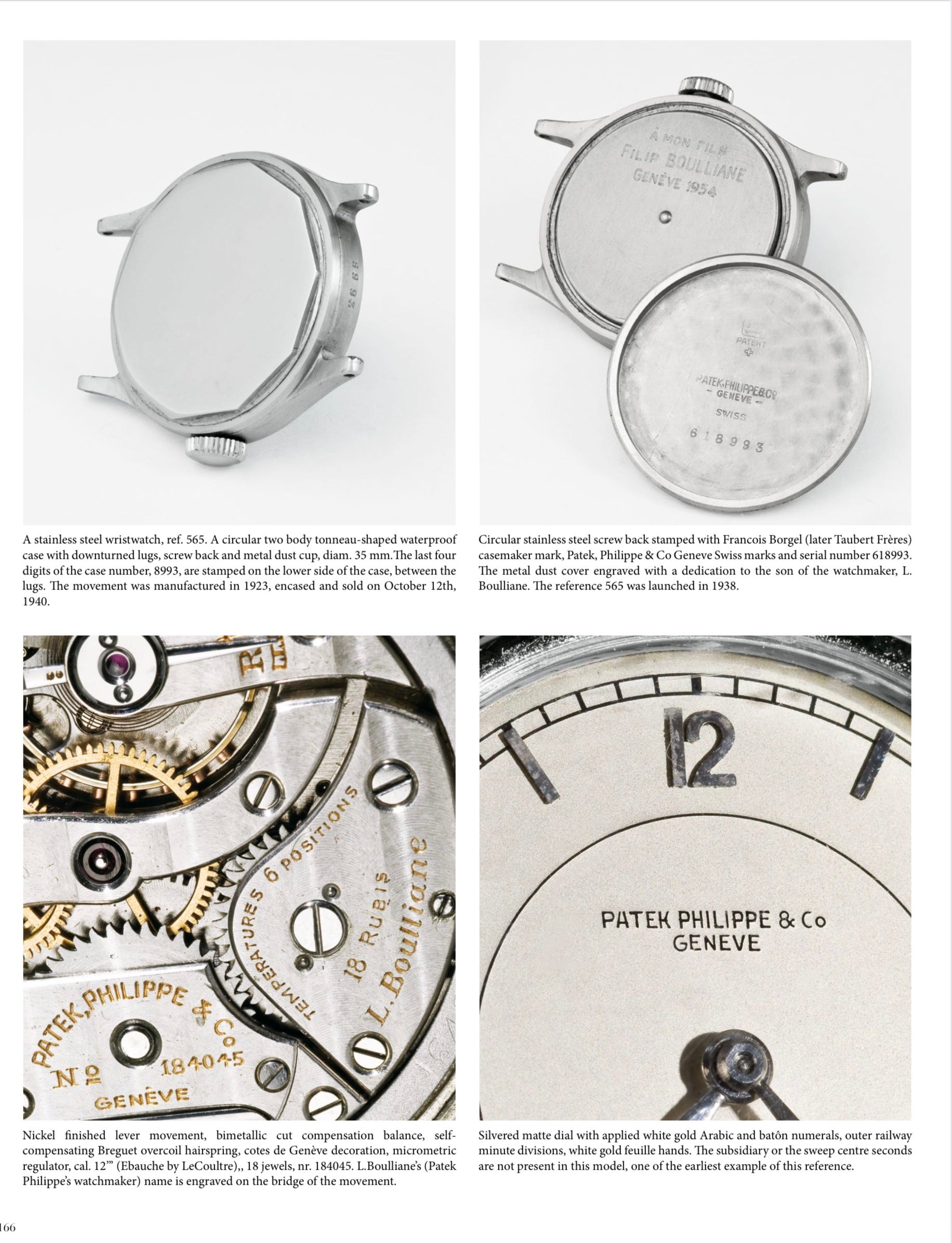
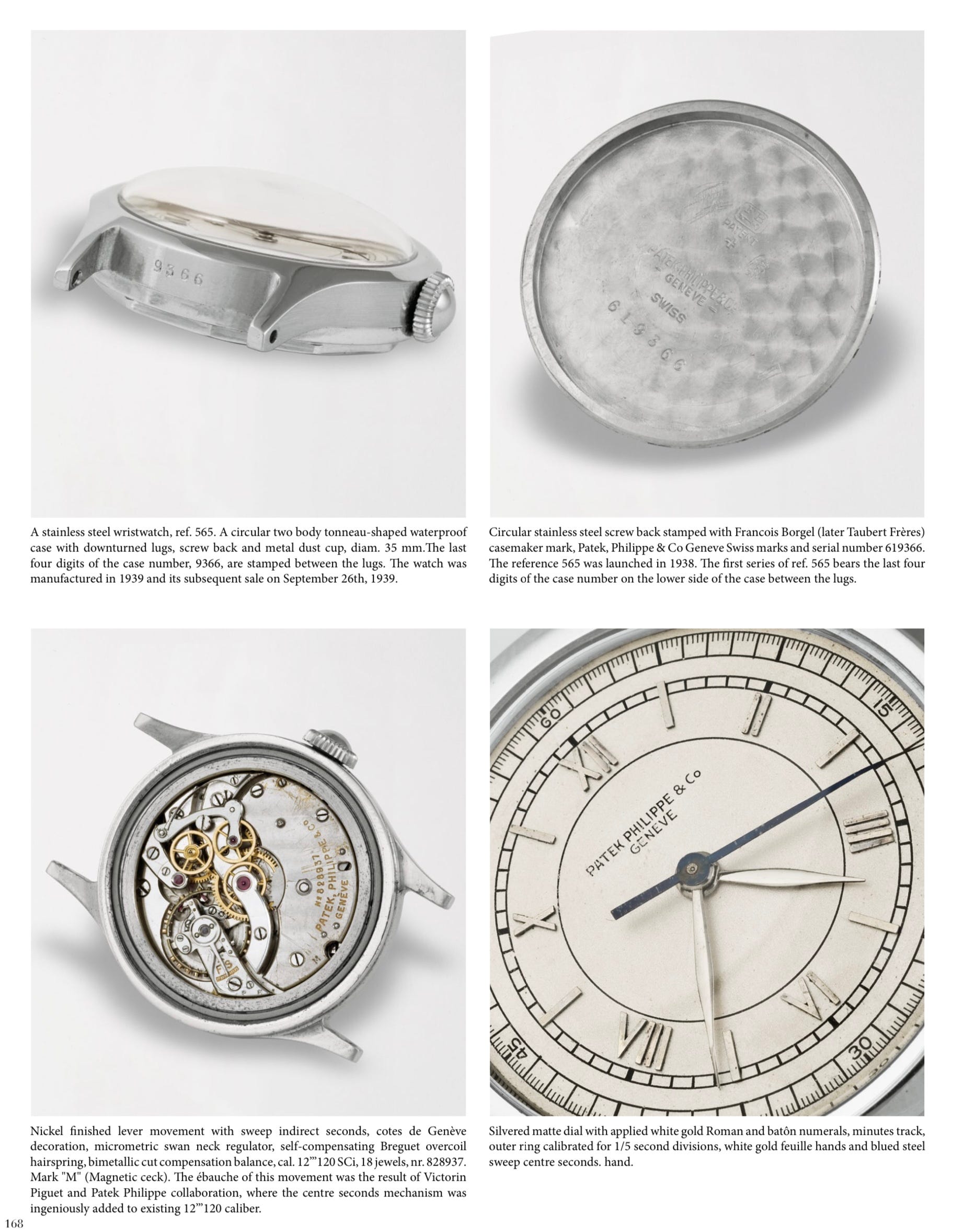
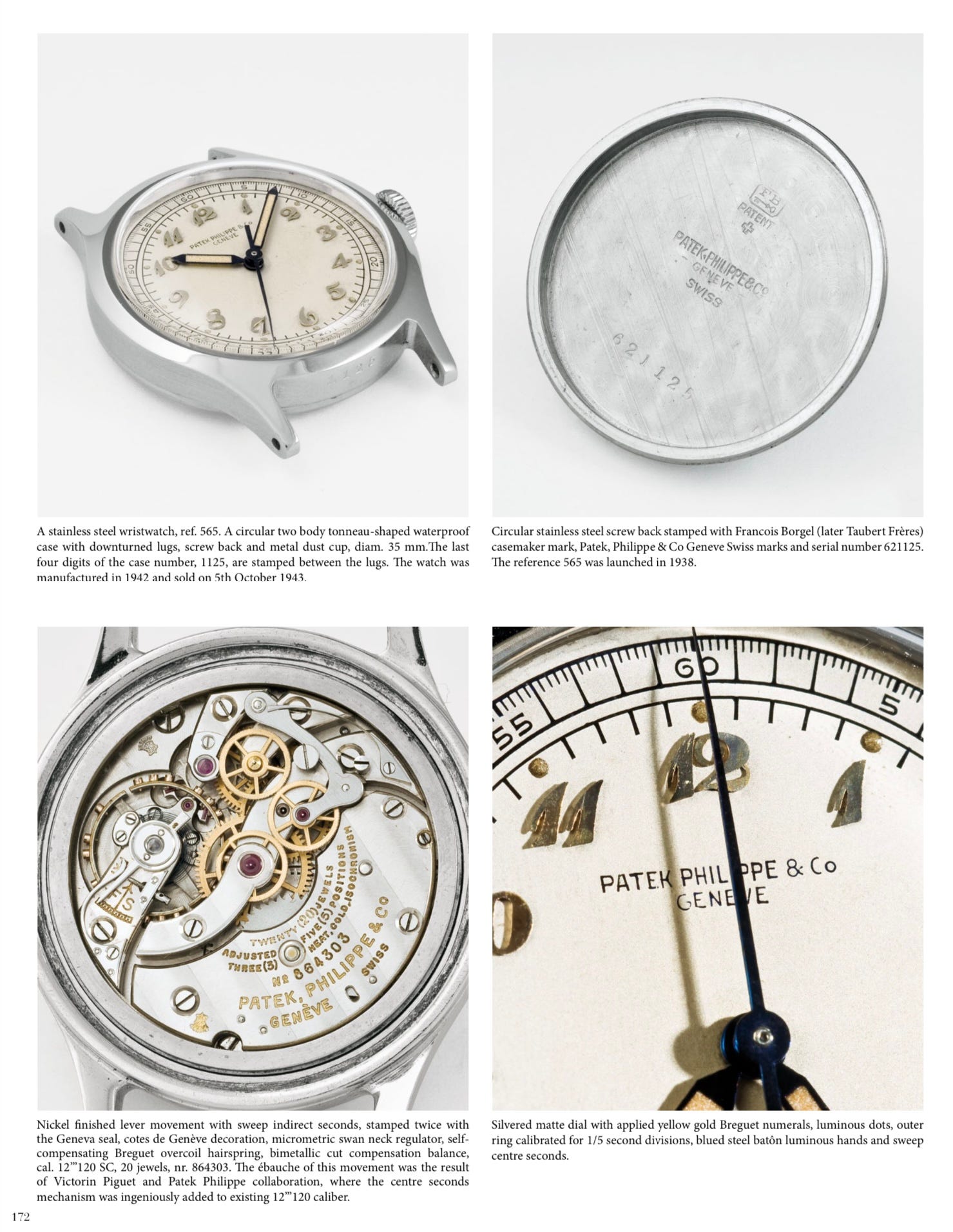
So there we have it - records of several early and rare ref. 565A examples with matched stampings between the lower lugs and the inner case back. Perhaps this was a practice Taubert did for Patek in the early run of the ref. 565 in the late ‘30’s and was not continued beyond the early ‘40’s. What I’ve not observed, are any examples of precious metal cases showing a similar stamping.
A Beautiful Movement
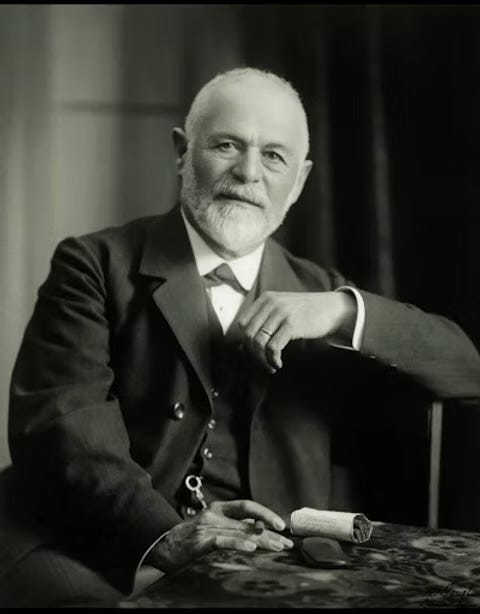
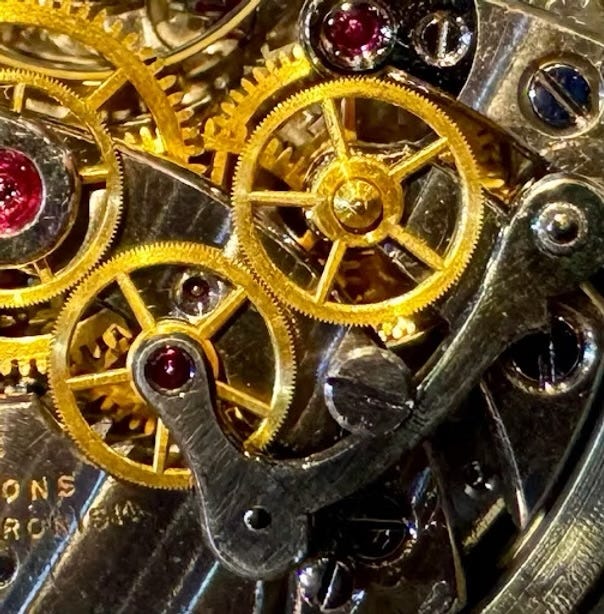
Let’s take a quick diversion to recognize the cool caliber 12-120 SCi movement seen in some ref. 565 examples, including two shown in this article. The movement is fascinating to watch in action and features a Victorin Piguet module positioned on top of the base Jean Pfister-designed 12-120 caliber movement for Patek. The attached module adds height and necessitates the slightly thicker 565 case type seen on these examples, which I’ve covered at www.aircooltime.com in a previous article that reviews ref. 565 case types.
The sweep seconds hand shudder results from the Piguet module with its extra bridge and gearing that relocates the seconds function from the original design at a subsidiary position and creates the operation of a central sweep hand. The indirect drive causes the slight shudder in movement, which was later resolved with the direct seconds 27 SC caliber design and used on a very few 565 and 2508 among other Patek references.
Believe It Or Not
I hope you’ve enjoyed this quick take on a controversial topic, related to an iconic Patek reference which is much respected in the collector community. What do you believe? Are these early examples with serial stampings fact or fiction?
Contact Me:
Instagram: @aircooltime
Web: www.aircooltime.com
Email: aircooltime@gmail.com
Acknowledgements
Special thanks to Matt Bain, www.matthewbaininc.com for the hands-on experience and picture permissions. Two of the ref. 565 examples referenced in this article have once passed through his hands.
Appreciation to John Goldberger for specific image use on pages noted from his publication, Steel Patek.
Additional thanks to Phillips auctions and Coronet for image use as noted.
Images not noted are my own.
That’s a good analogy! Yes indeed, they are quite interesting and scarce. I actually like the slight shudder of the seconds hand, as a sign of its design and relative rarity.
i love this indirect-seconds caliber, bolt-on complications were like hot-rodding watches. didn’t know they had a shudder issue, but still would pick it over the 27sc.