

Background
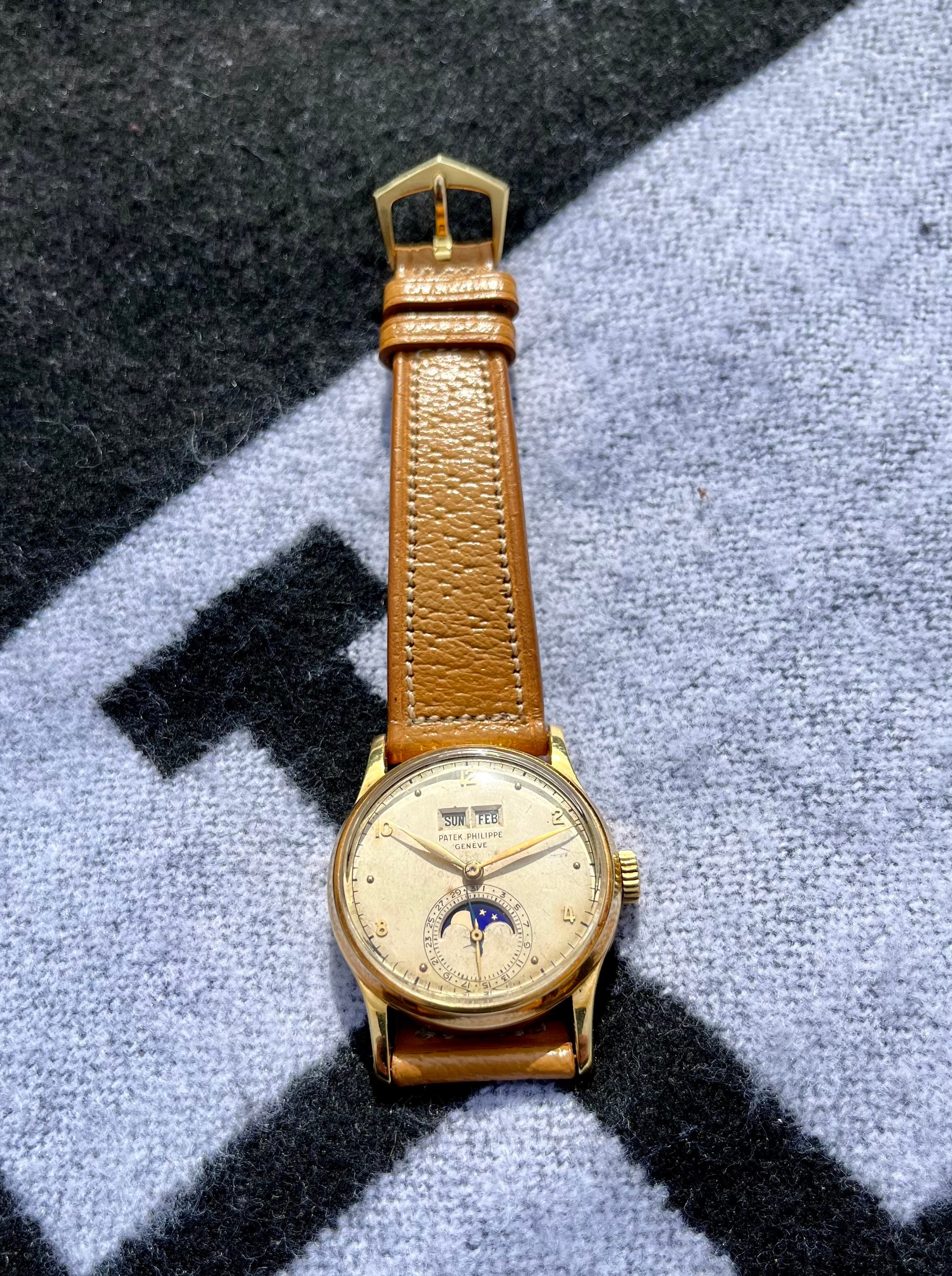
The vast majority of strap buckles made for Patek Philippe, at least for several decades, were crafted and supplied by A & E Wenger. These buckles feature Patek stampings and at times, “AW” on the inner portion (“AW” only for other brands). They have a curved fit to the wrist with either a flat, gently arced, or slightly peaked outer edge depending on the decade.
Beginning in the early ‘50’s, watches from Patek Philippe destined for the U.S. market were fitted with a newly designed buckle to allow for —among other reasons— easier customs clearance and identification of watches that were sold in the U.S. The new buckle was dubbed the “Henri Stern” (HS) buckle as a nod to the US distribution point, The Henri Stern Watch Agency. This buckle style with its angular borders and pointed apex tip remains the current tang buckle type with a few modifications since its introduction, including a larger size as contemporary straps are less tapered than vintage straps. It is the correct vintage buckle type for a U.S. market watch since its appearance in the ‘50’s, as opposed to the usually seen AW buckle style known in other markets. If you have an important vintage U.S. market Patek Philippe from this era, you want this buckle.
Vintage U.S. Market Examples and Features
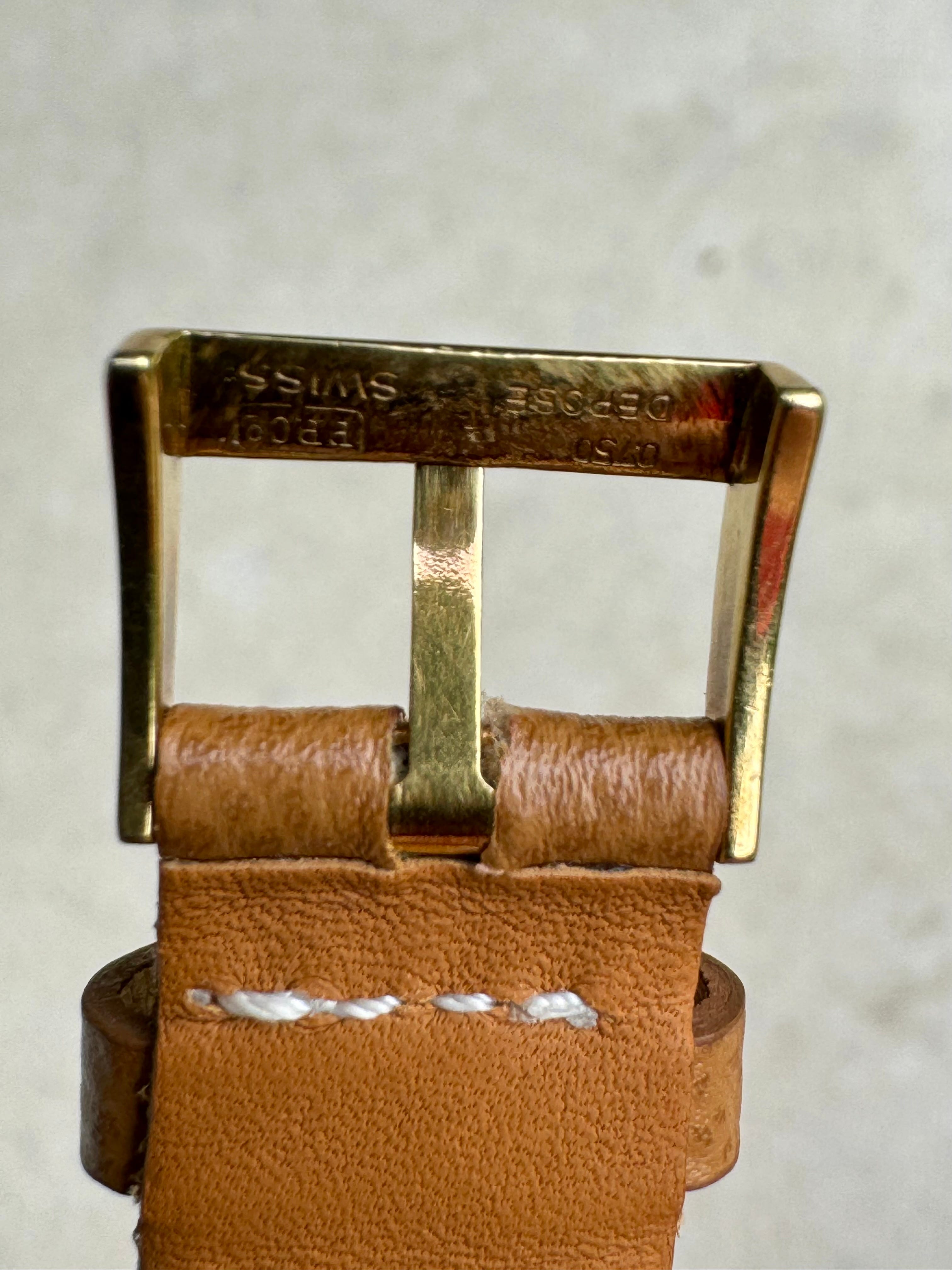
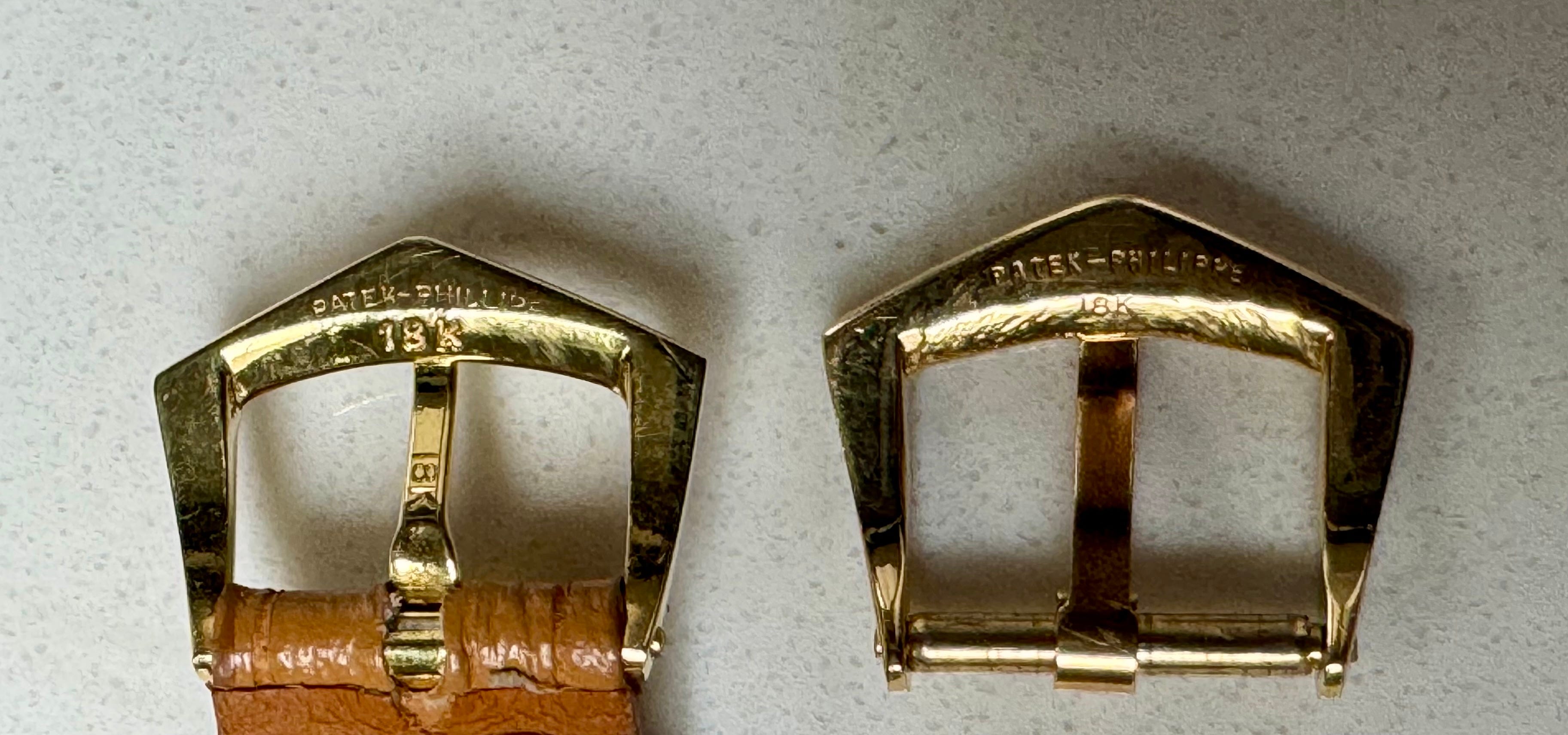
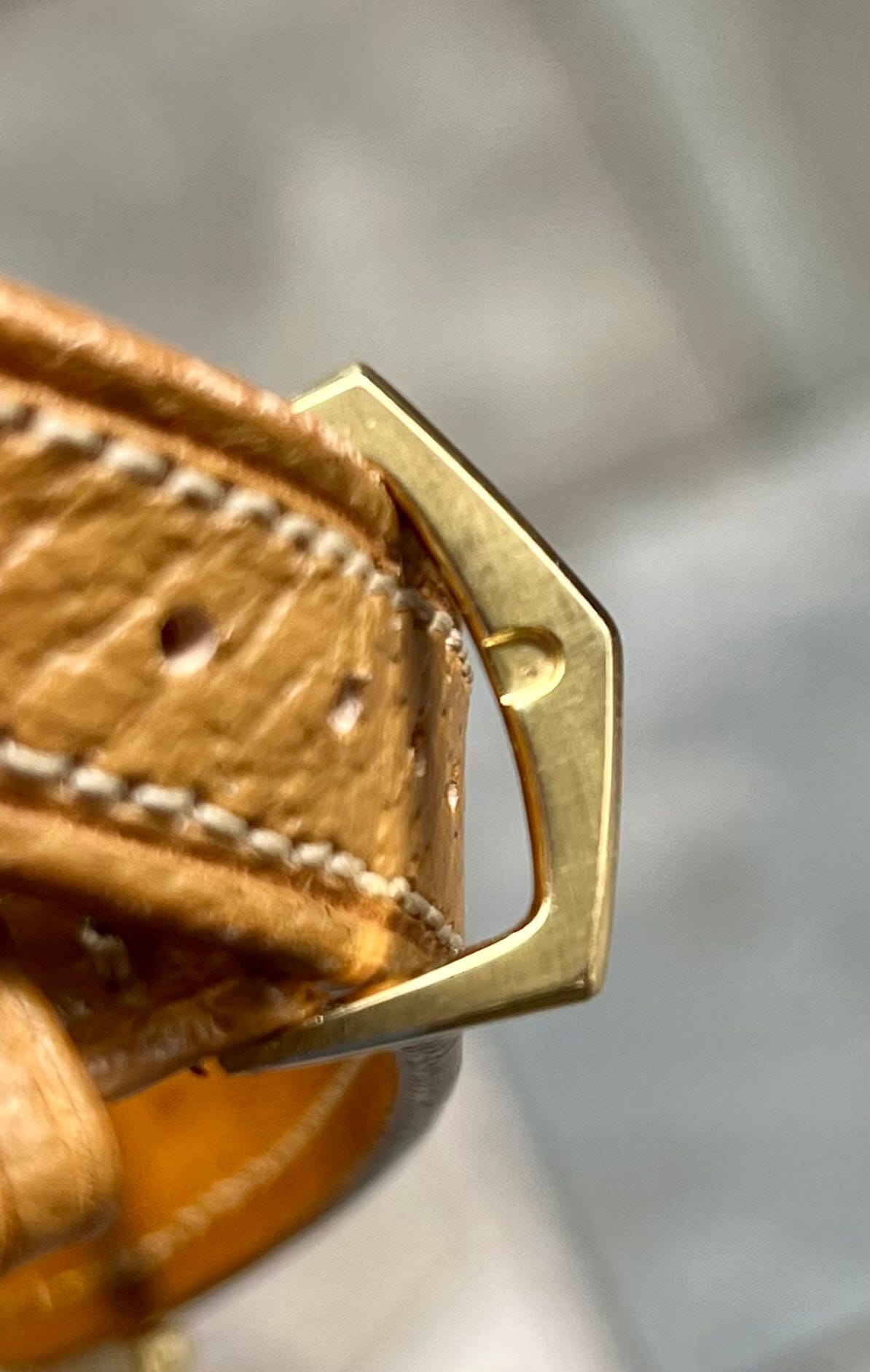
Beyond its primary supplier, Wenger, Patek Philippe also outsourced buckle production to additional manufacturers. It’s known that a Brooklyn-based contract manufacturer in the ‘50’s for the U.S. market, for the then newly launched HS buckle, had at least one batch produced with a misspelling of the latter portion of the brand name as “Phillipe”. John Reardon of Collectability wrote a brief teaser on this very topic HERE.
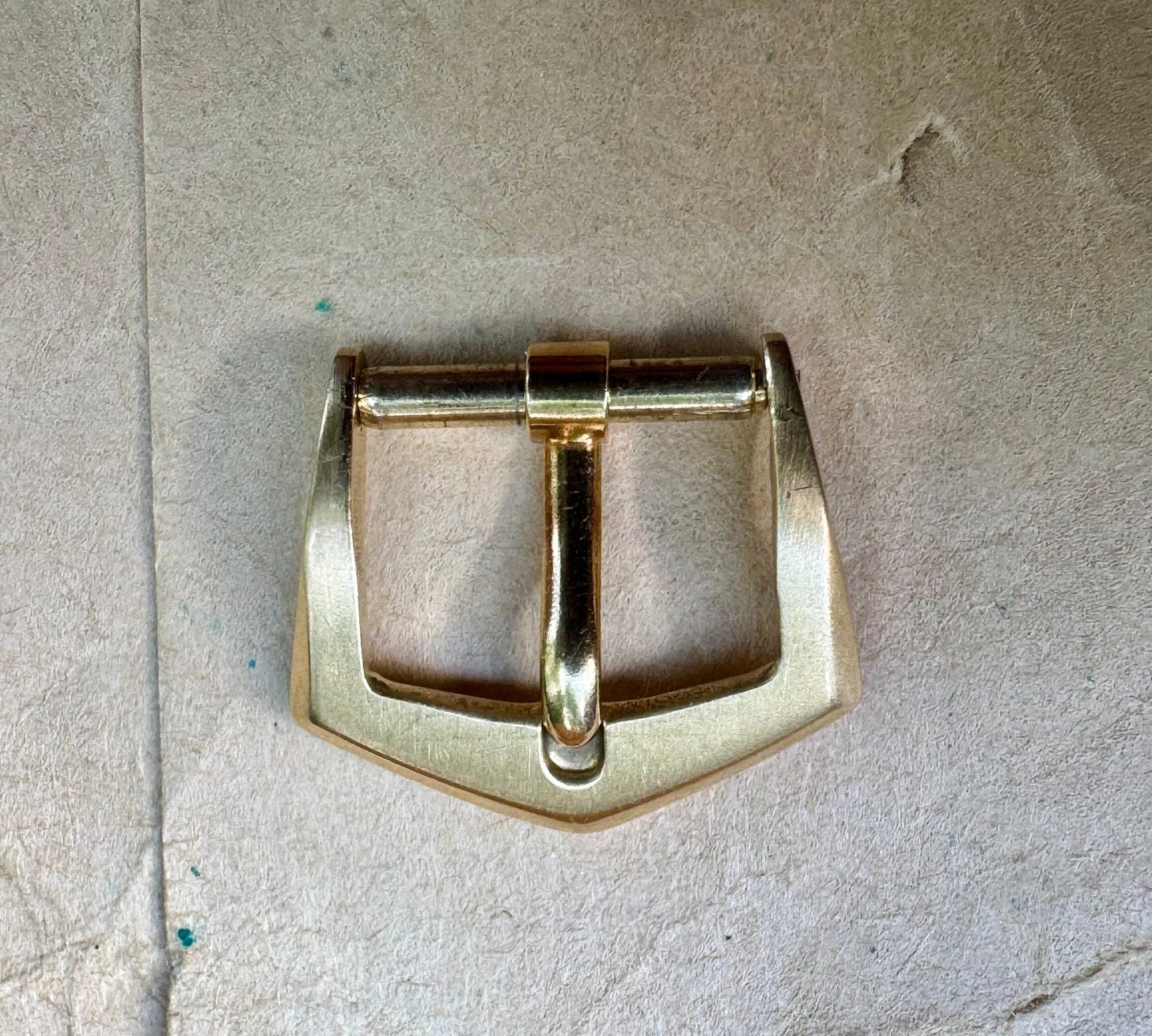
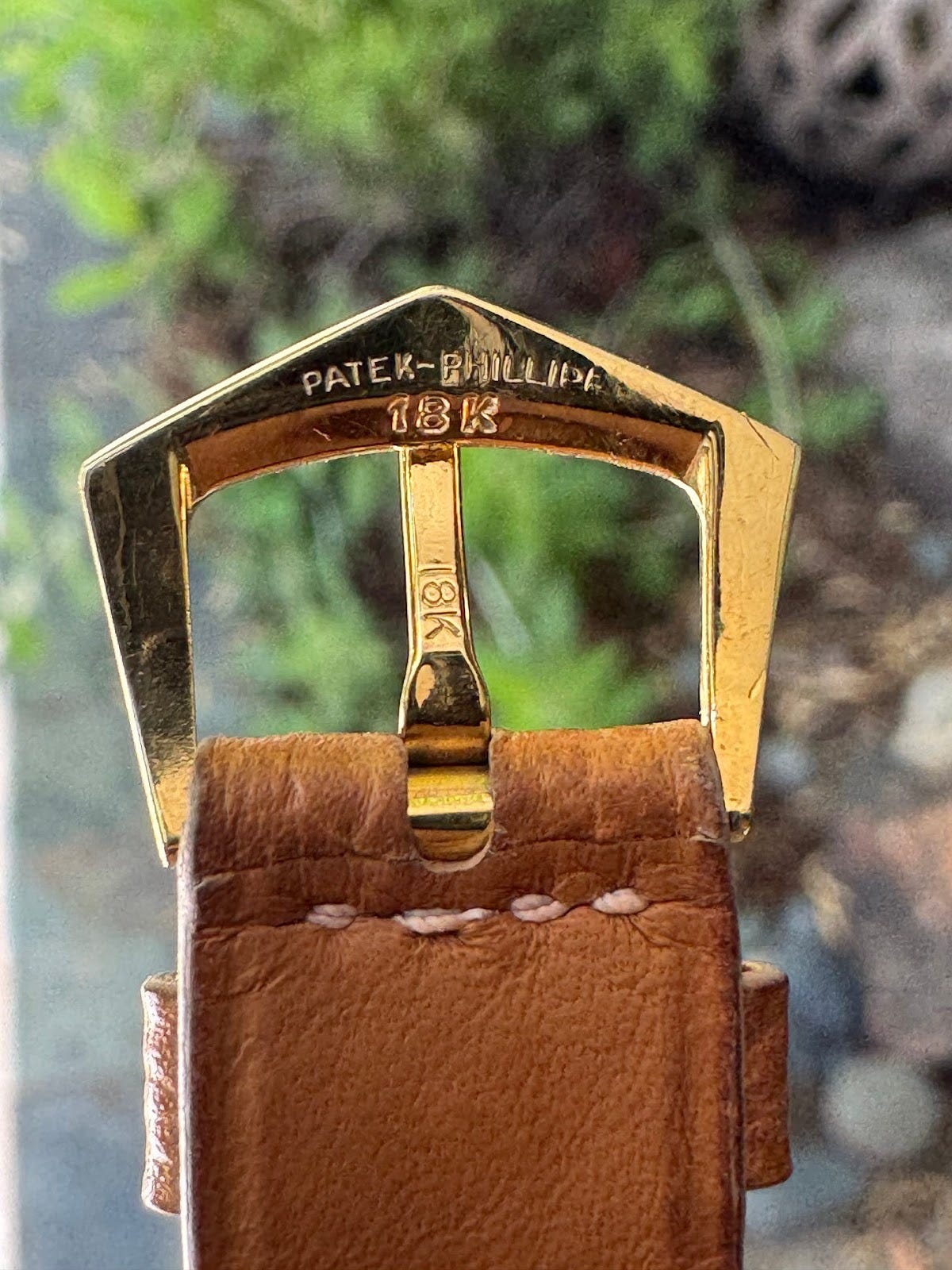
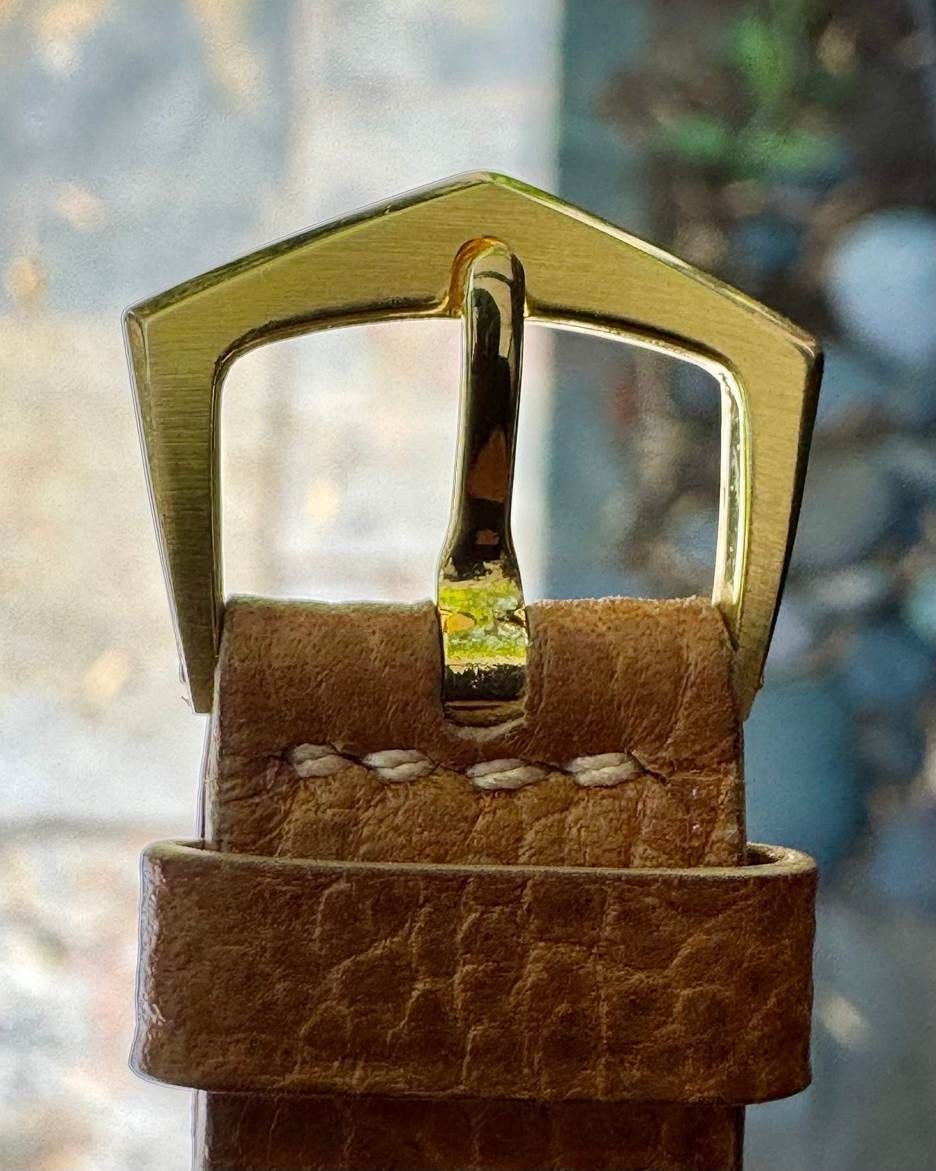
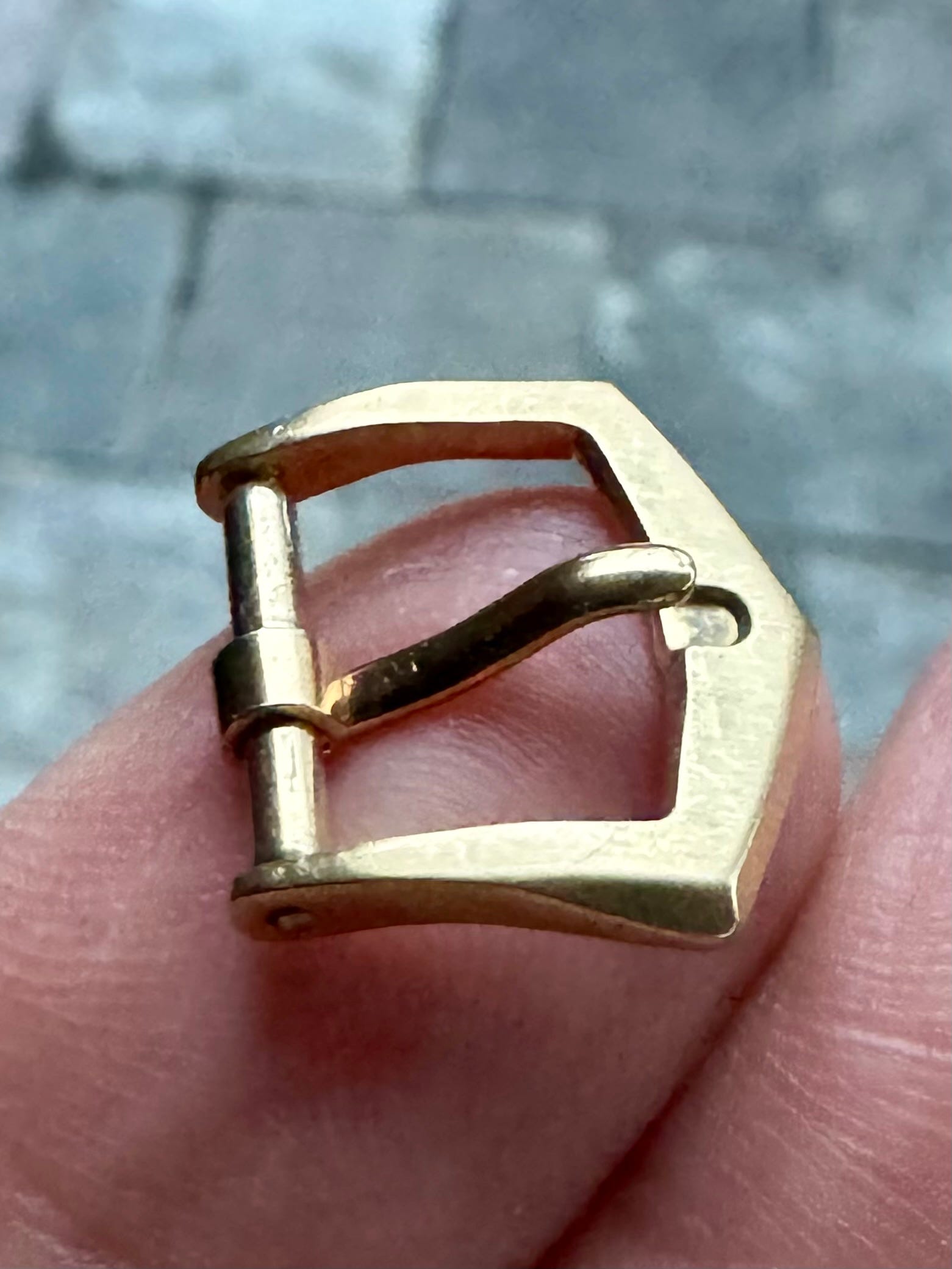
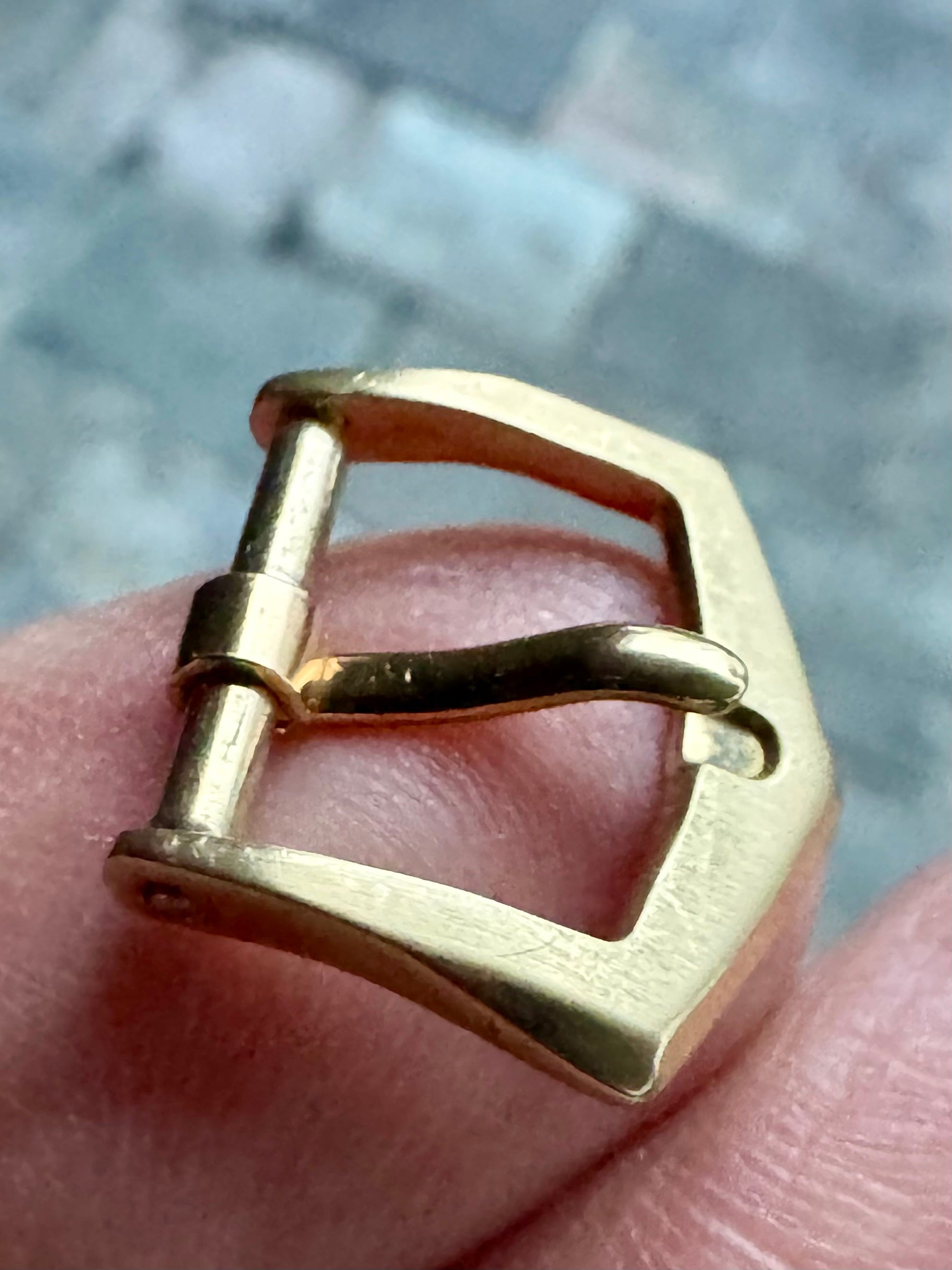
Beyond the spelling cues, a trained eye will note a number of subtle detail differences between the two buckle types. I’ll share some pictures of the correctly spelled version and the error type that appeared in the US market as documented reference points. The correctly spelled buckle is shown in the first two images.
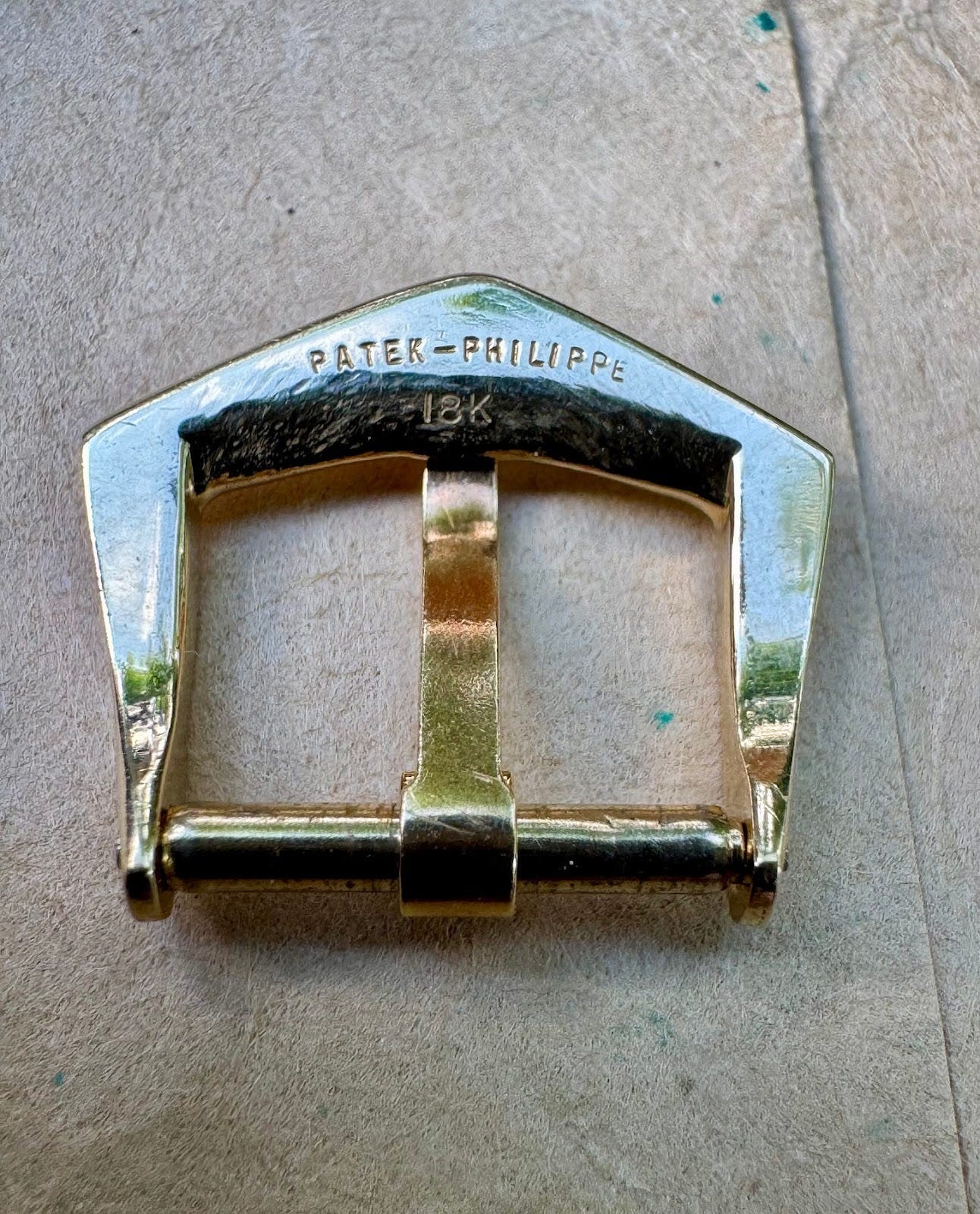
The following images show back and top side views of the “error” buckle.
Next up are side by side comparisons of both buckle types.
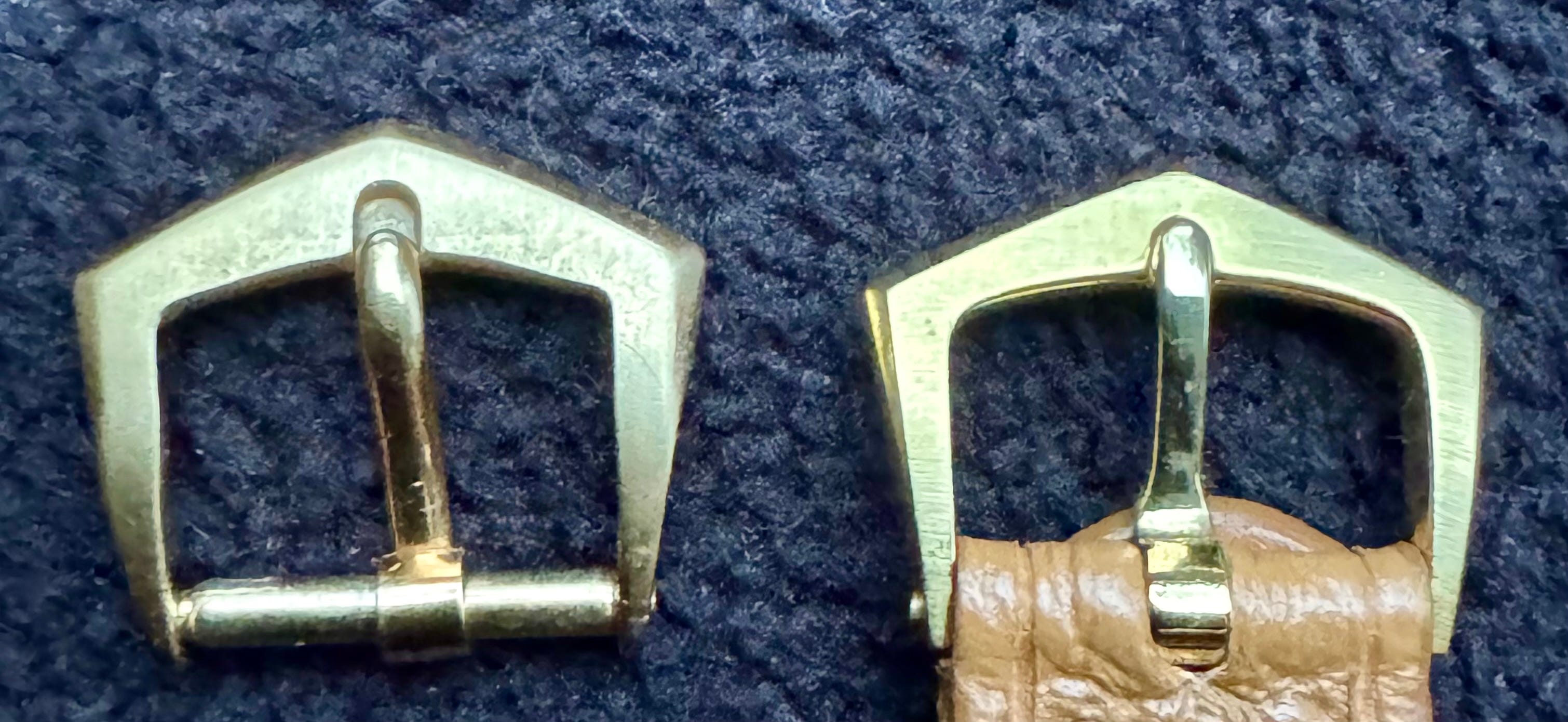
Shown below are different angled views of the “error” buckle type.
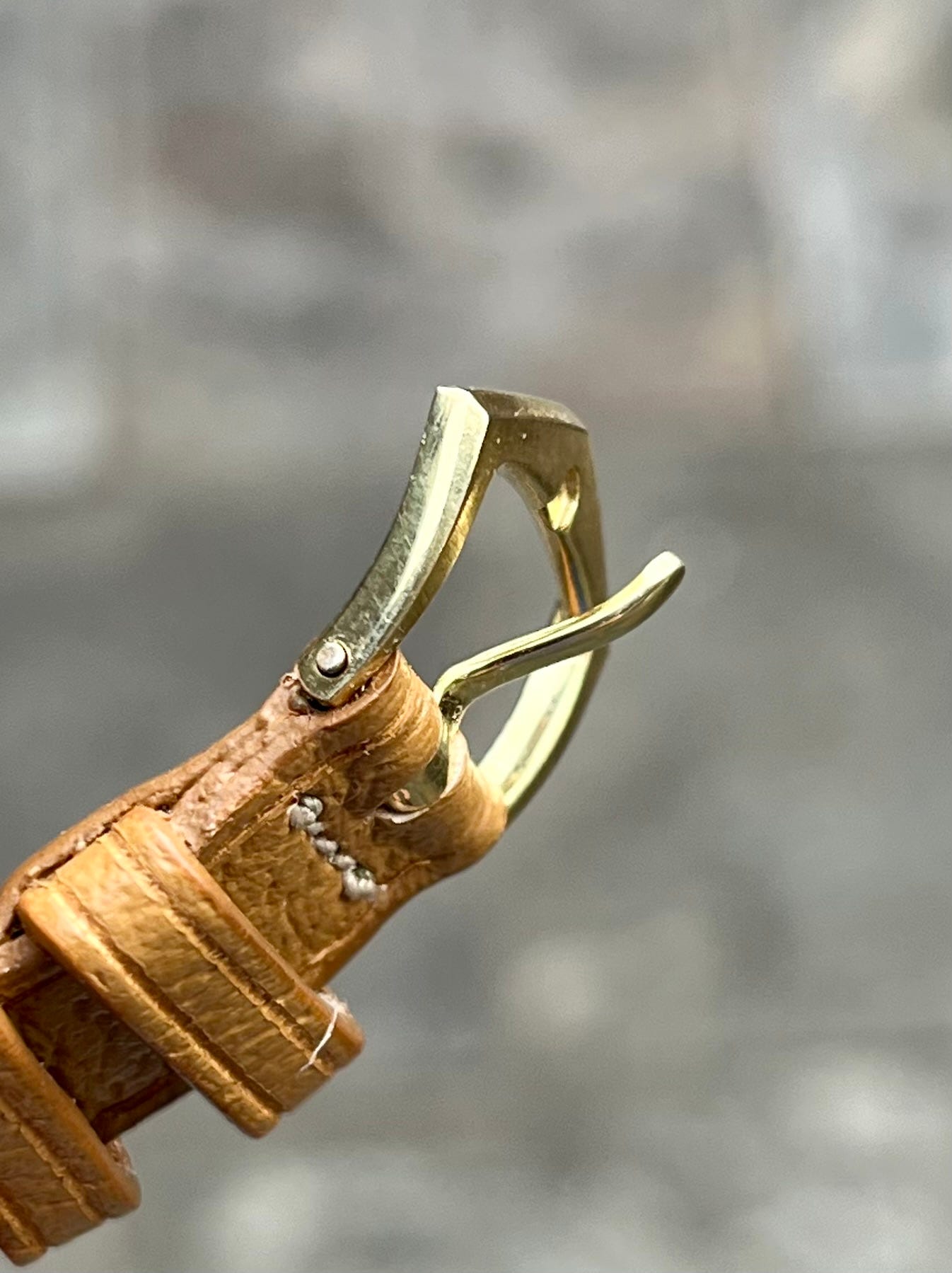
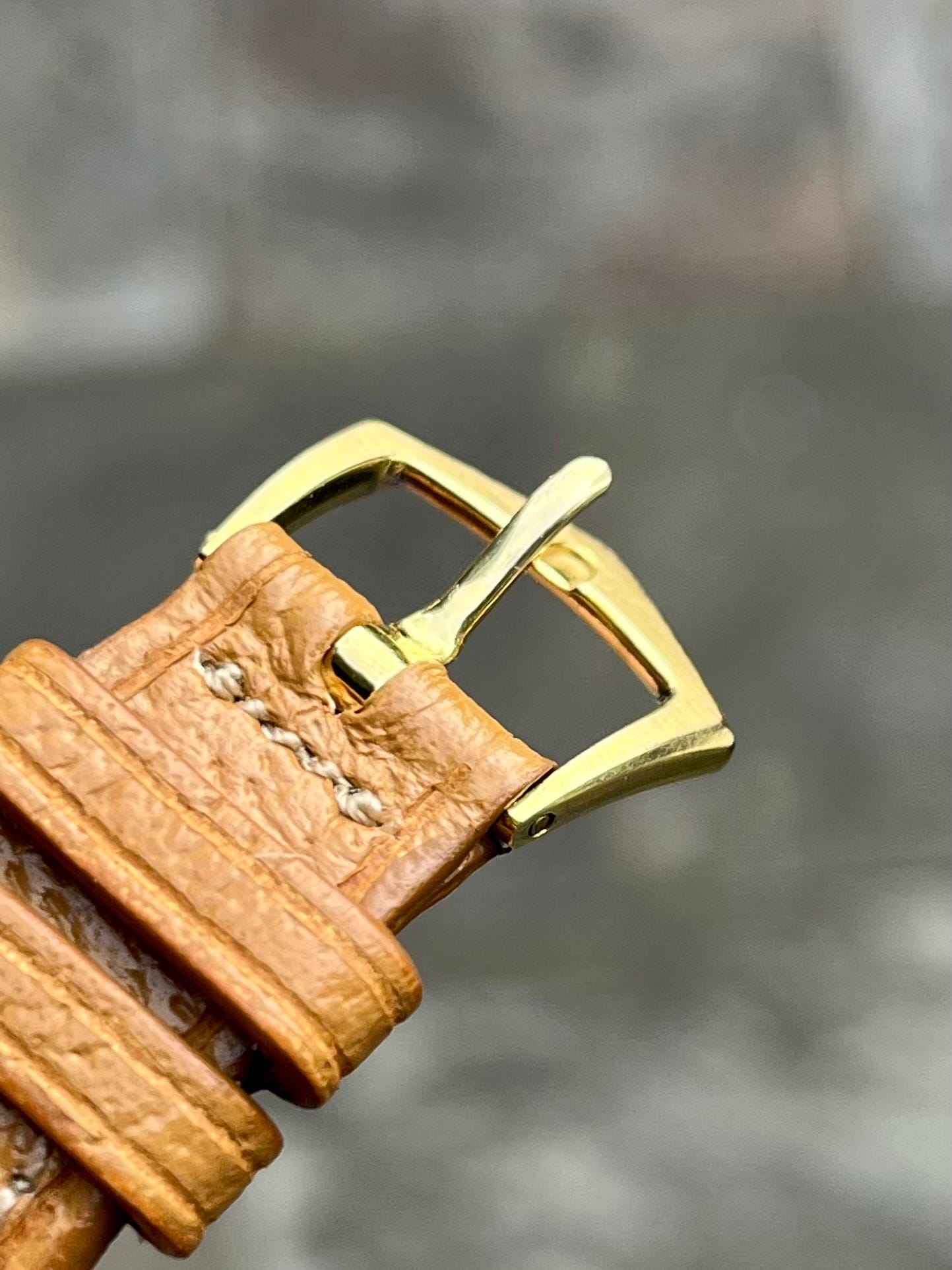
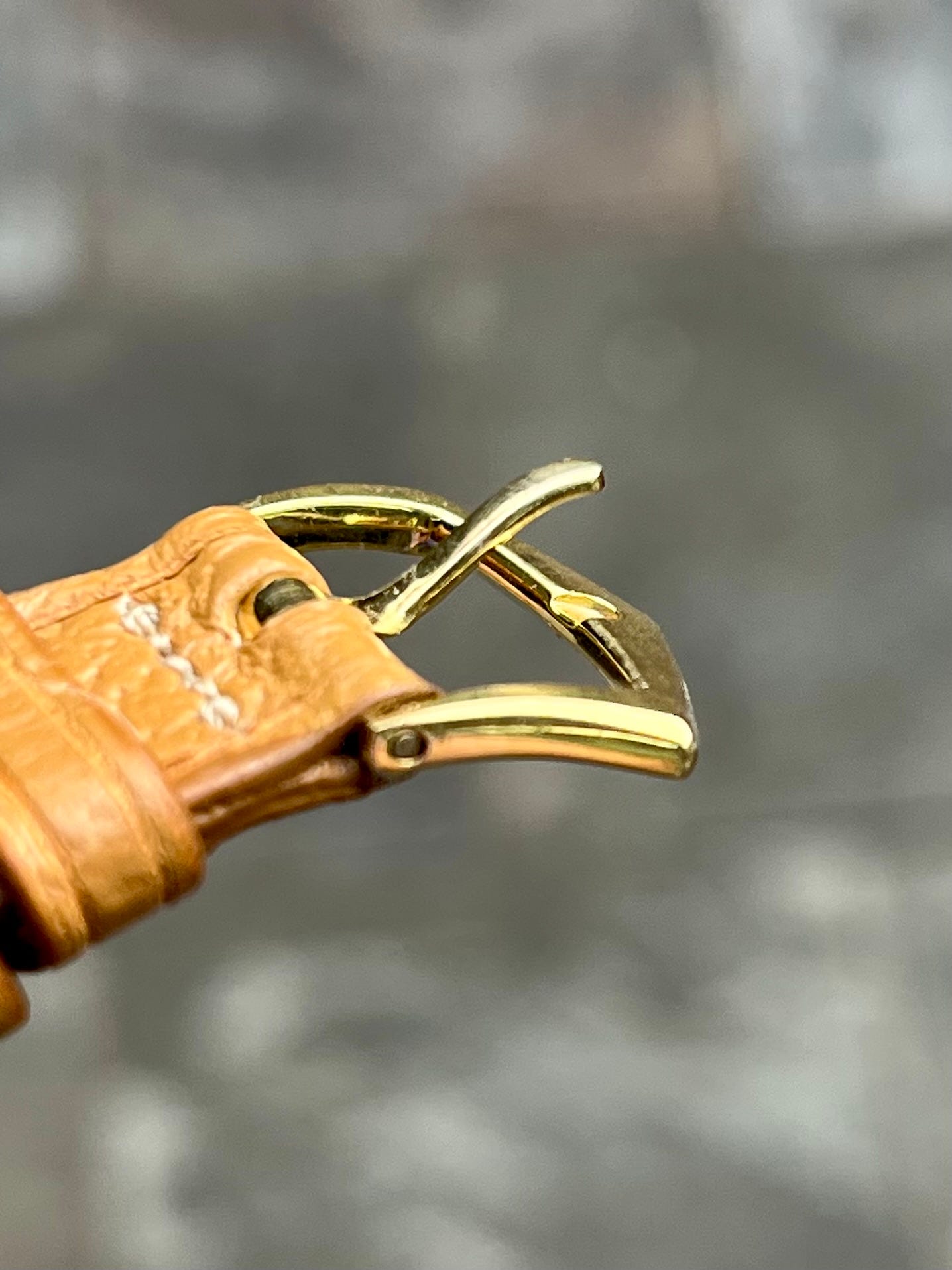
To conclude this section, several angled views are shown below of the correctly spelled buckle type.
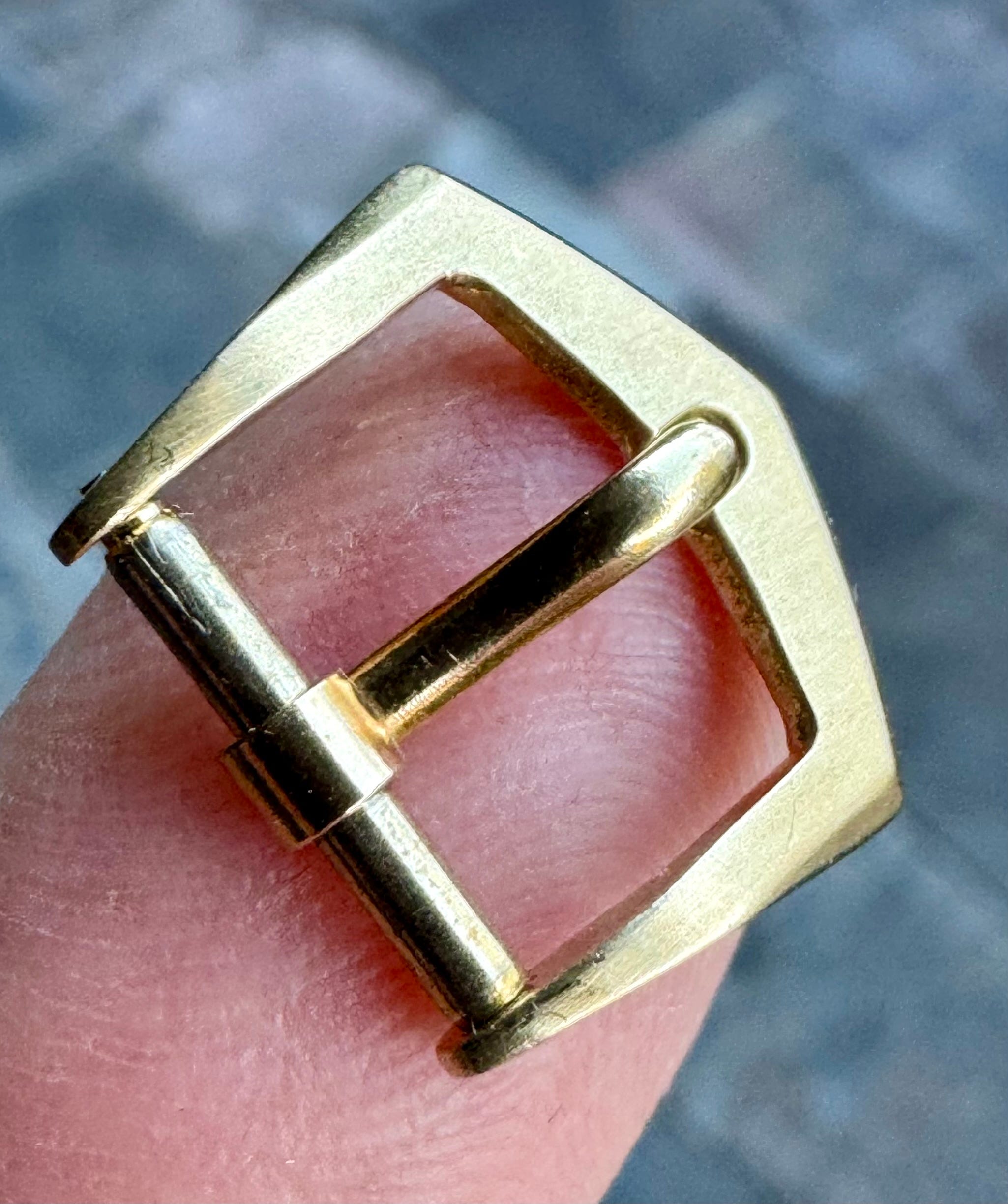
A Few Words on Straps and Fit
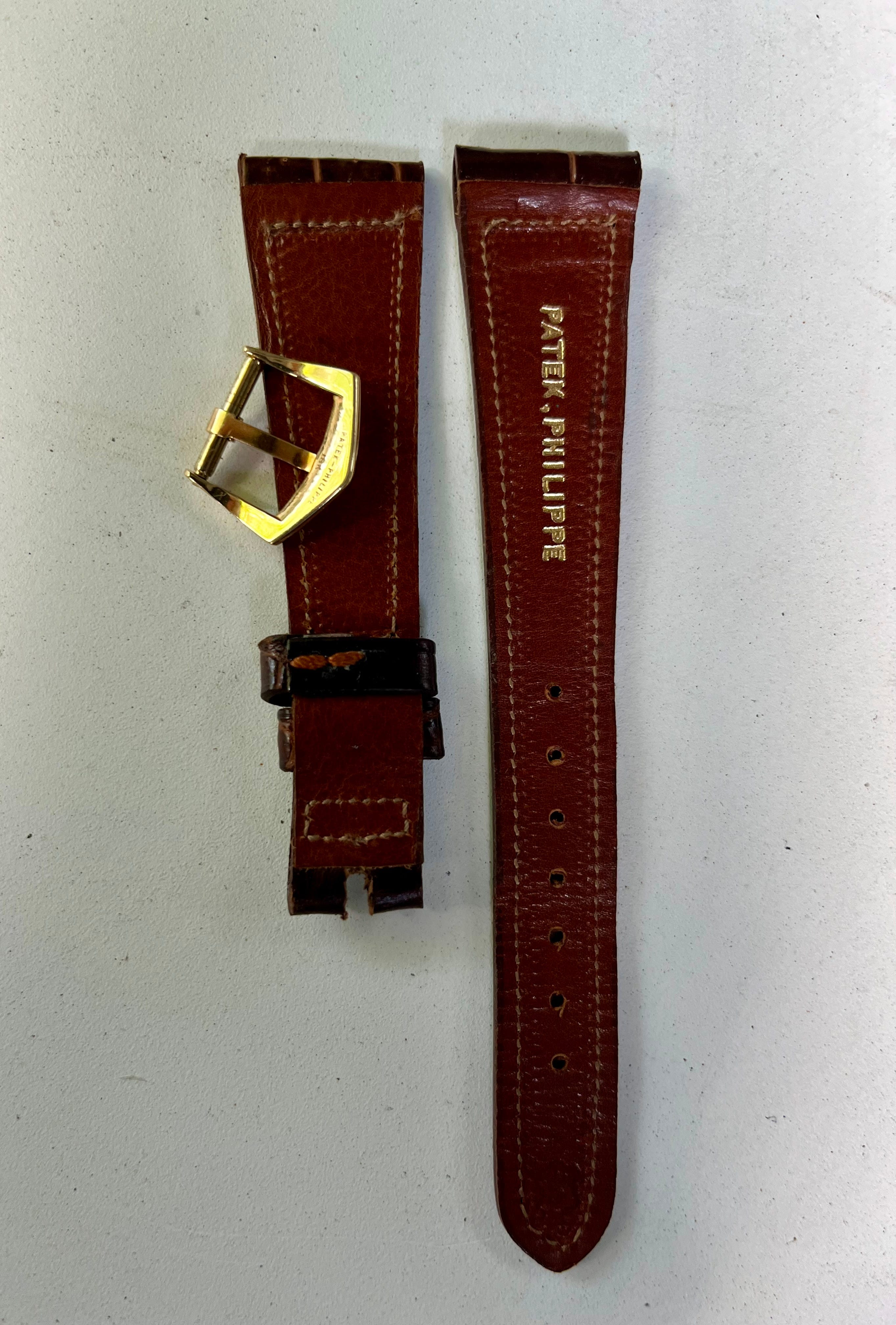
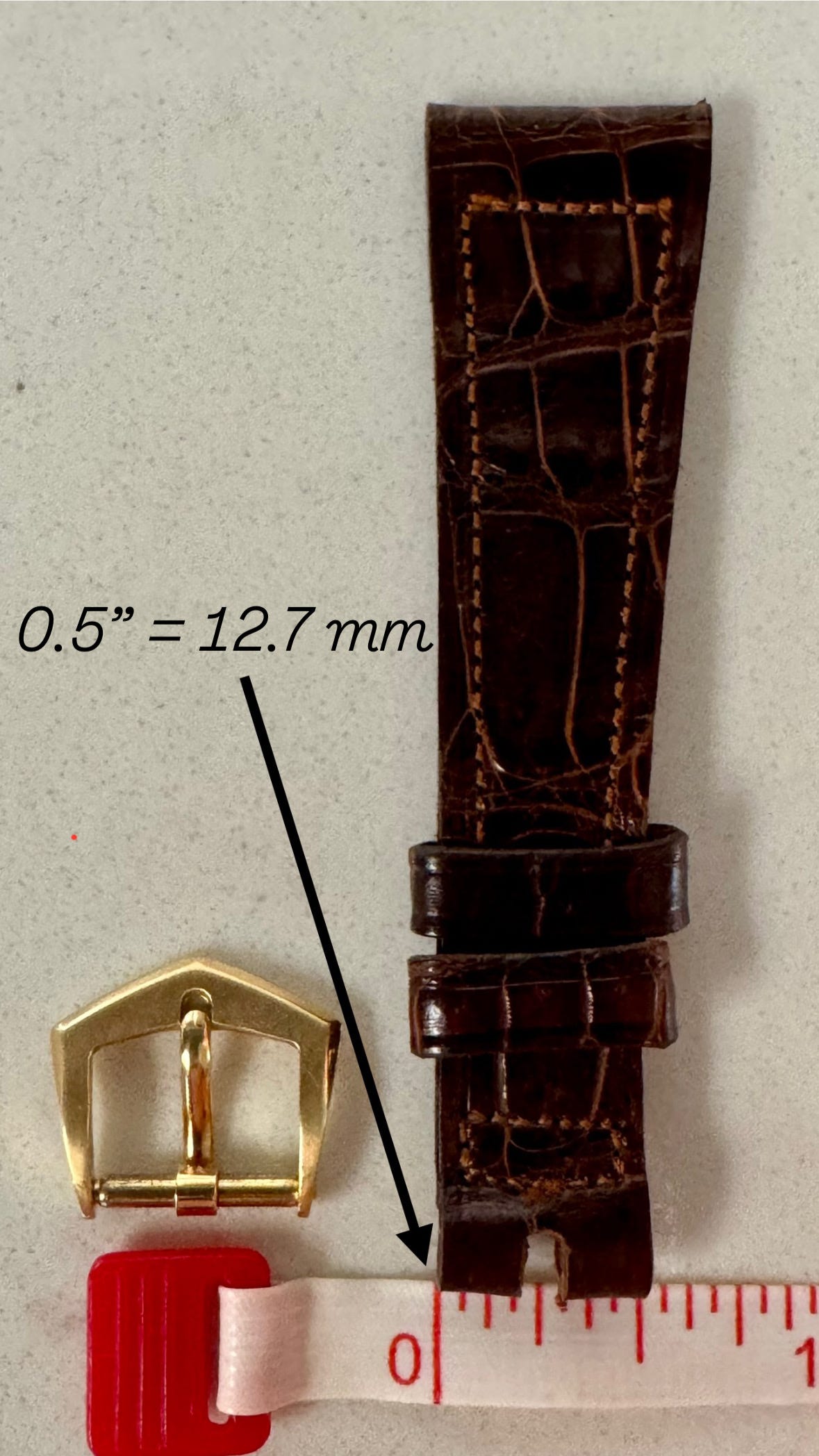
Because the HS buckle was made for the U.S. market, the taper dimension on both strap pieces should be 1/2 inches, (12.7mm). Patek Philippe U.S. market straps of the era were manufactured with this taper in mind as illustrated. Because most straps are typically made in millimeter measurements, this is an important point for one to consider when ordering straps from other suppliers.
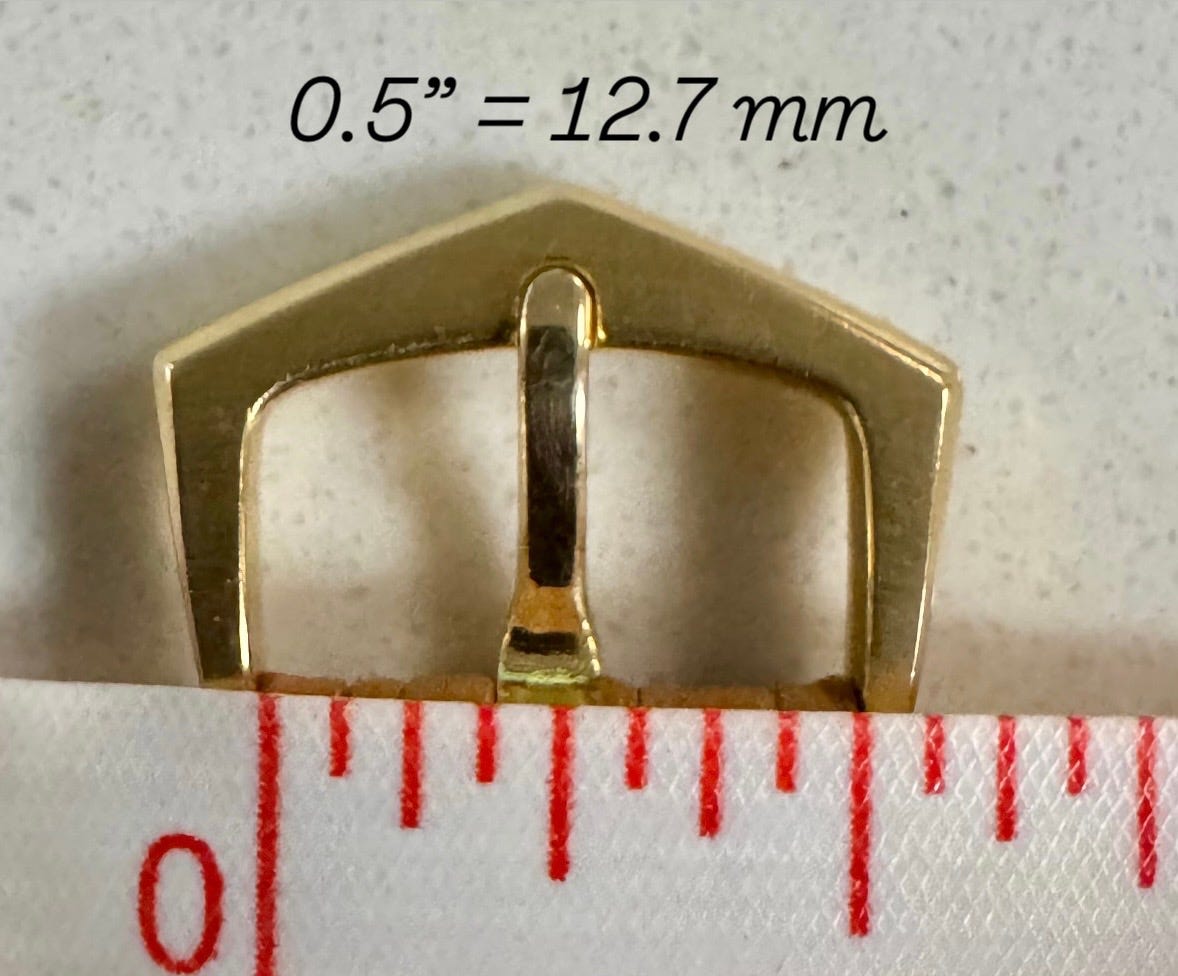
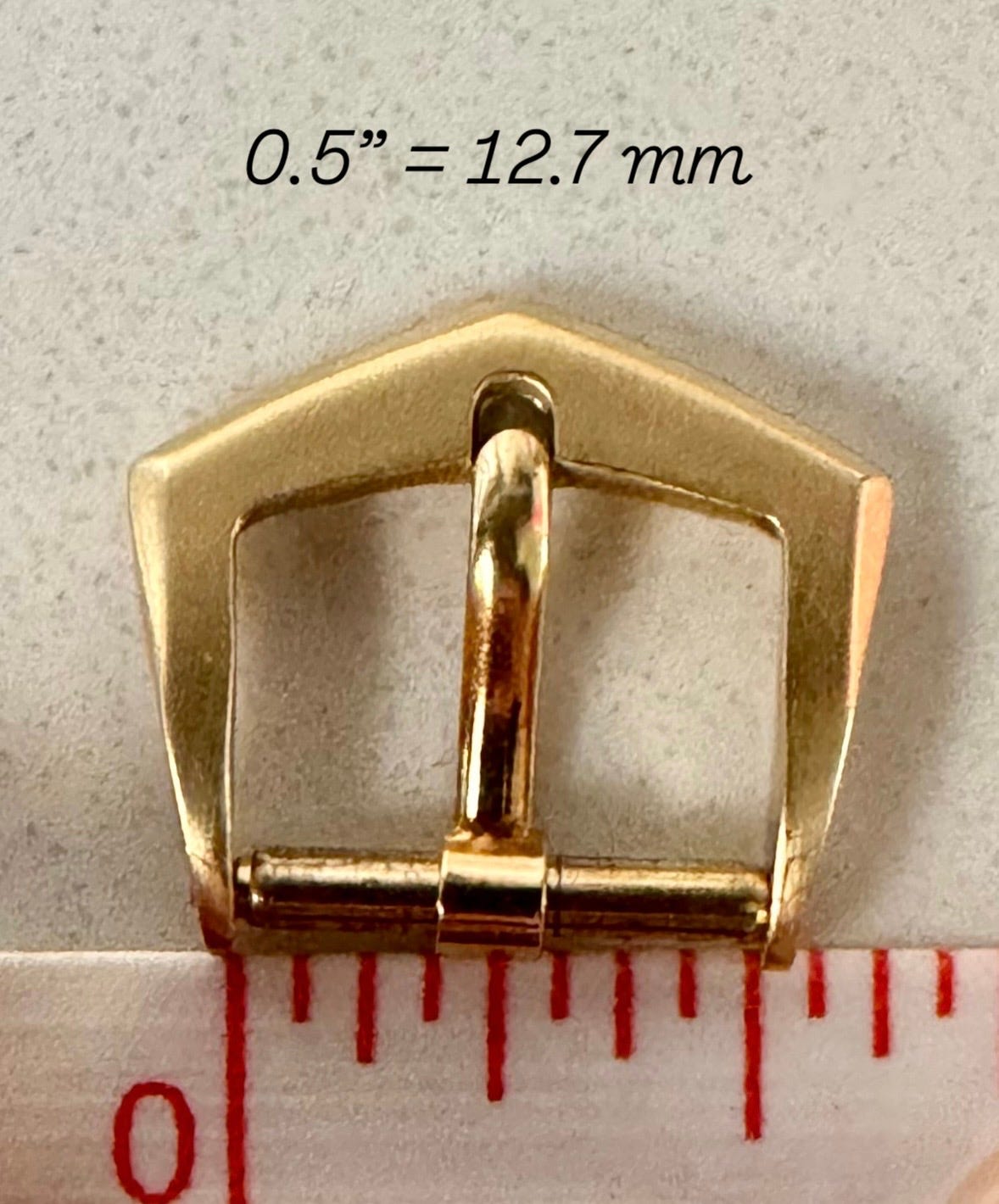
The vintage HS buckle shape requires a slight twist of the band while passing it through a usual 14mm tapered strap to minimize edge finish abrasion. While the usual 14mm strap taper will work with these buckles attached to pliable materials such as pigskin, it does require a bit more delicate handling when fastening the watch on your wrist.
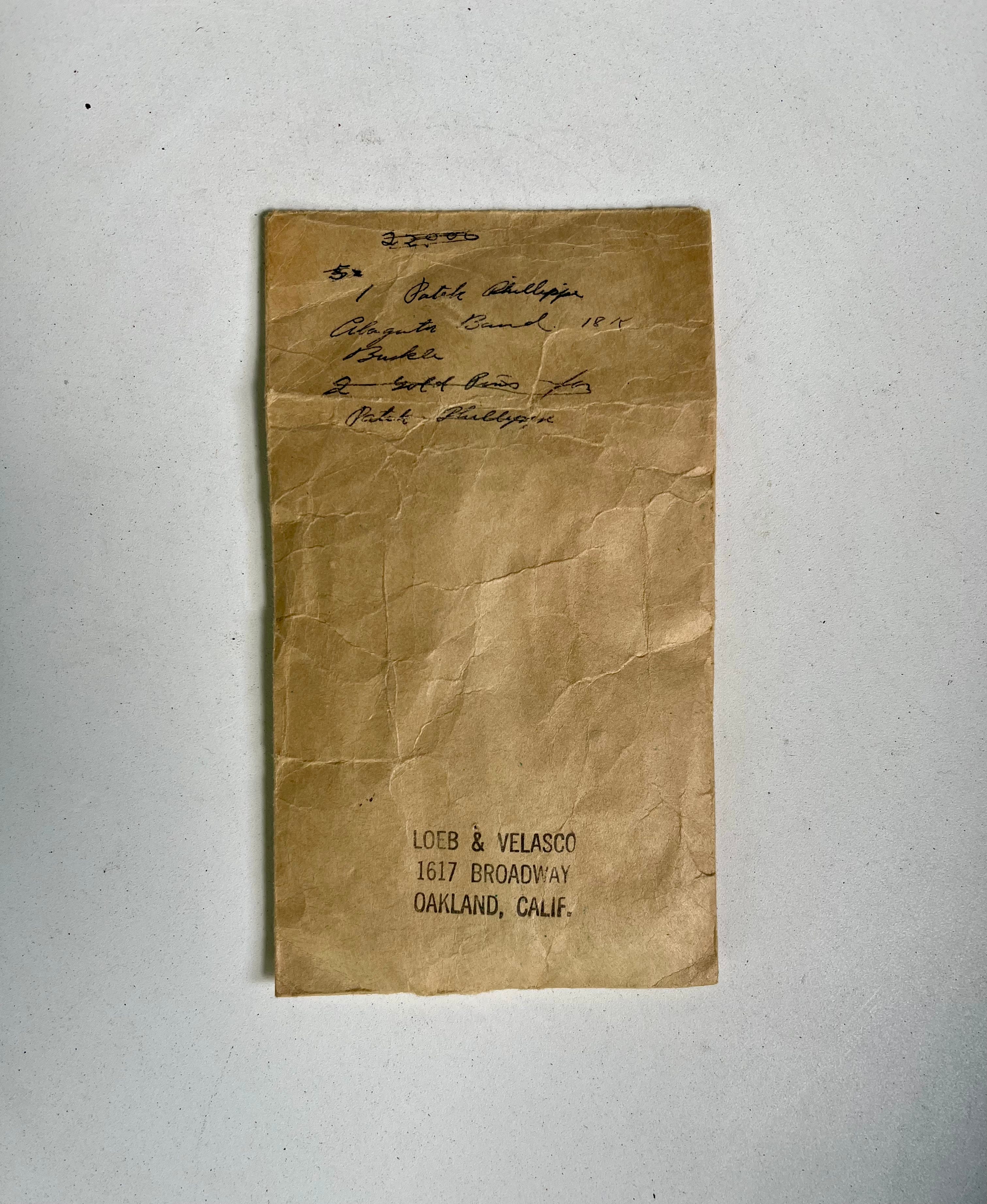
The “error” buckle illustrated and a crocodile box-stitch strap were accompanied by a Patek Philippe retailer stamped envelope. A handwritten note is displayed describing the contents on the outer envelope of the California-based retailer of the era.
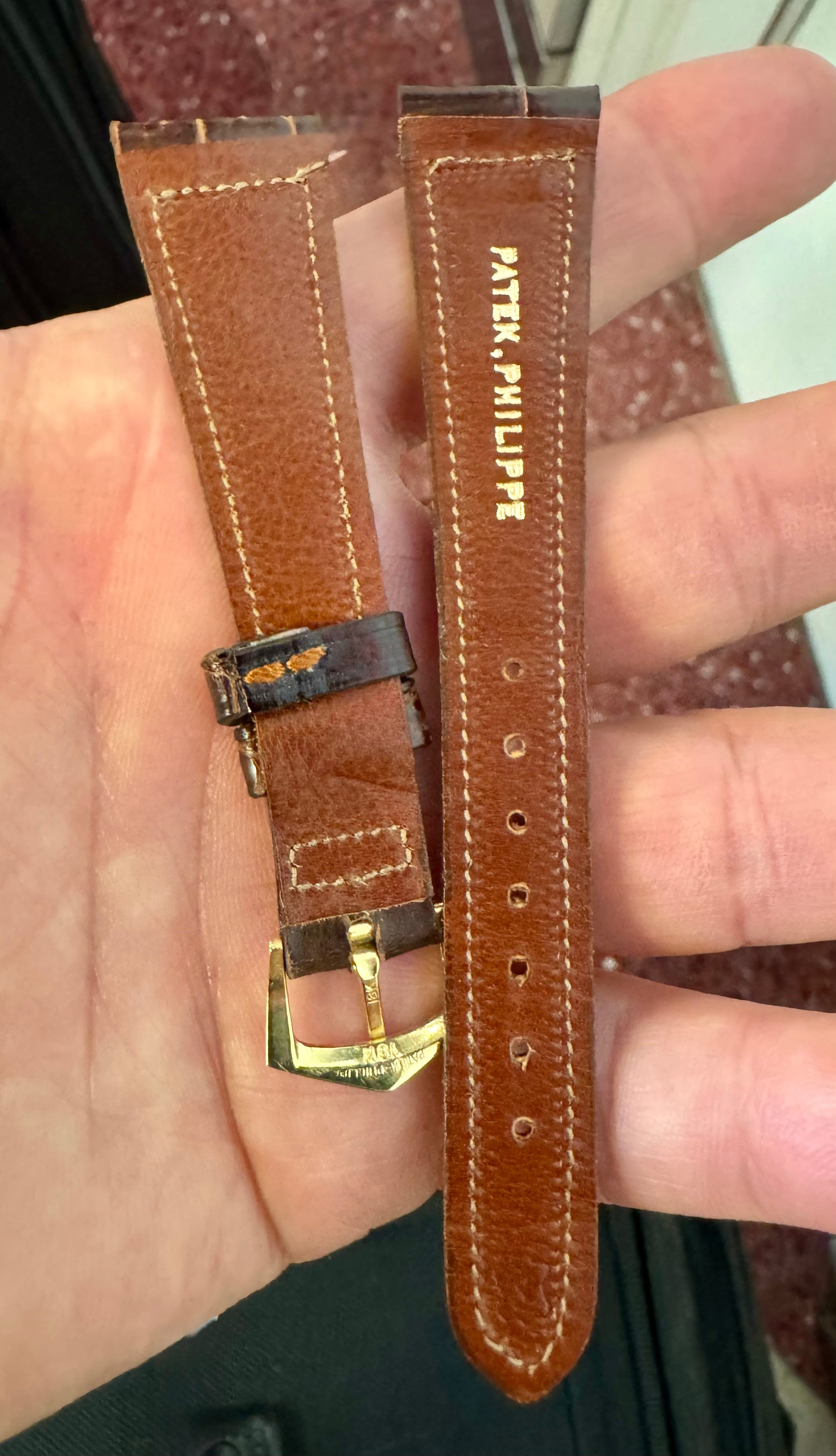
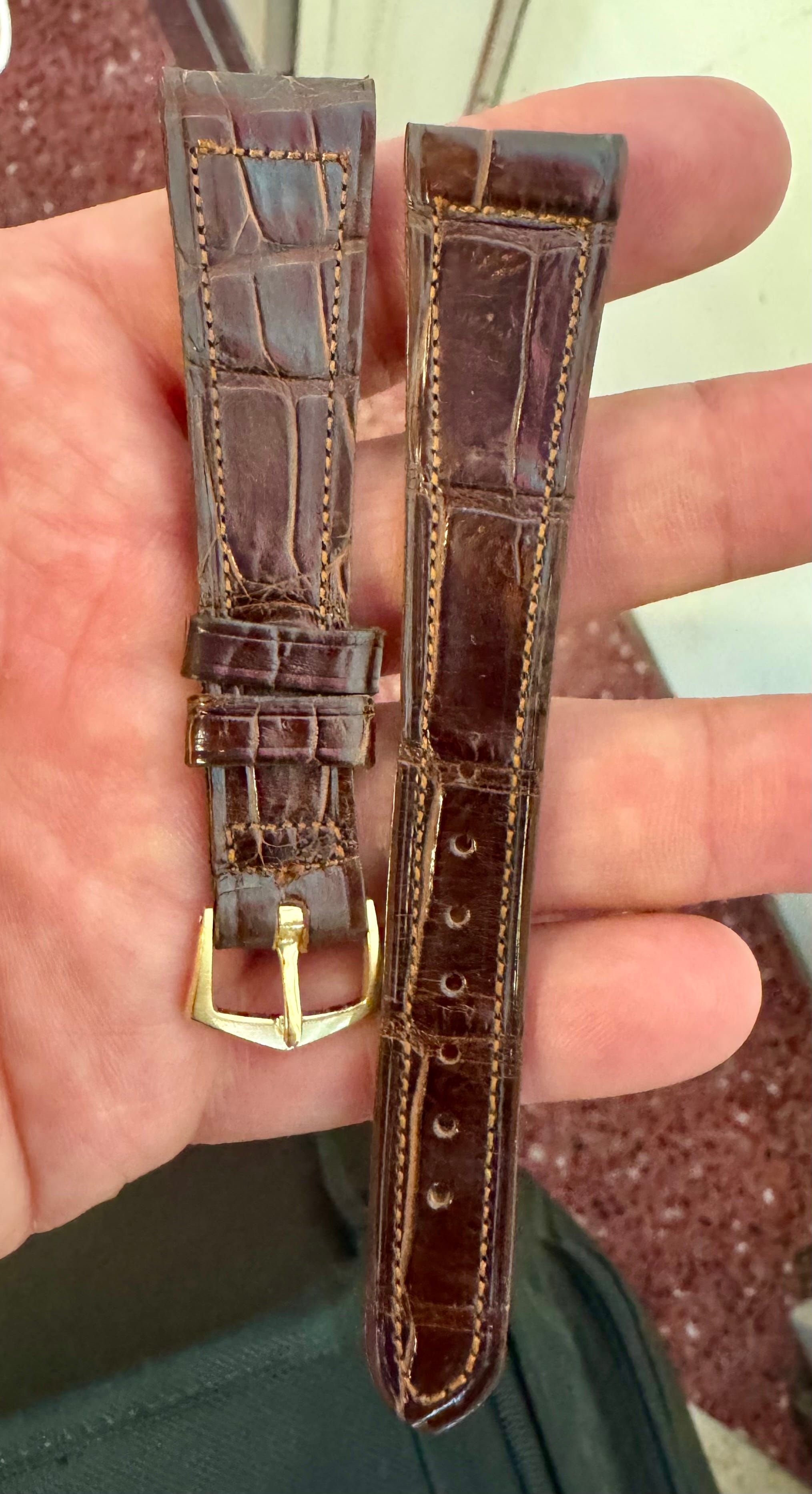
The images below show an original, unused Patek Philippe period strap fashioned with the correct 20/12.7 mm taper for U.S. market iconic offerings. This strap would be ideal for the complicated 1518, 1526, 2497, 2499 and 1579 references, in addition to the time-only reference 570.
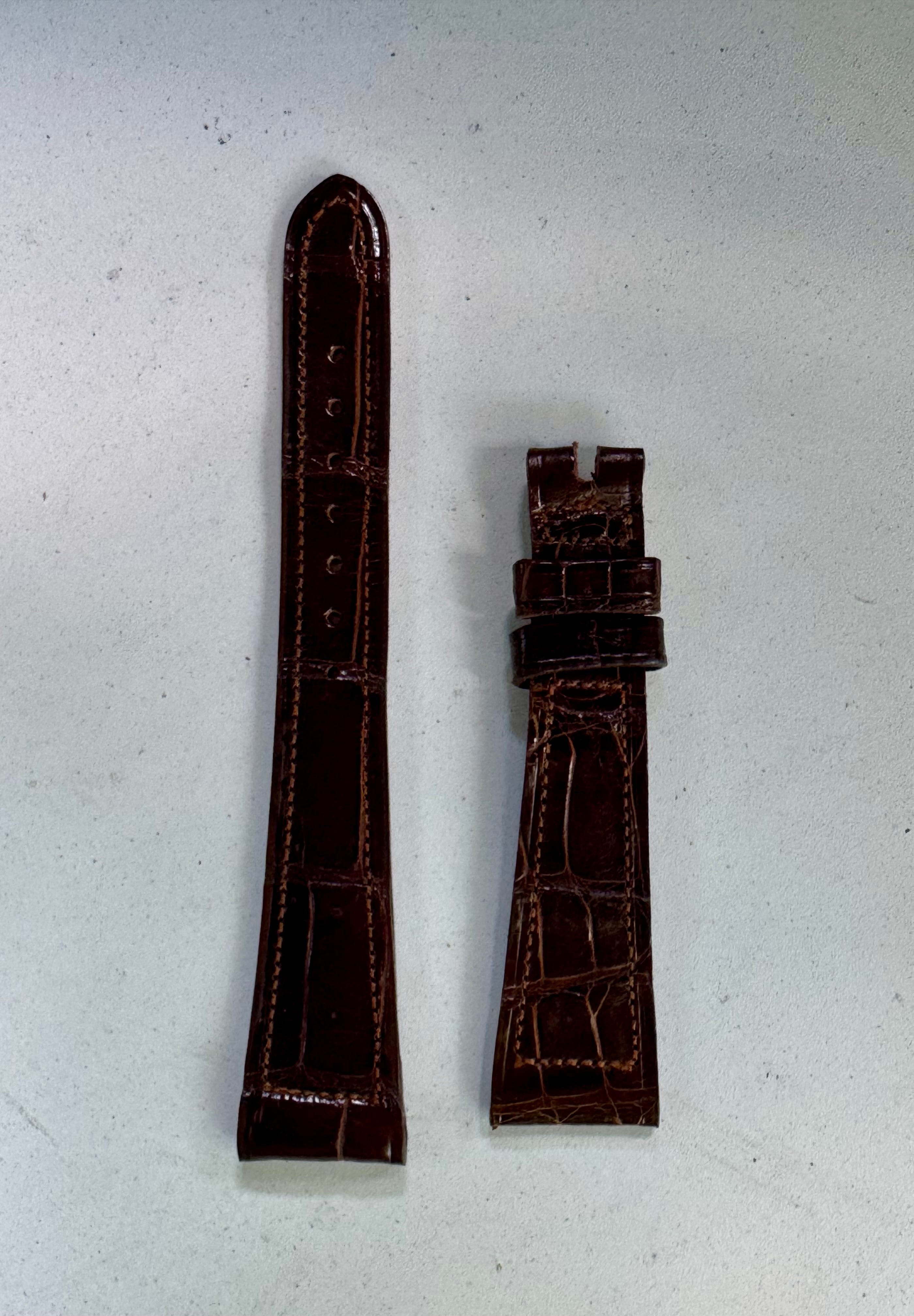
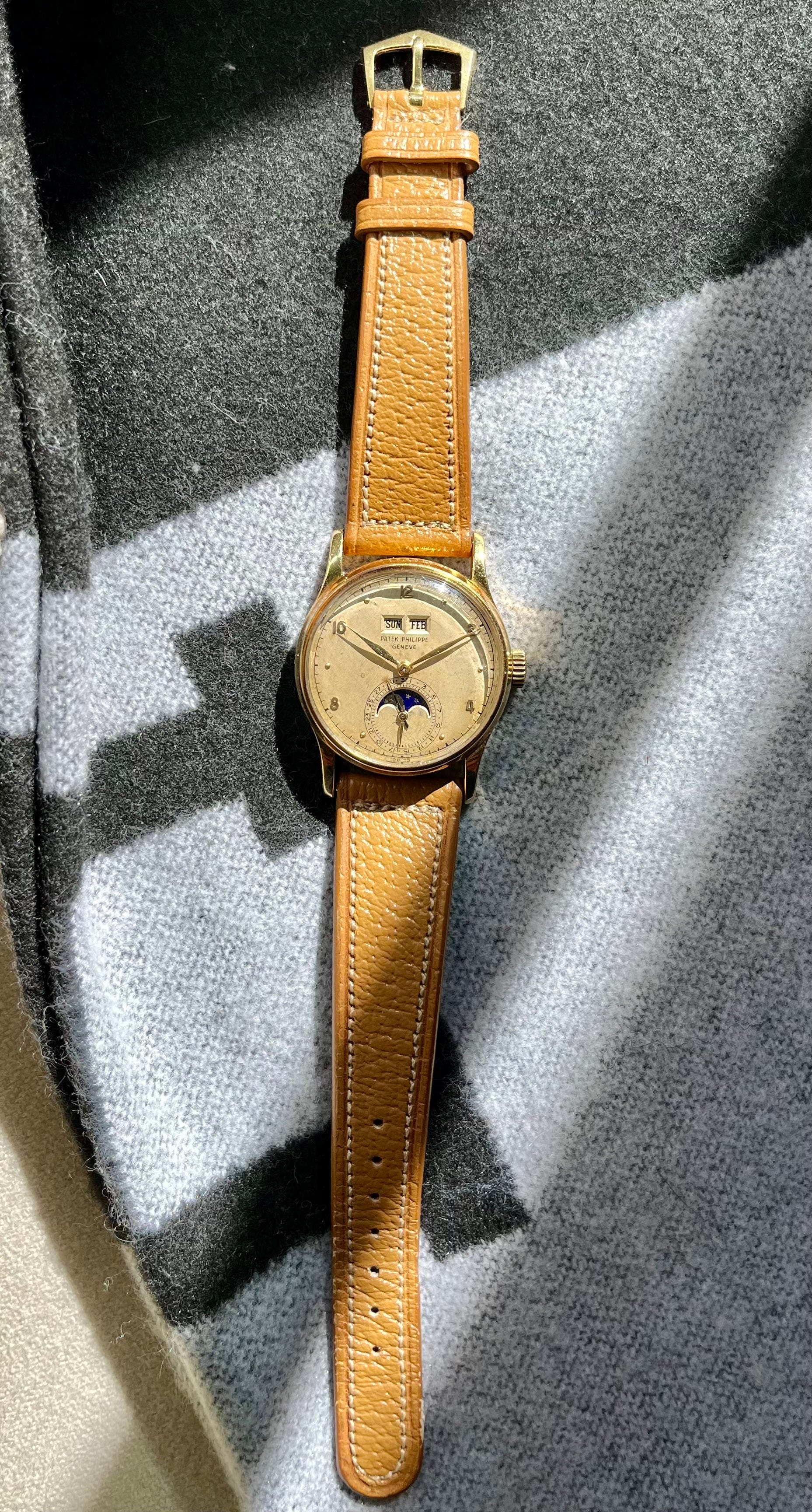
If you are ordering custom straps, it’s best to order the taper in 20mm x 12.7mm for an optimal fit to the HS buckle. This size will achieve the correct fit as illustrated below on a period U.S. market Patek Philippe strap.
When comparing the design of the Wenger to the HS buckles, the Wenger design has the more generous 14mm width to accommodate typical strap measurements. While technically not correct for a U.S. market watch from the period, it does make for a practical and user-friendly option.
Closing Thoughts
From an original era, preservationist point of view, either of the HS buckles could be considered correct for vintage US market Patek Philippe watches from the 1950’s, as it’s unclear when the error batch was exhausted. Moving forward, I would expect to see only the correctly spelled HS buckle after that decade.
On vintage U.S.-market Patek examples from the 1950s, I find the tang of this particular “error” buckle to be more proportionally aligned with the recess compared to the correctly spelled buckle shown, although that may be a period quality control issue and not representative of all examples*. A small detail, but one that matters for optimal fit and to ensure the watch stays most securely fastened.
The birth of the Henri Stern buckle—and its initial misstep—is just one intriguing chapter in the history of Patek Philippe buckles. It underscores something larger: with Patek Philippe scholarship, even the smallest components carry a history worth studying.
*If you have a correctly spelled HS buckle with a different tang fit, please reach out.
Subscribe: www.aircooltime.com
Contact Me:
IG: @Aircooltime
Email: Aircooltime@gmail.com
Crazy to see the odd stuff which interests us as collectors/enthusiasts 😁
i first struggled with the spelling too, but the easy way to remember is “2 p’s because it’s pp” 🙂