

Introduction
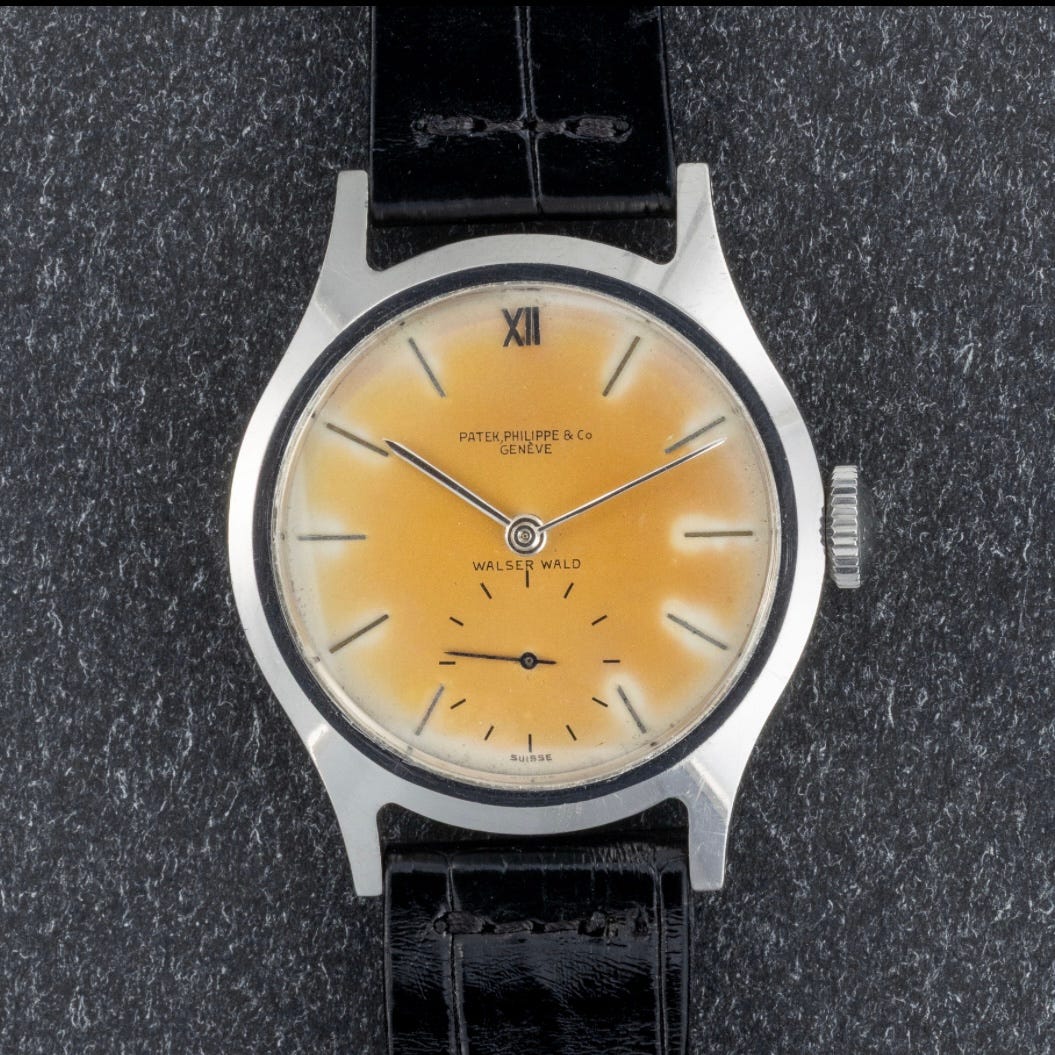
Currently at the FutureGrail auction and closing on May 12, is a rare and unique Patek Philippe reference 565 in steel. It is yet another example displaying the last four digit case serial stamping between the lower lugs. Previously I wrote about the four digit lug stampings seen on some early examples of the Patek Philippe 565 reference in steel only. These stampings are observed from a period of 1939 - 1943. For further detail on this subject, including examples of serial stampings between the lugs, see my accompanying article HERE.
Below I explore the different components of this unique example from 1940. This particular example has also been published in Patek Philippe, My Dream Collection by Ali Nael. All images of subject example provided by Ali Nael, CEO of FutureGrail auctions.
The Dial
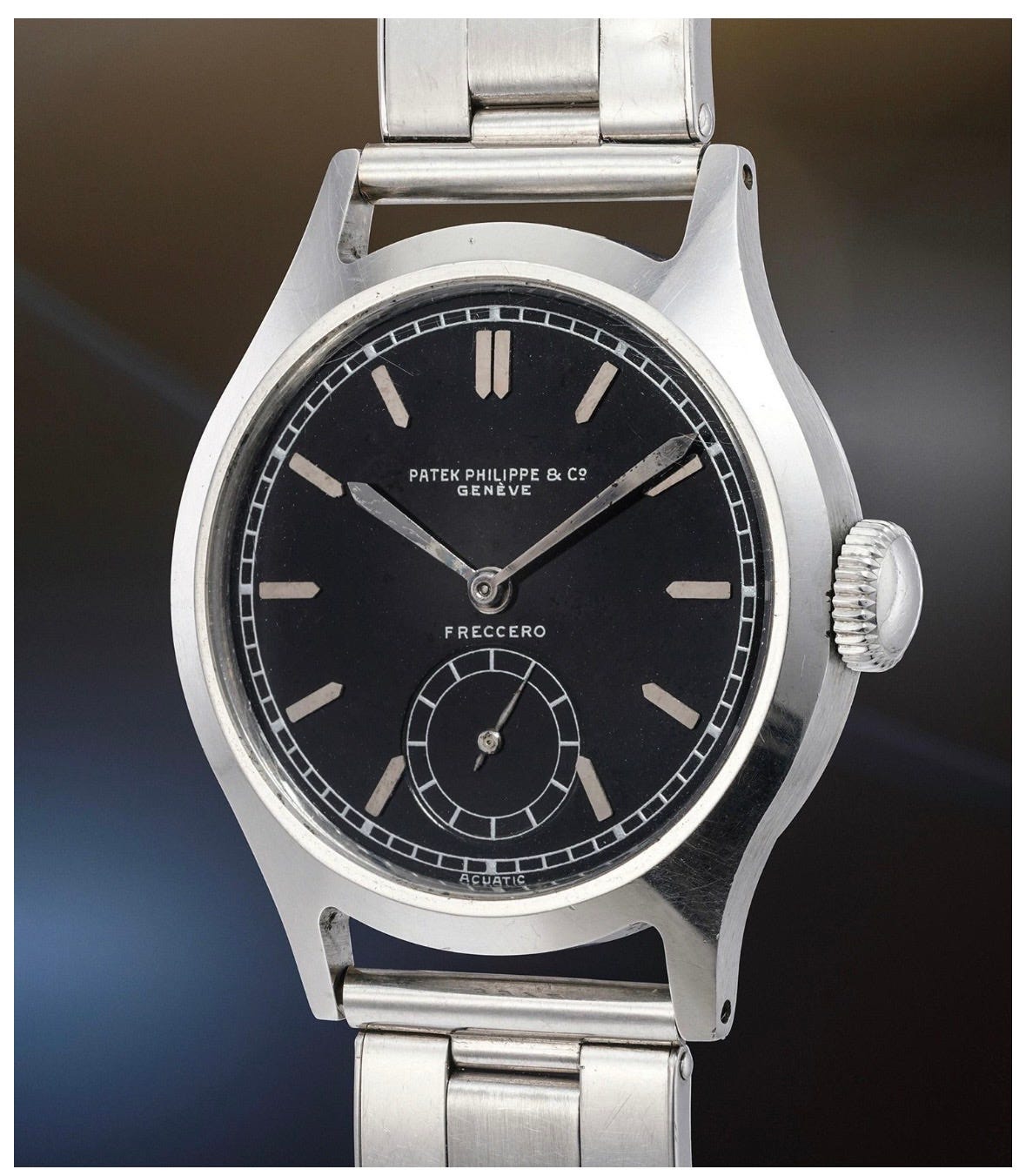
In a previous article referenced above, a very rare black-dial example from 1939 was illustrated with archival confirmation and a printed “Freccero” retailer signature. It is included here for its relevance to the features observed on the present example.
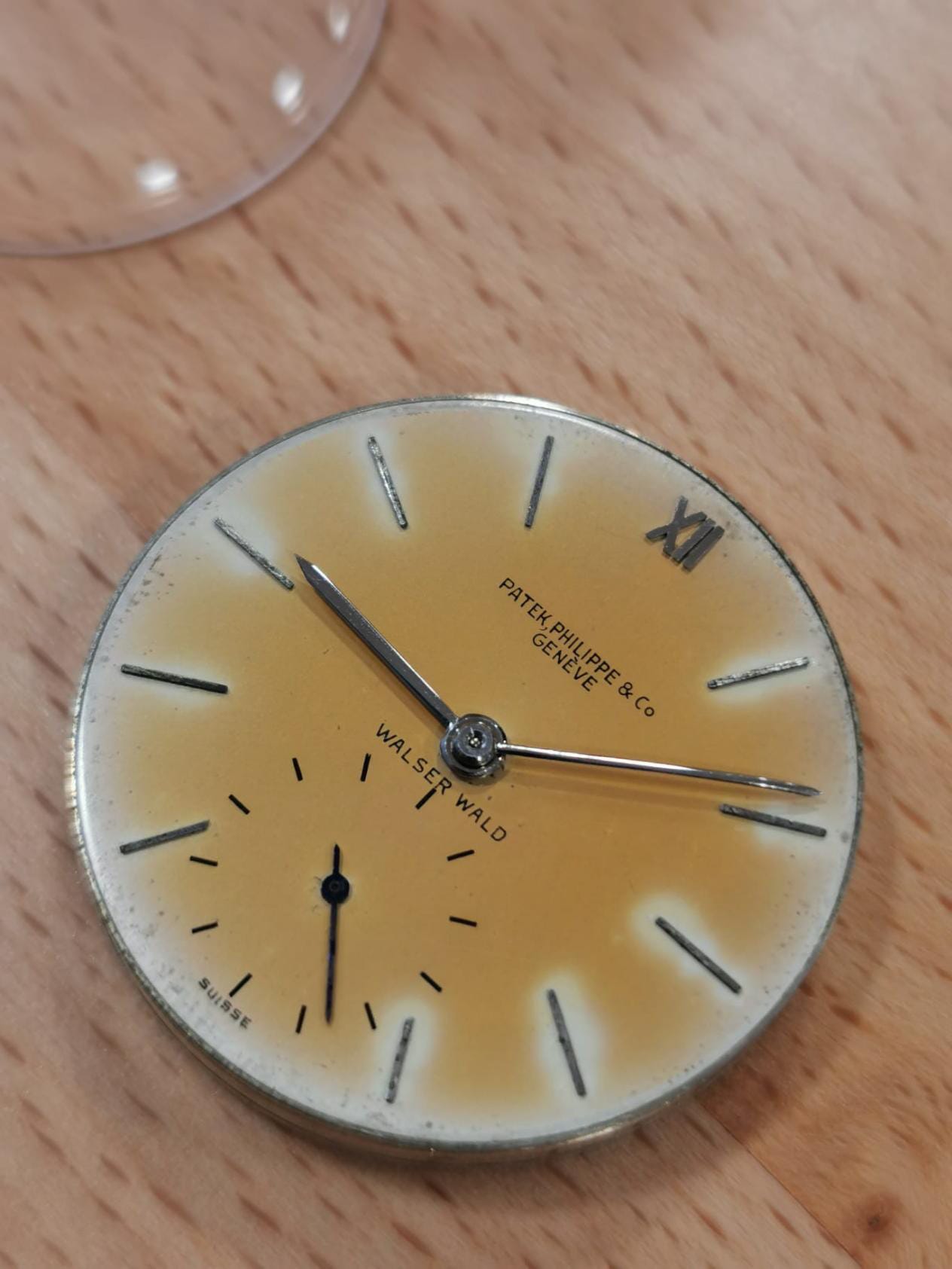
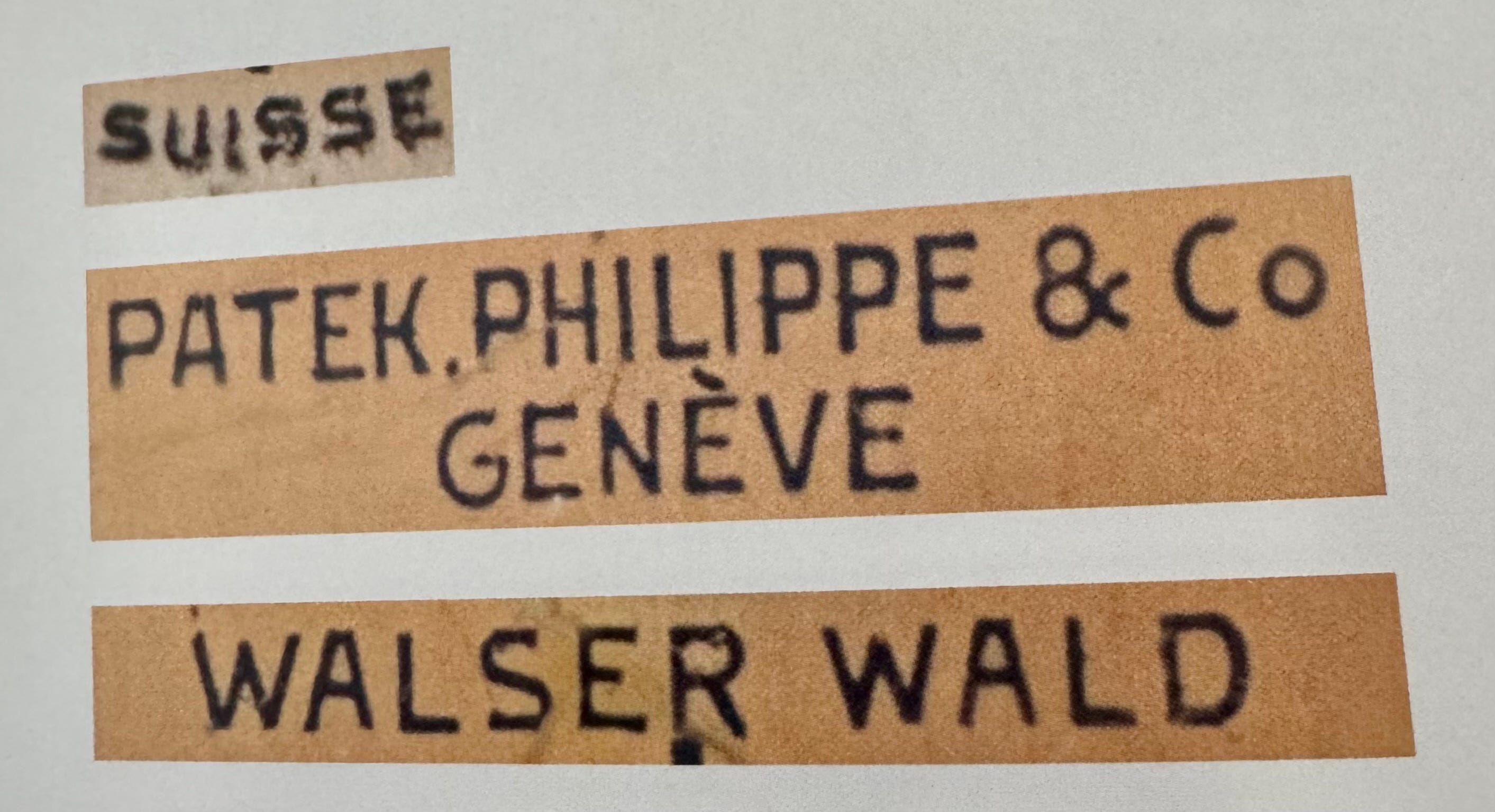
The subject example is especially noteworthy for featuring the storied South American retailer’s signature “Walser Wald” printed on the dial. In addition to being the only example known with this signature, the retailer name appears to be the original print known from the period, including its correct, relative placement on the dial. Often these can be reprinted after dial cleaning or restoration and difficult to reproduce properly to a trained eye. The engraved, enameled signature appears in its elongated form on examples up to the early ’40s. This long-form signature is distinguished by the inclusion of “& Co” at the end, whereas later examples adopt a more compressed configuration, still ending in “& Co” before the transition to a shorter “Patek Philippe” signature in the late ‘40s.
It is among very few known examples to pair a retailer signature with a serial number stamped between the lower lugs. The original, silvered dial is further distinguished by the aging of its original surface, which has developed a so-called “tropical” appearance. Particularly distinctive expressions of dial patina are often observed among examples originating from this part of the world, likely influenced by prolonged exposure to sun, heat, and humidity, which over time can produce varied and compelling surface characteristics. The stick markers have an outline surrounding them that resembles something of a neon light halo glow. In this case, the unique tropical patina also serves as an important indication of the dial’s original condition.
The hands appear to be white gold, as do the applied stick hour markers. The use of gold for markers on dials in steel cases is not uncommon for Patek, as a way to elevate the watch with the case being strictly a means of protection and durability for a very fine, hand crafted object. Typically the markers were rhodium plated, which can explain the signs of slight tarnish observed. This is one of the few dials seen on the reference 565 without an outer pearled or hash engraved minute track. The absence of a minute track removes the strict visual measurement of time, lending the dial a more open, unstructured character suited to moments of relaxed enjoyment.
The Case
The FB/Taubert designed monobloc case is very well proportioned, with a crisp bezel line that is often softened from past polishing on many examples. The case integrity is well preserved and notably absent of corrosion and pitting. This example appears to be the Type 1 case, displaying stubbier lugs and a convex recess point by the winding crown. Further observations on the evolution of case types seen across this reference over time can be found in my accompanying article HERE.
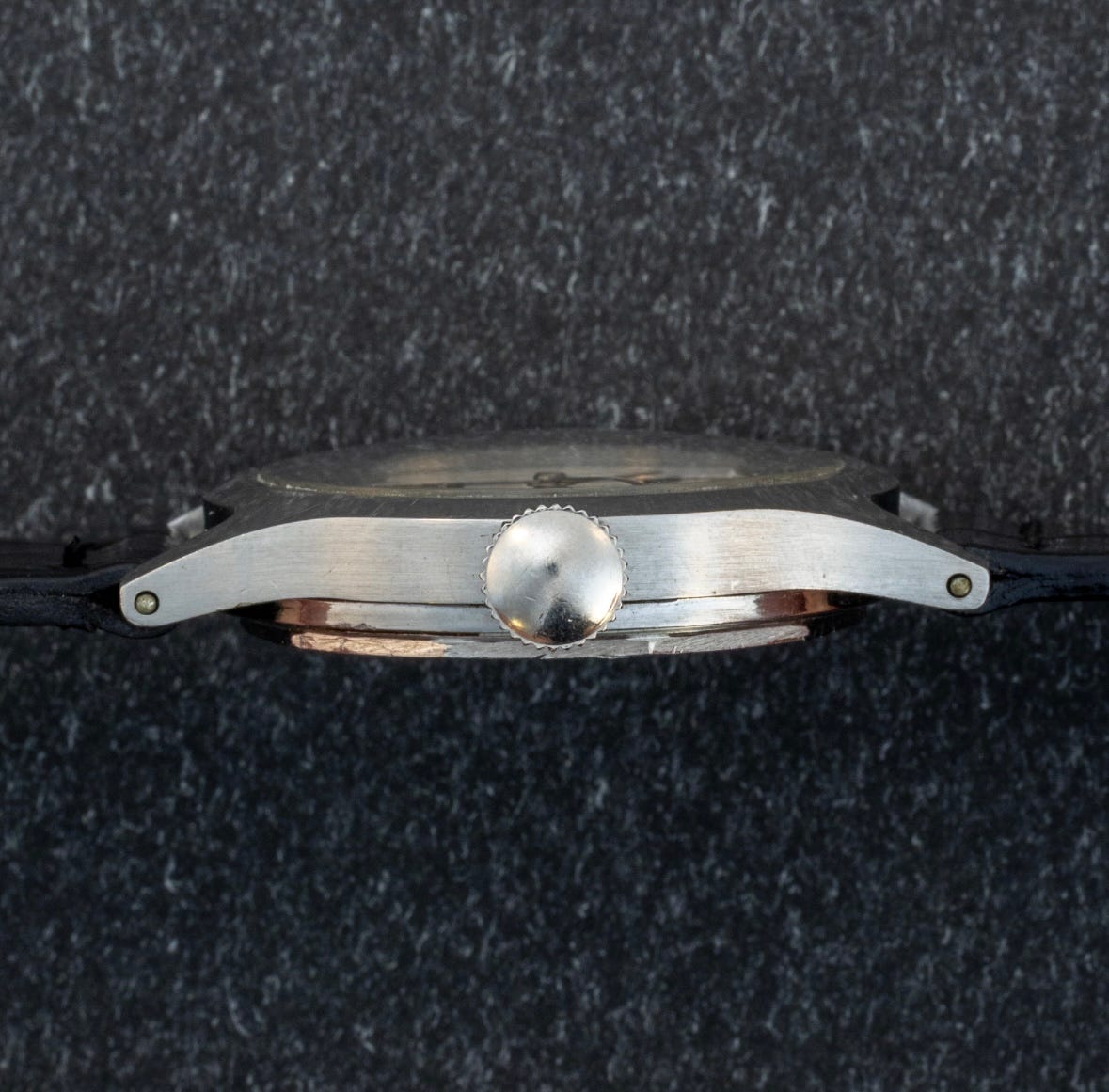
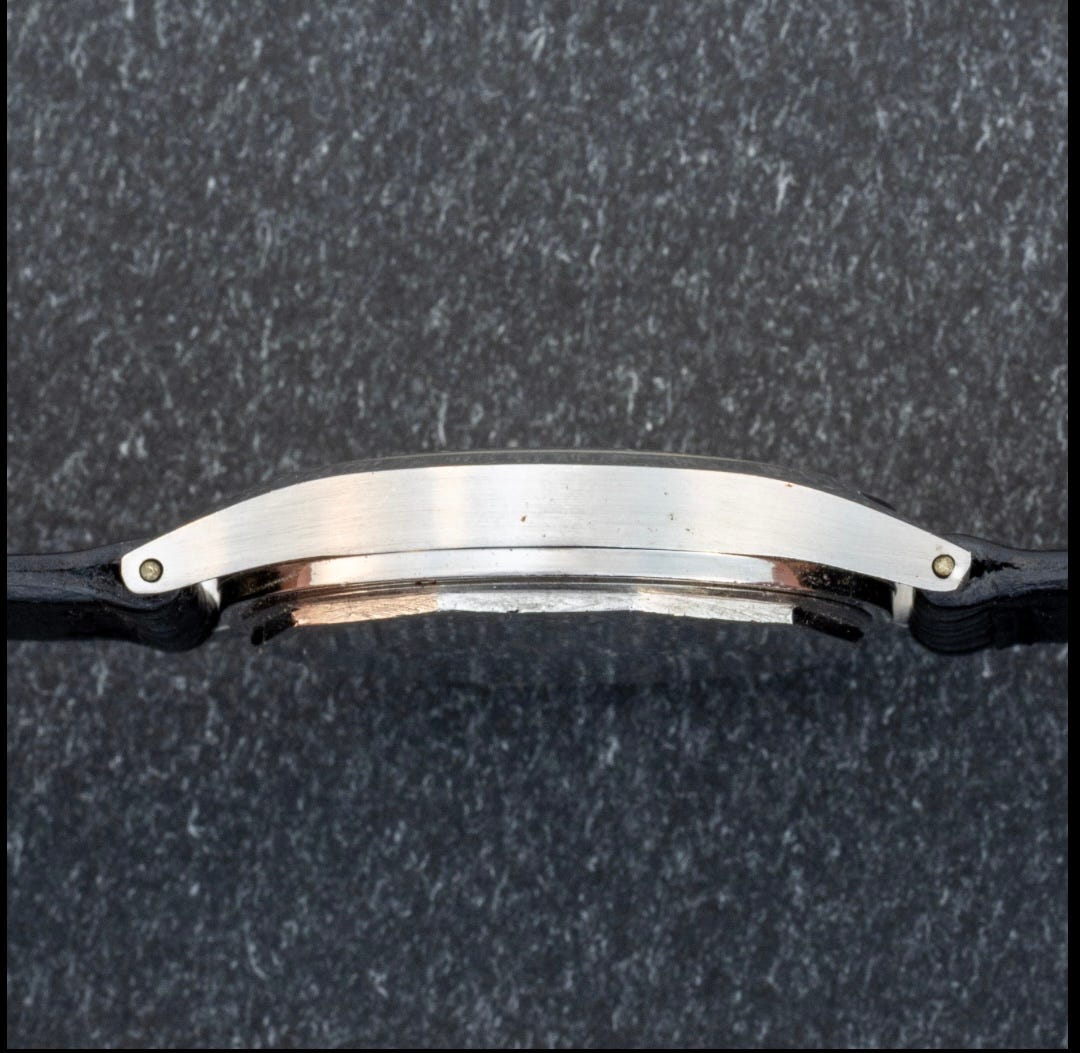
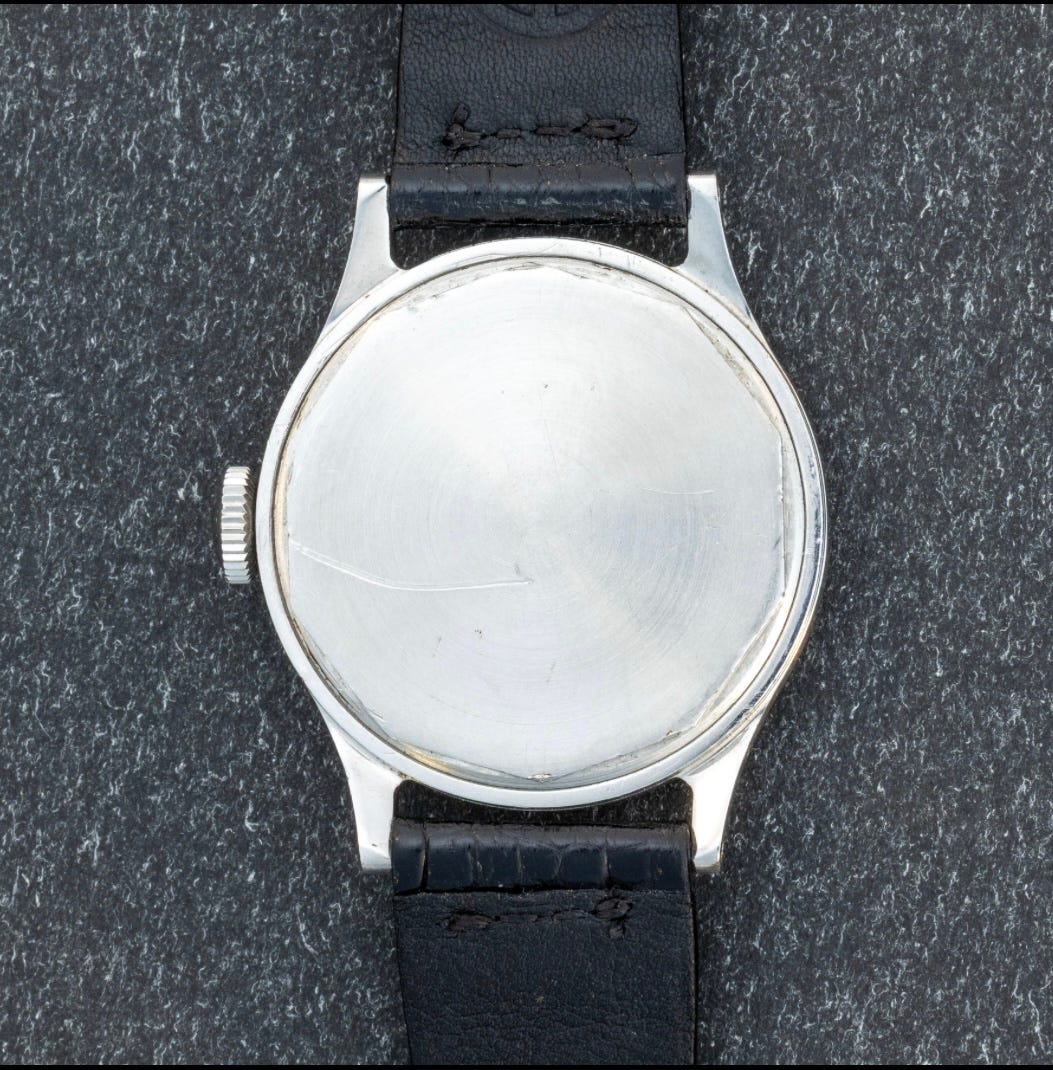
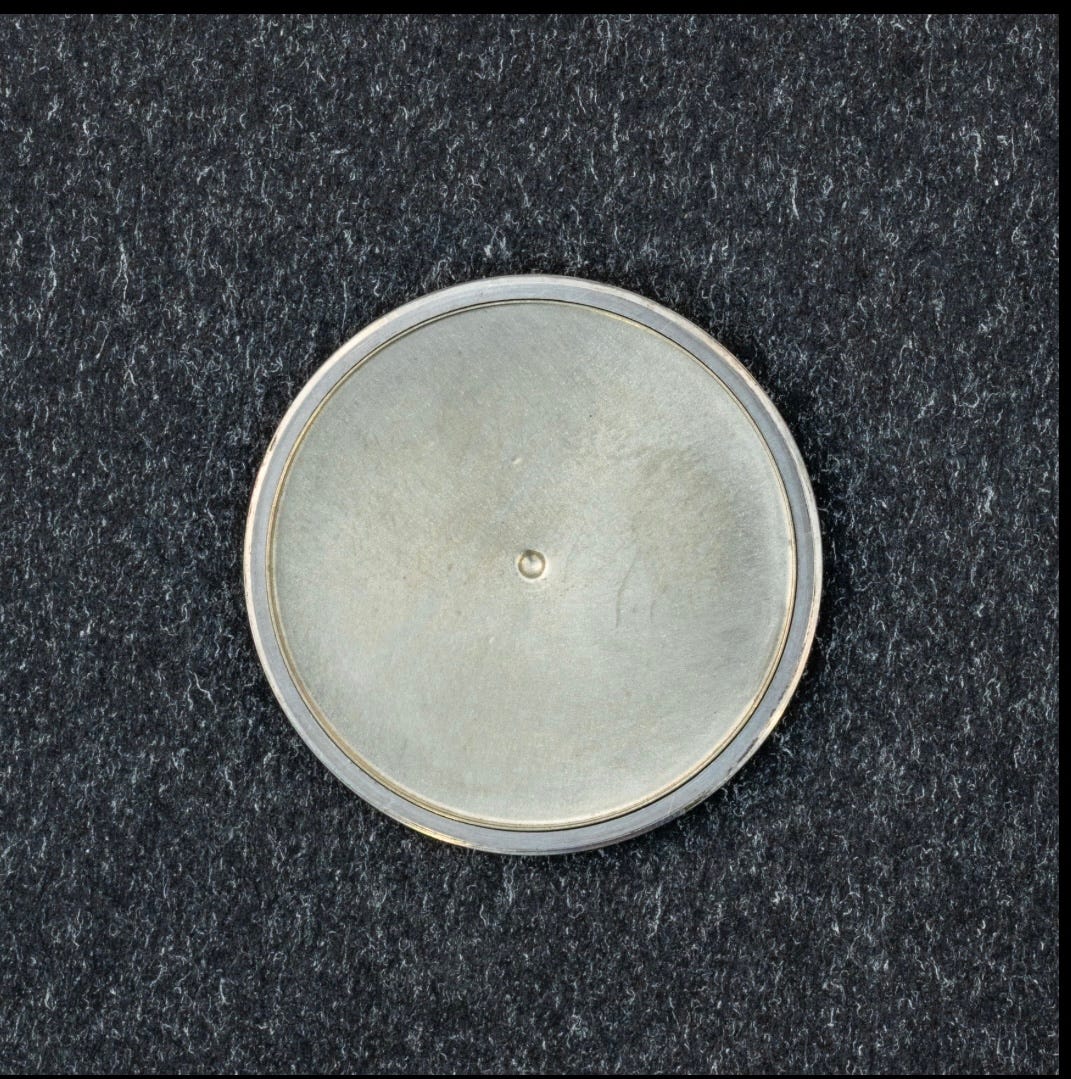
The dust cap is also present, which helps to protect the movement from magnetism, moisture and dust. When these references are found complete with an inner dust cap, often times the dials have survived in well-preserved condition for the age.
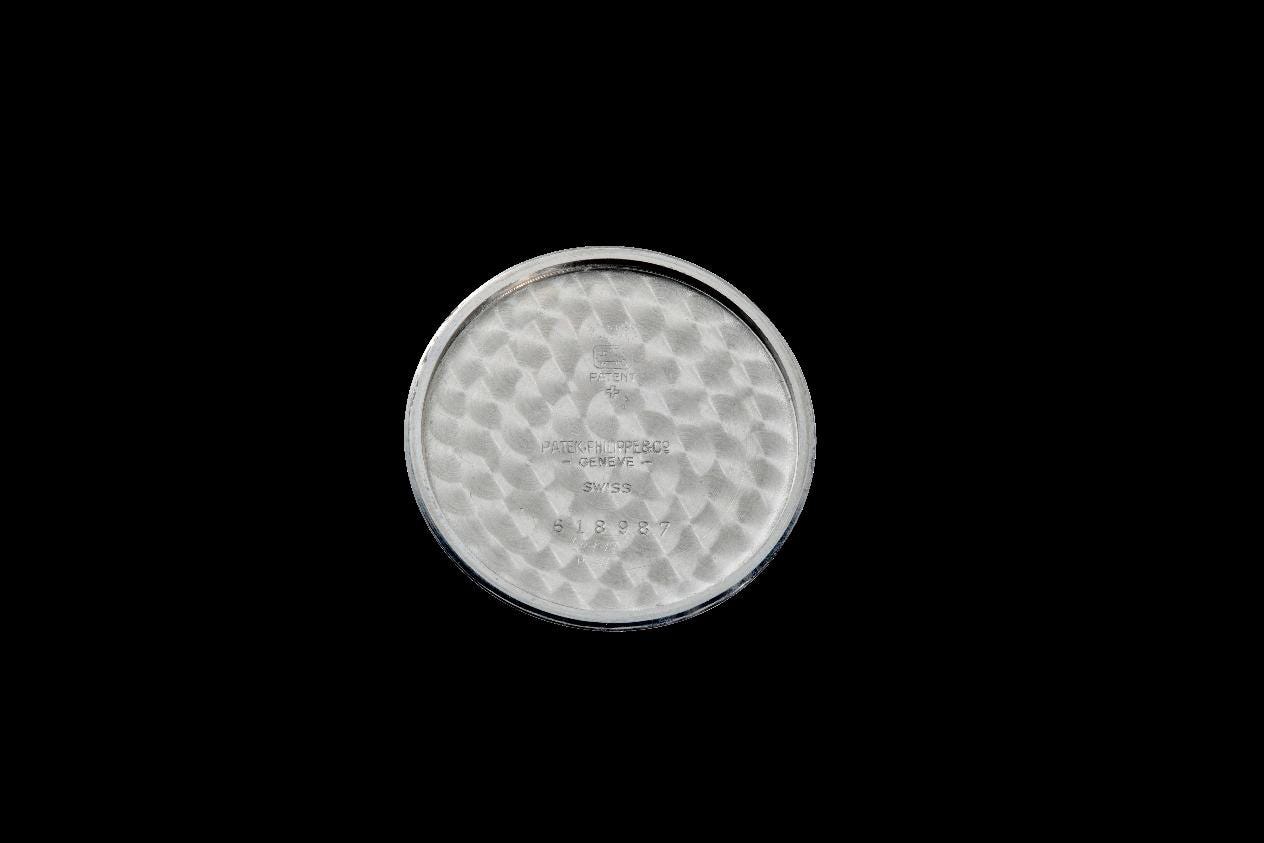
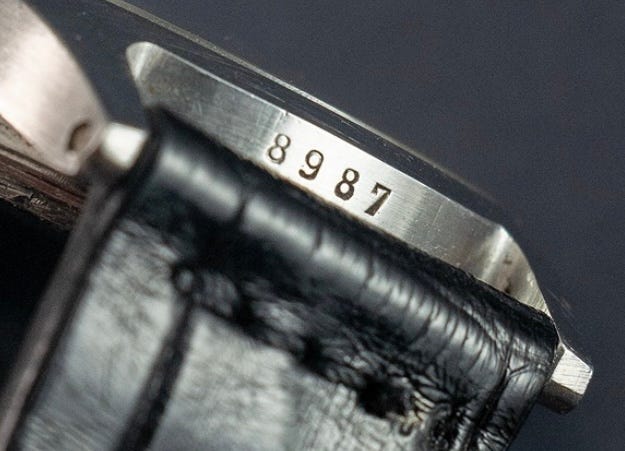
As mentioned, on certain early waterproof wristwatches, notably the Patek Philippe Reference 565 (late-1930s – early-1940s), a stamped marking appears between the lugs, generally consisting of four digits. This number corresponds to the last four digits of the case number engraved inside the case-back. It functions as an assembly mark, ensuring the correct matching of the case components.
This practice, chiefly observed on steel examples produced between 1939 and 1943, remains occasional and disappears rapidly during the 1940s. It does not constitute a manufacture standard nor a commercial marking, but rather an internal technical procedure. It is not, however, attested on contemporary waterproof chronographs, notably the Patek Philippe Reference 1463, introduced in 1940.
These Ref. 565 cases were supplied by Taubert & Fils, successor to the patents developed by François Borgel.
The Movement
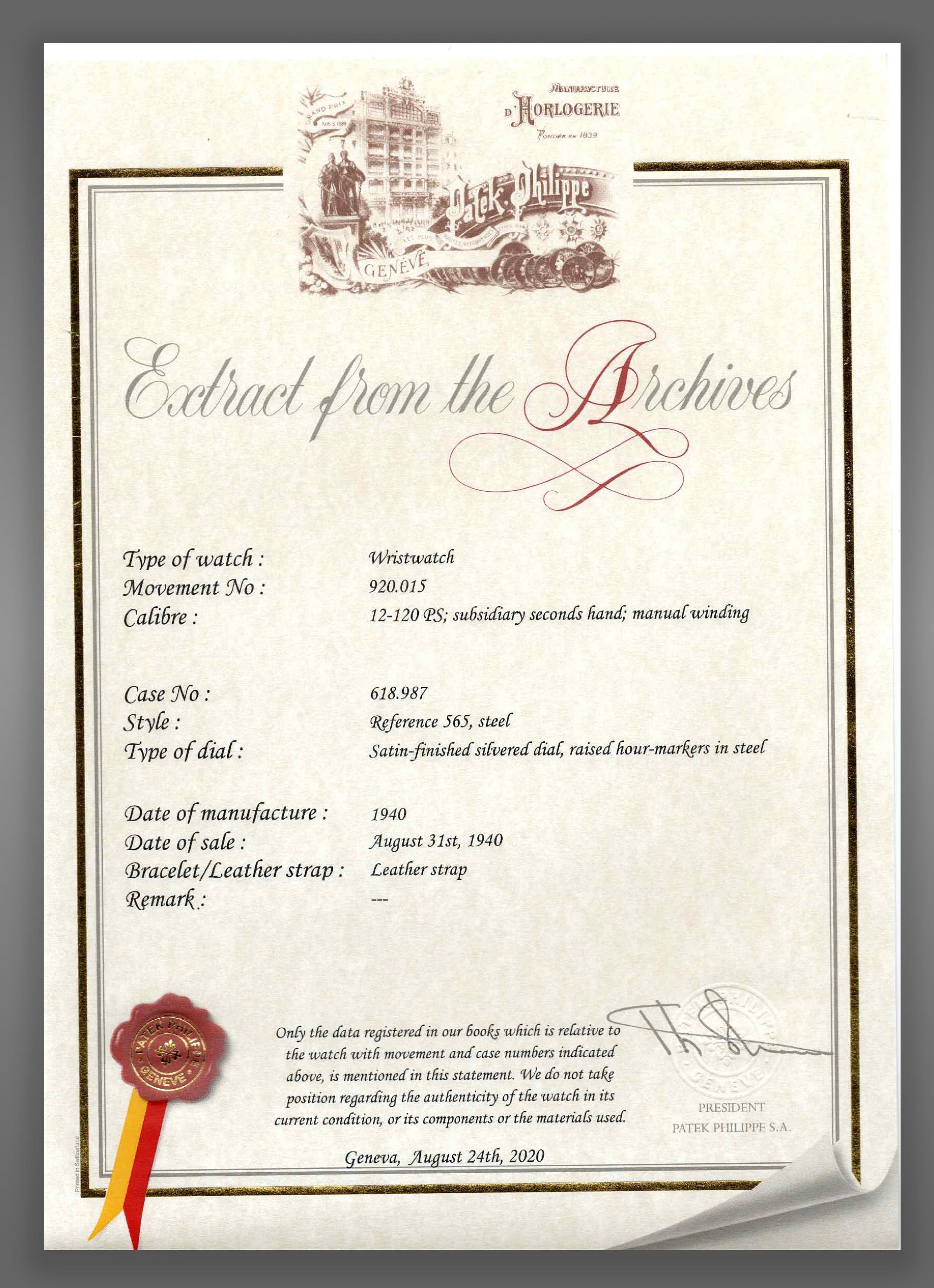
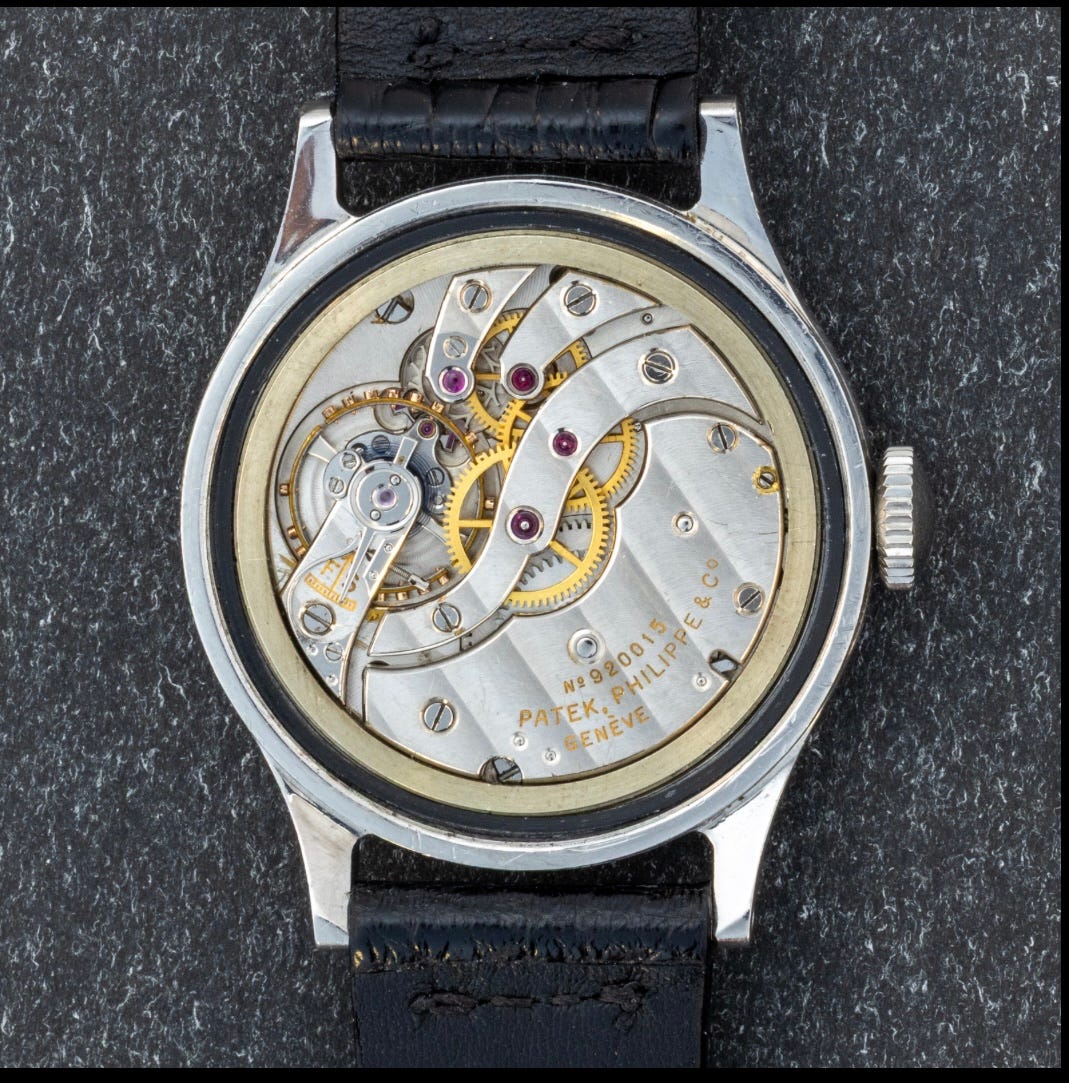
Here we see an image of the cal. 12-120 movement in well-preserved condition. Note the lack of corrosion or rhodium wear on the bridges and slots of the screw heads. These are signs of responsible service intervention over the years.
Closing Thoughts
A beautiful and distinctive Patek Philippe Ref. 565 in a desirable stainless steel case offers a welcome opportunity to revisit this iconic reference. Examples such as this remind us that great watches continue to reward close study, especially when unique characteristics are preserved in honest, original condition.
Contact Me: @aircooltime, aircooltime@gmail.com, www.aircooltime.com