

*For optimal viewing, watch video in full screen mode.
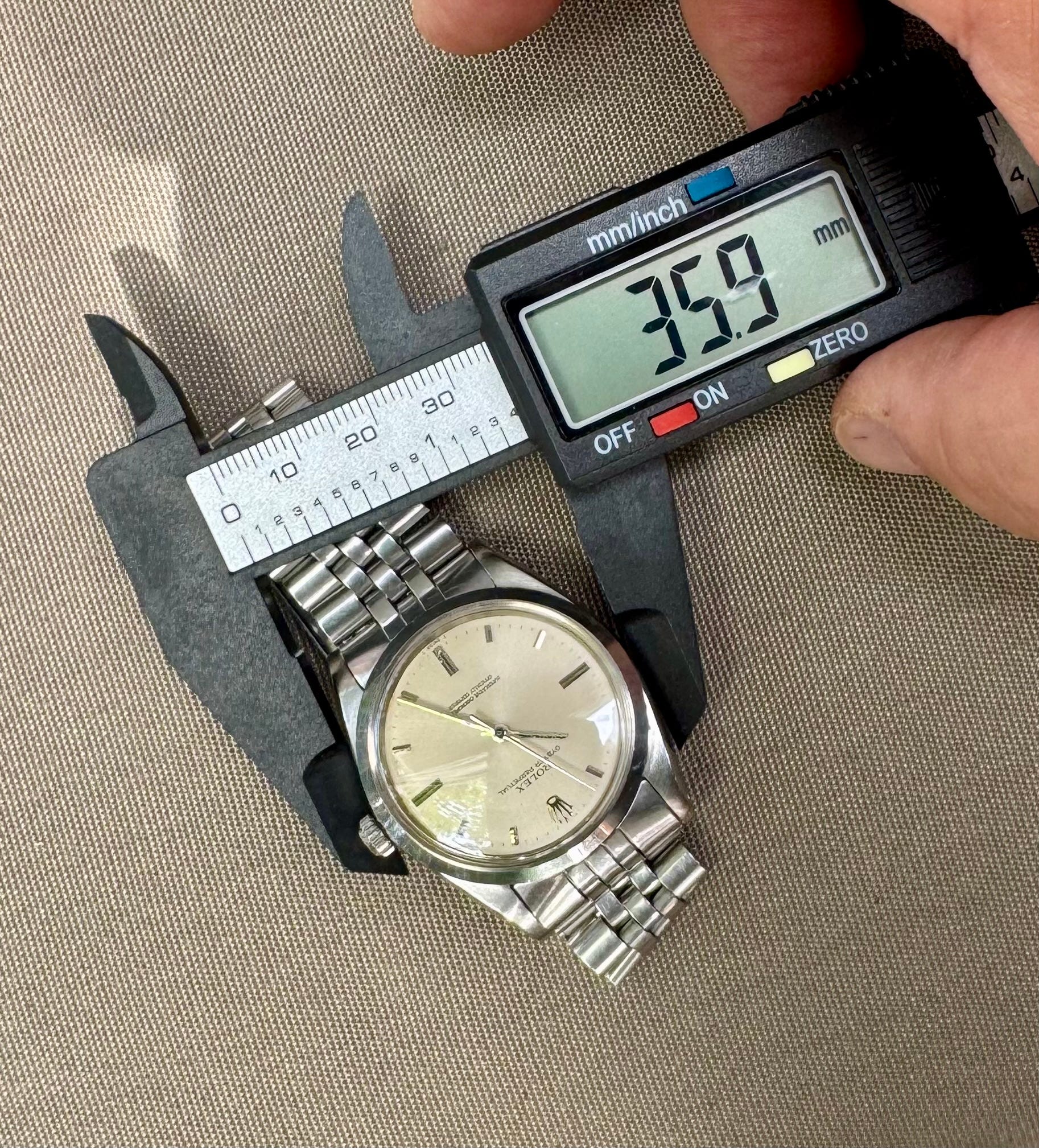
The Rolex Ref. 1018 is one of the quieter members of Rolex’s vintage offerings. Sharing a similar, but slightly different 36mm case design of the better-known Explorer 1016, the 1018 has never attracted the same level of collector attention. That relative obscurity is part of what makes particularly well-preserved, honest examples so interesting.
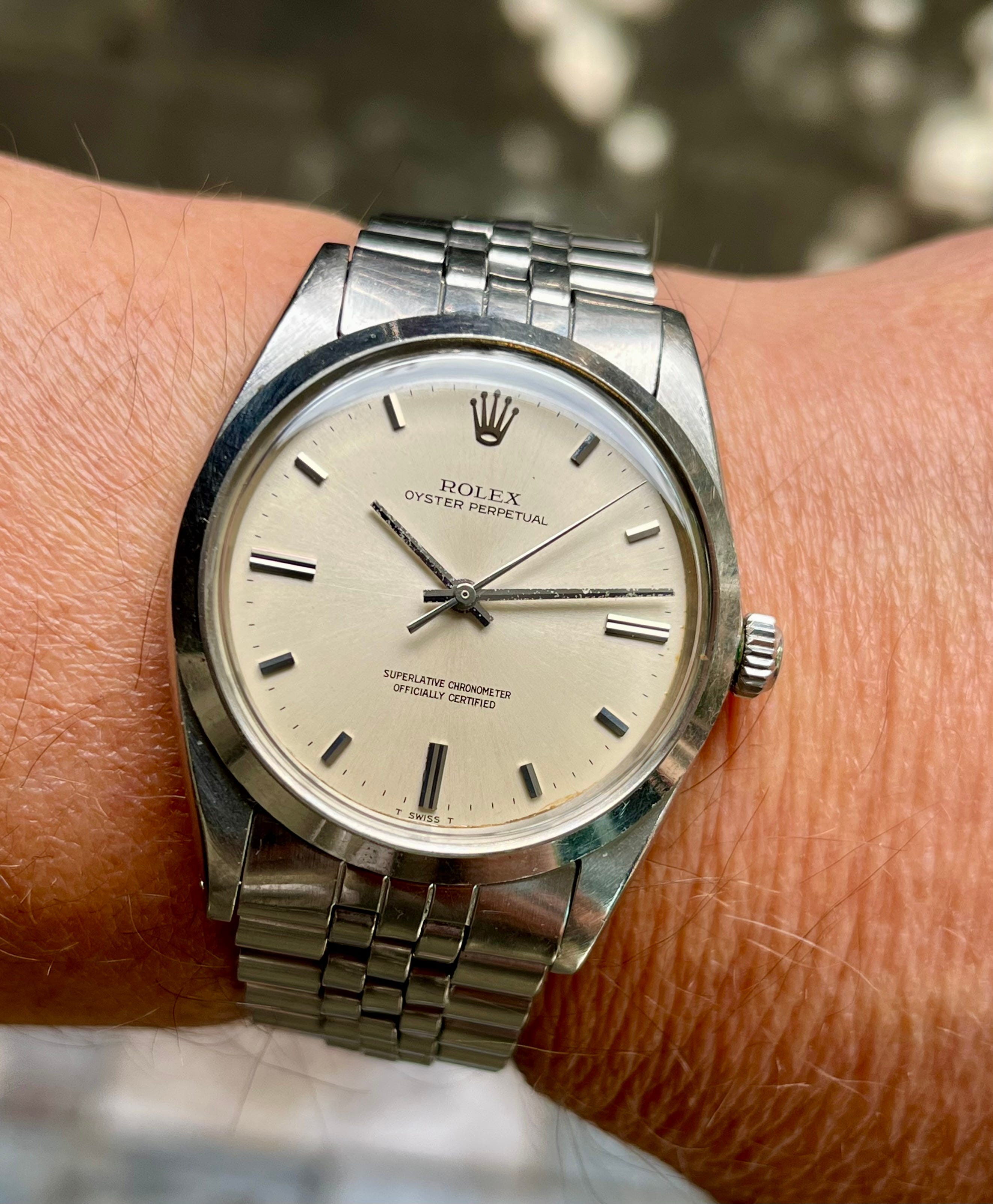
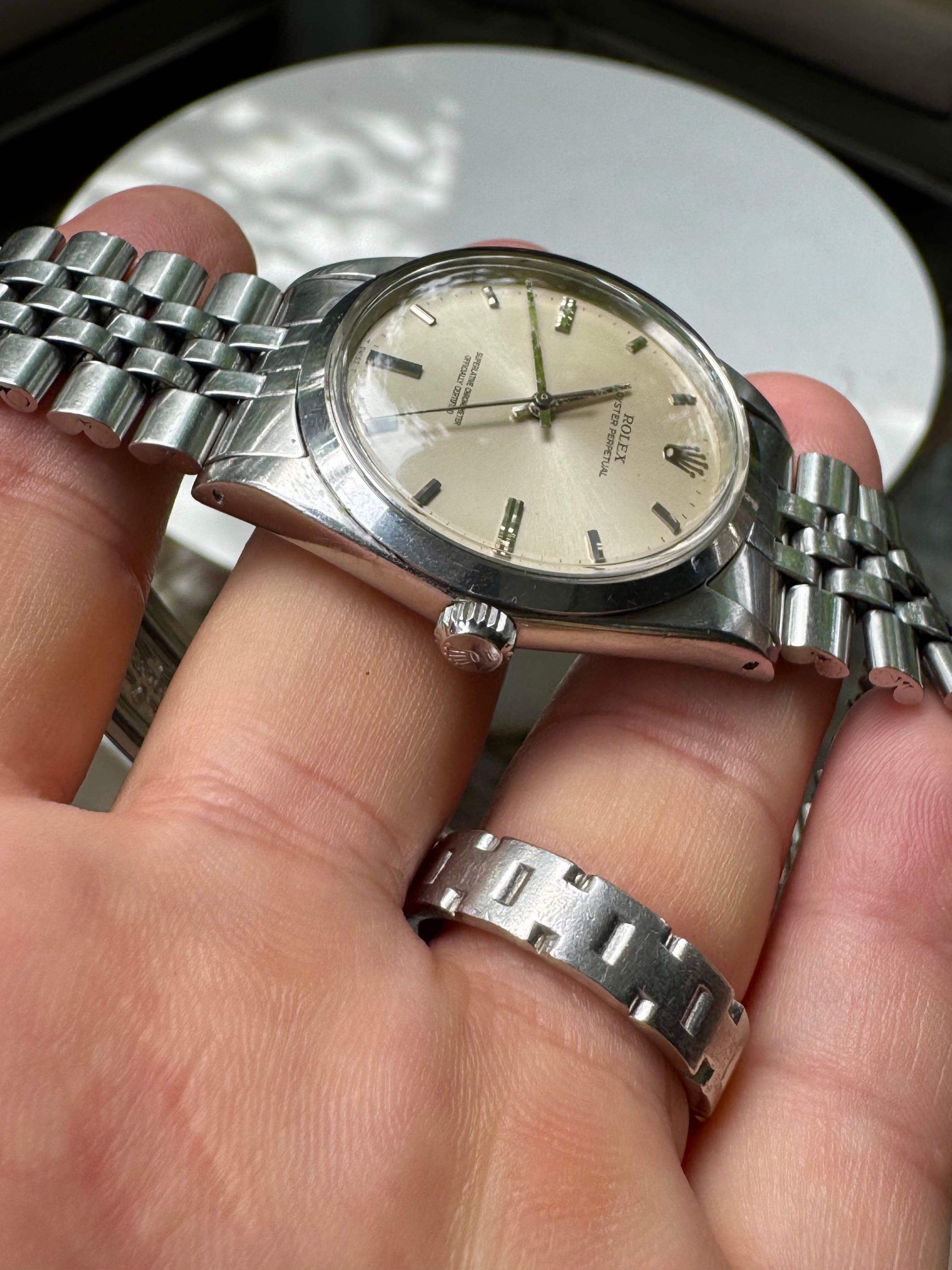
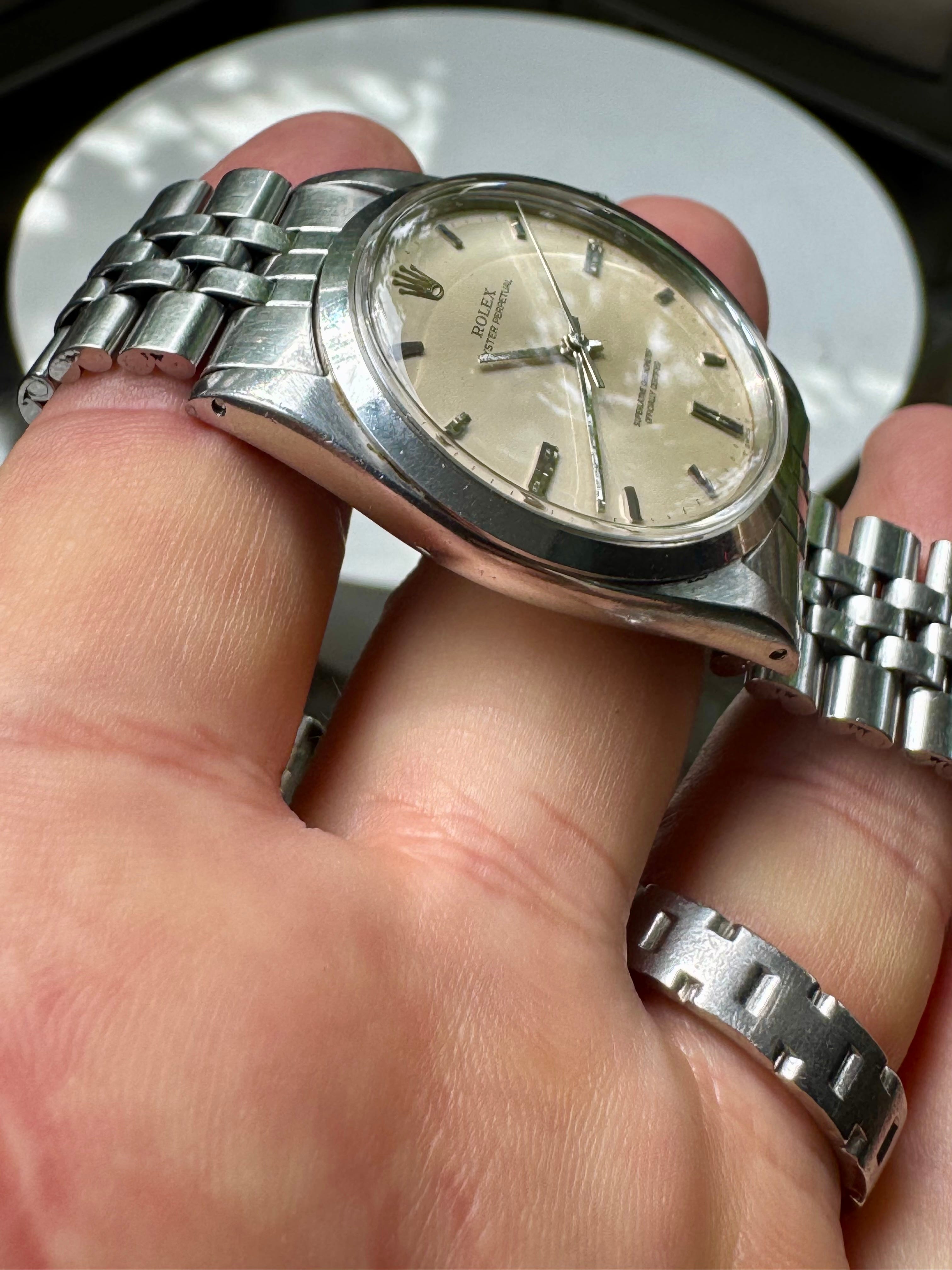
The dial has a subtle sunburst finish. Its original silver-sunburst finish has gracefully transitioned into a soft and warm ivory tone. An attractive mellowing of the original tone typically results from long-term exposure to ambient light and temperature changes acting on the dial finish over decades. Most documented examples feature luminous dots against the hour marker ends, along with luminous material channeled into a portion of the hands. Entirely non-luminous dials, however, are scarce, and their originality can raise an interesting question: was the dial manufactured without lume, or was luminous material removed at some point in its life?
For a review of the 1018 reference, Charlie Dunne’s Collector’s Guide: Rolex Oyster Perpetual Reference 1018 is an essential resource you can read HERE.
A Curator’s Find
I recently helped a collector source this Rolex 1018 after he asked me to locate an under-the-radar vintage piece with a particularly strong combination of originality, condition, and character as an entry point to collecting vintage Rolex.
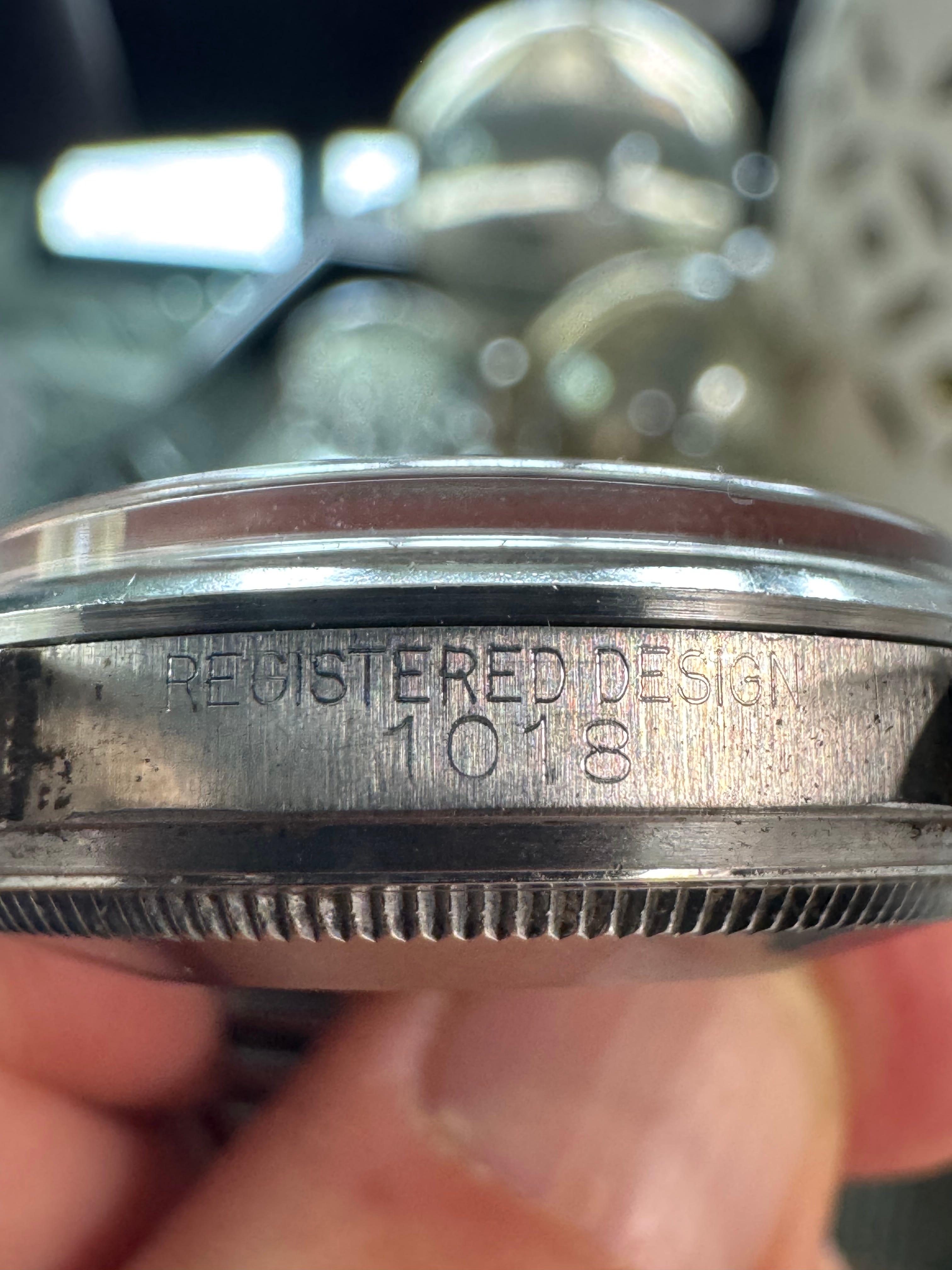
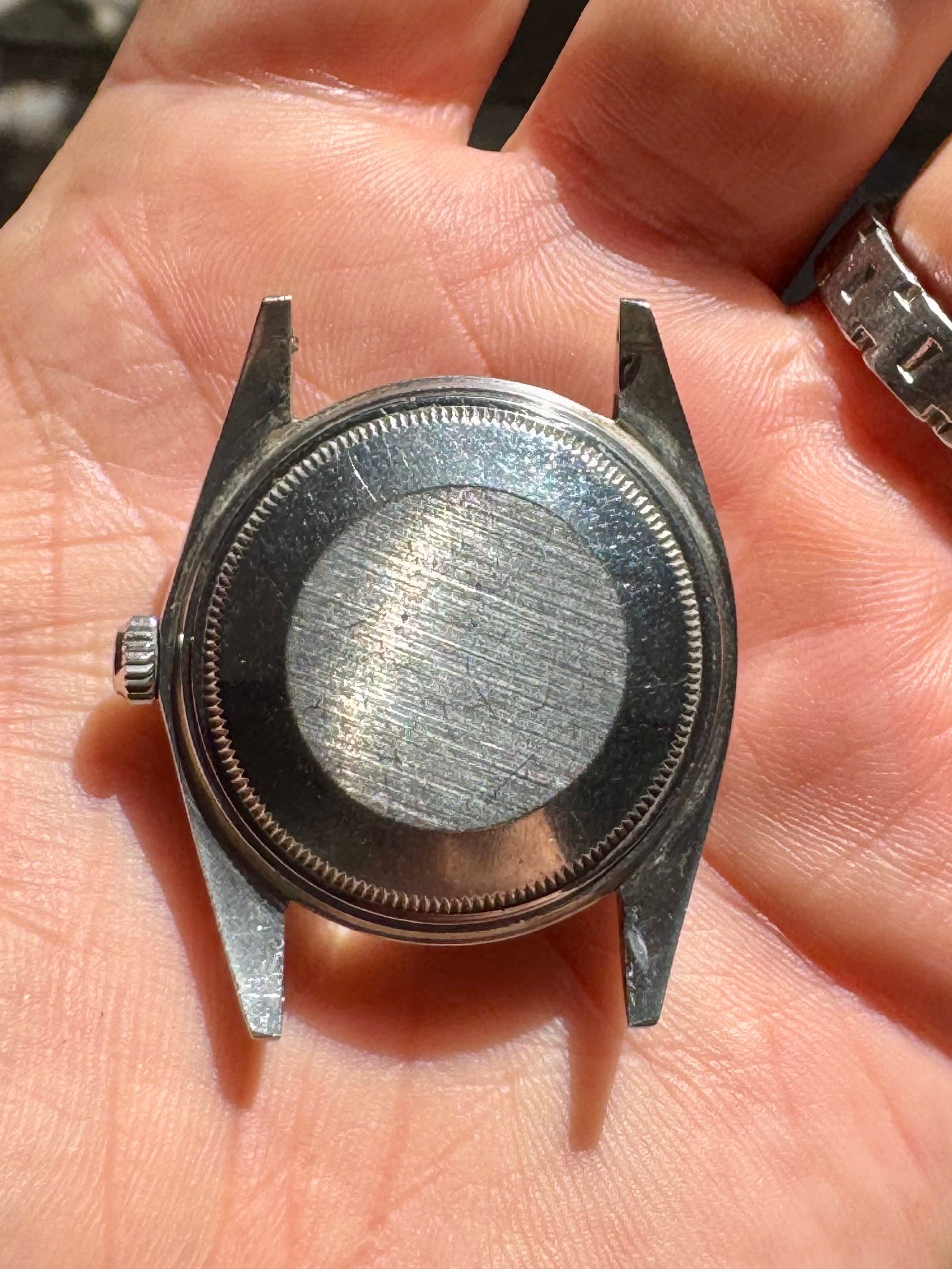
Dating to late 1967 by its case-back and serial number, this example immediately stood out for its completely non-luminous dial configuration. It’s also powered by the 1570 caliber that is found in the majority of examples.
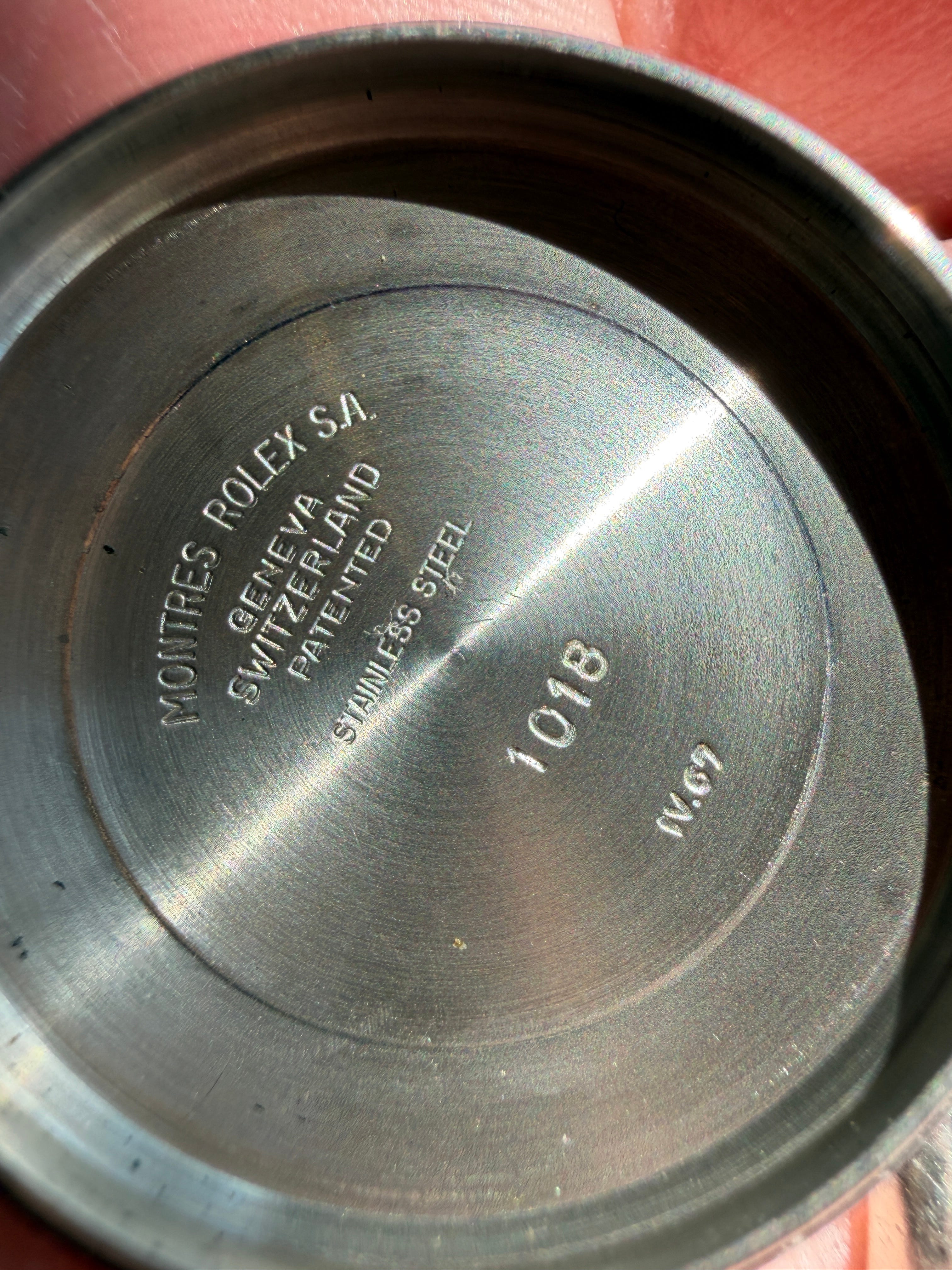
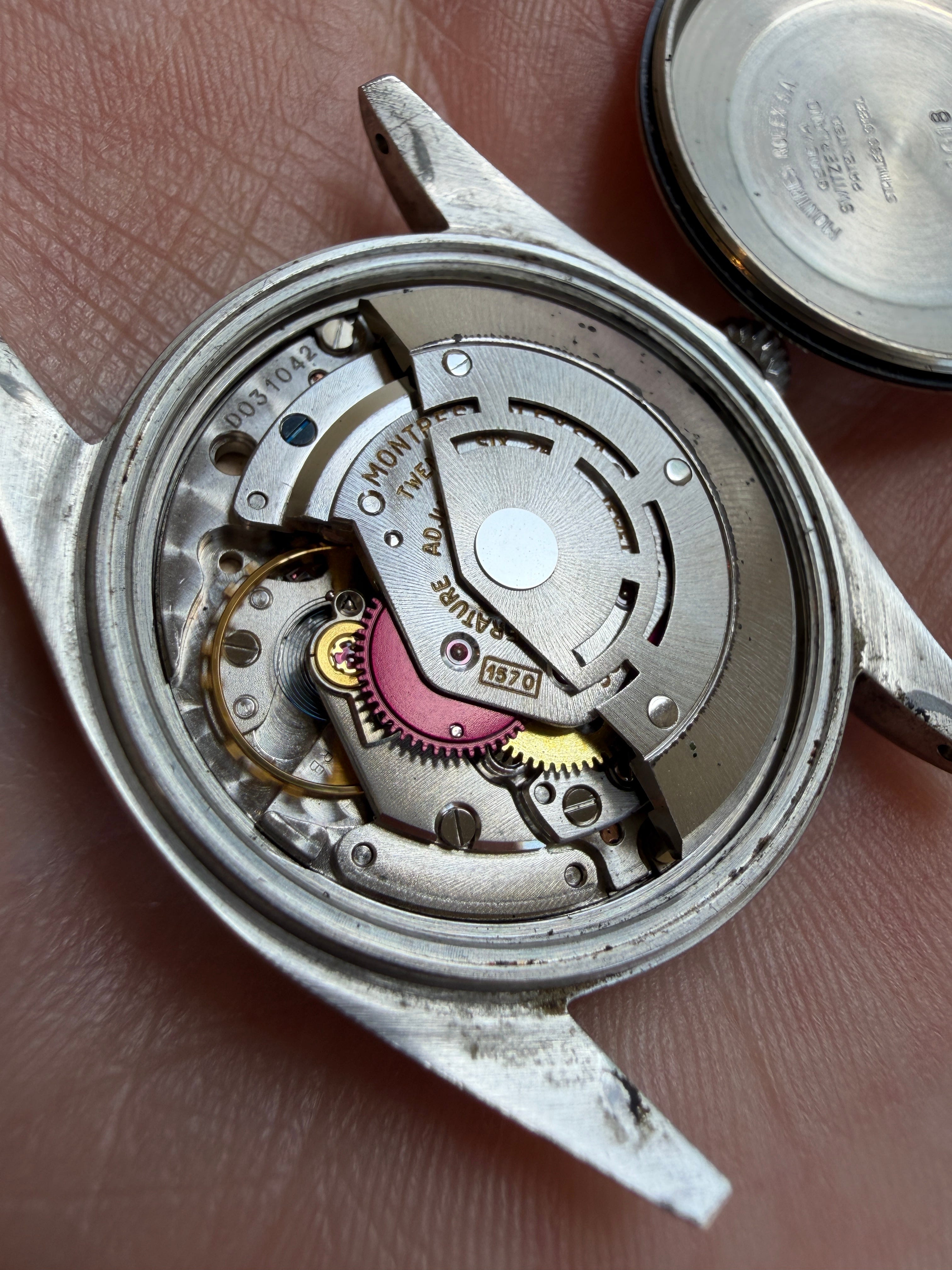
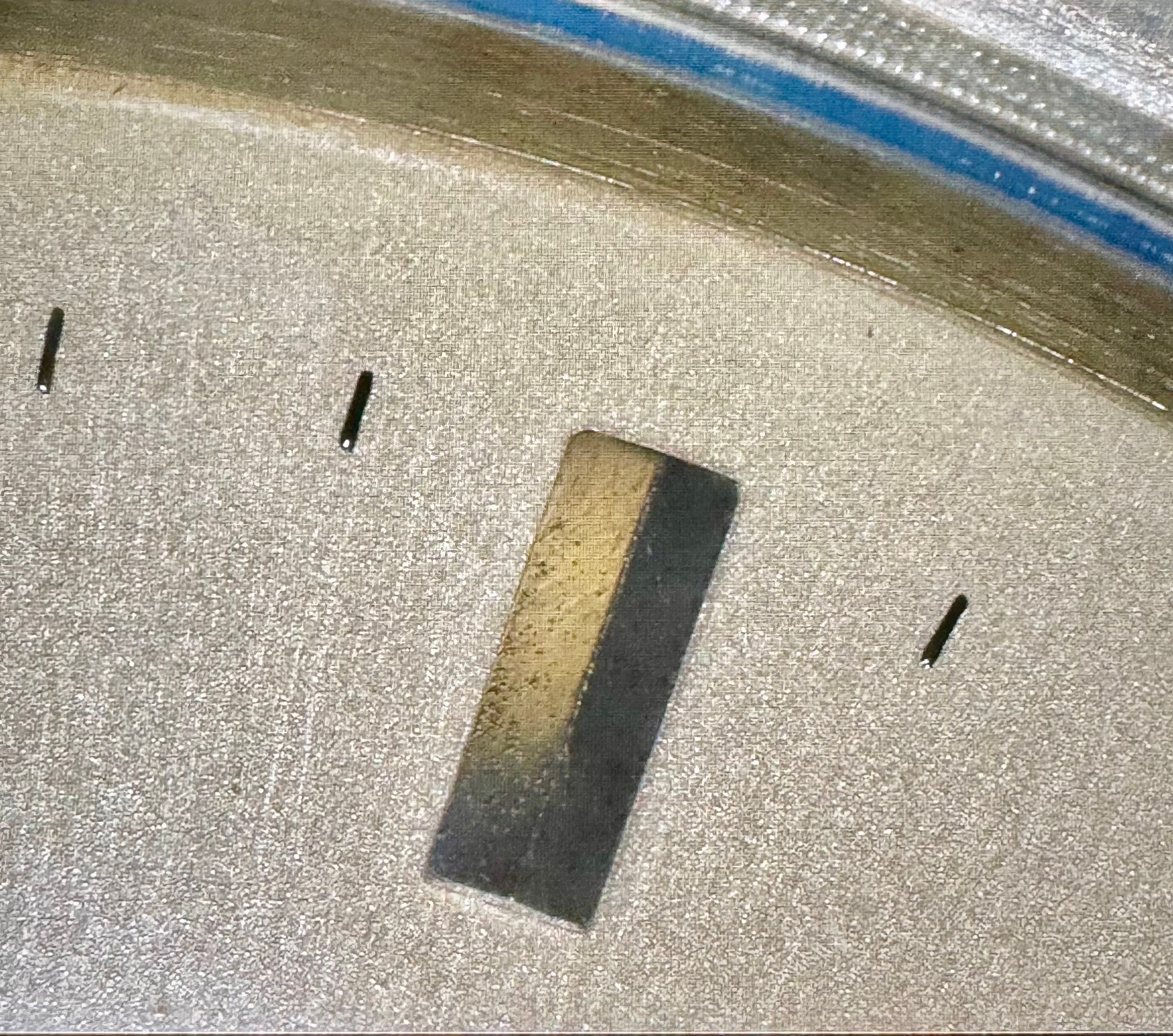
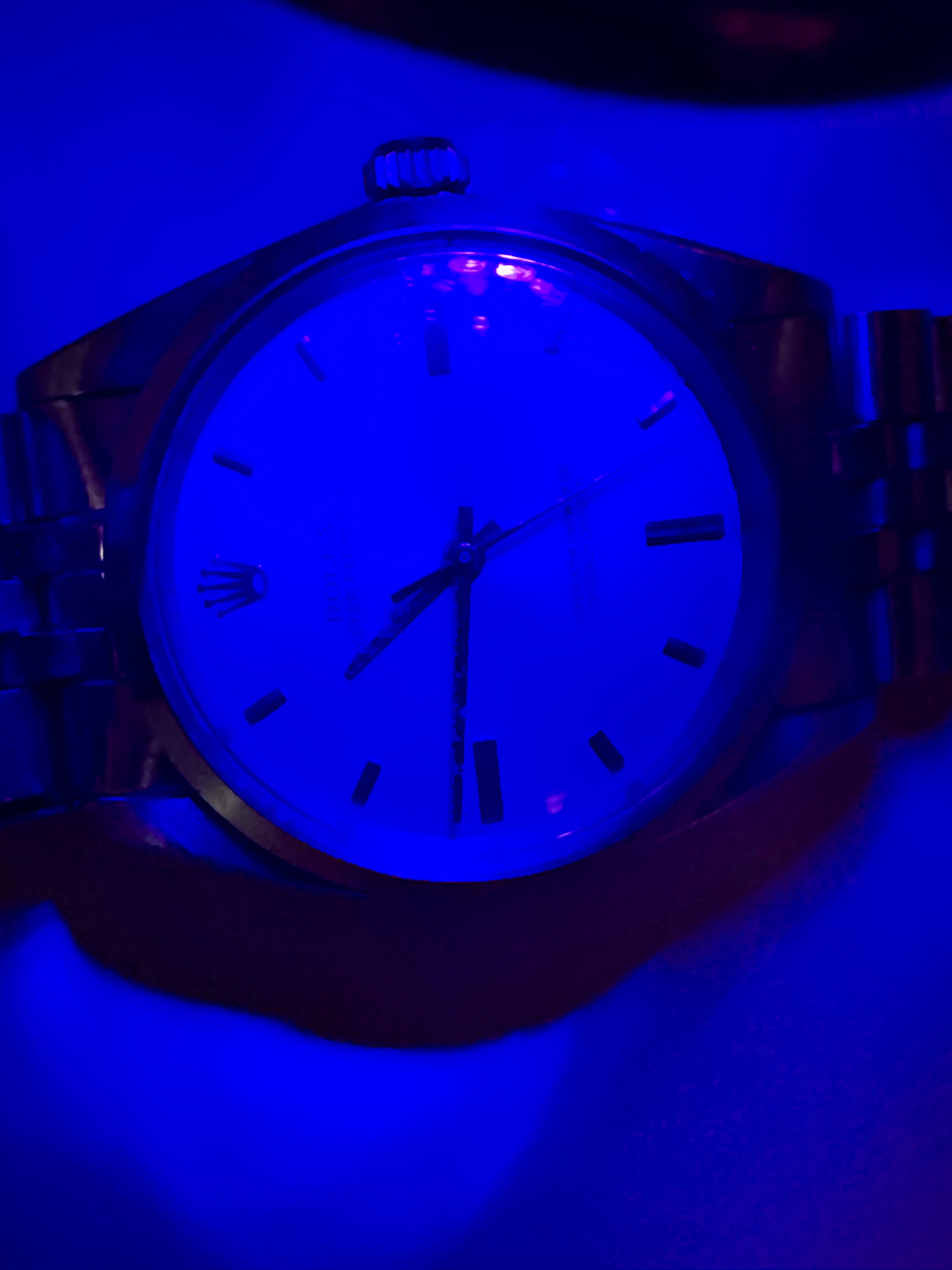
Before delivering the watch, I wanted to examine the dial as closely as possible. Under high magnification and UV light, the markers show no visible luminous material, residue, ghosting, or shadowing that would suggest lume components had subsequently been removed.
The dial nonetheless retains the familiar “T SWISS T” designation at 6 o’clock.
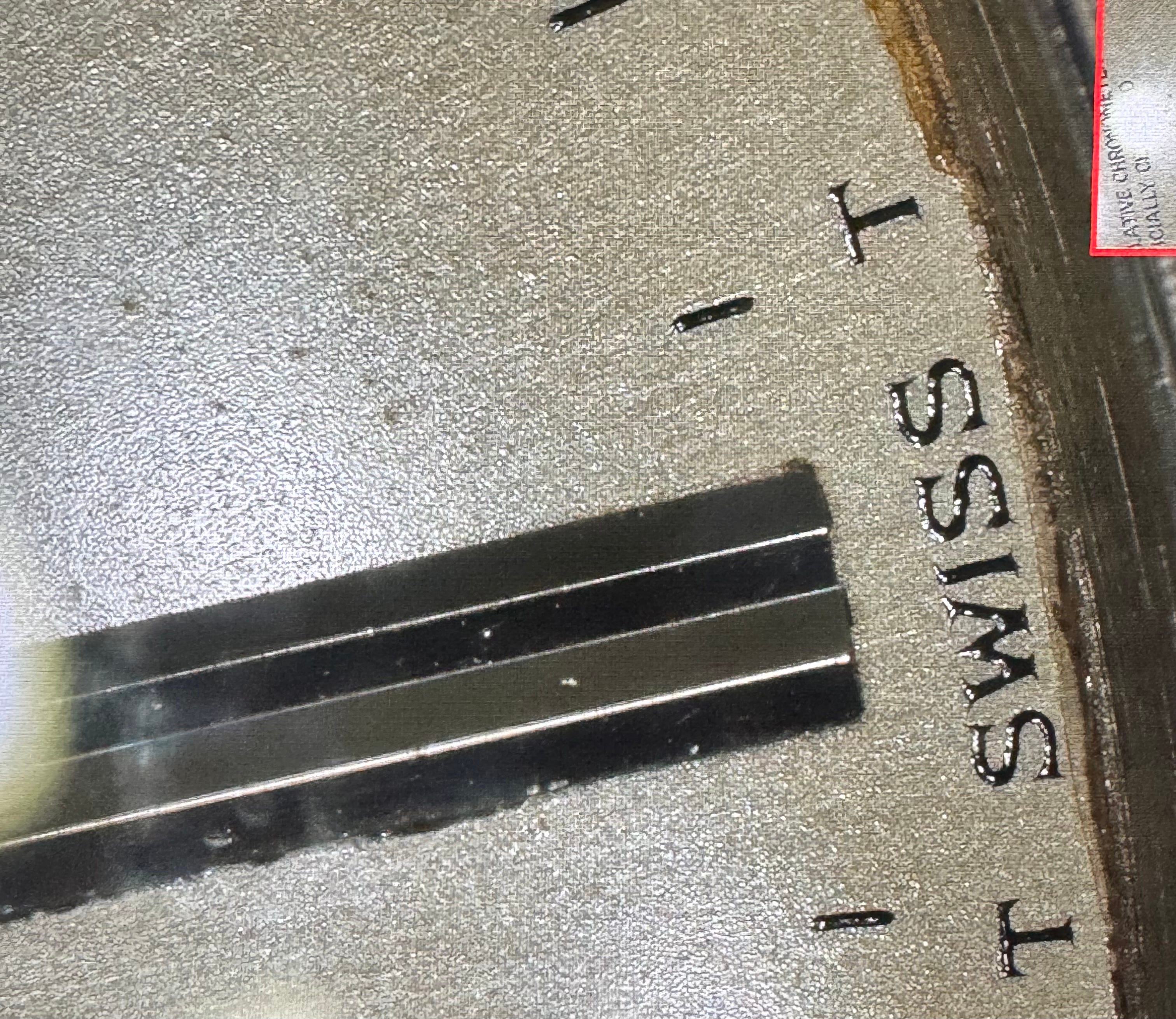
That combination makes the watch particularly intriguing. Rather than simply assuming that an unusual configuration represents a service replacement or later modification, I examined the physical condition of the dial itself. The images shared here provide strong evidence of original, non-luminous authenticity.
So, Where’s the Lume?
The likely explanation for the lack of lume on a dial with T Swiss T at the bottom is that it was destined for the Japanese market. Japan’s stringent customs and nuclear hazard laws around foreign isotopes meant that watches with active tritium required specialized handling or were banned. This restriction stemmed from post-war Japanese nuclear and isotope control laws, rather than a specific ban targeting watches alone. Tritium, while it is a weak beta emitter, fell under these strict regulatory controls. Watches that usually featured luminous material in other markets but were devoid of the material on watches during this time in Japan are called “Japan No Lume” variants. You can read more on this subject by Erik Gustafson, @hairspring HERE. Because Japan was a market with these strict controls at that time, no-lume dial variants of the 1018, while already a somewhat obscure model, are even less often encountered.
Condition and Wrist Presence
The appeal of this 1018 extends well beyond its unusual dial.
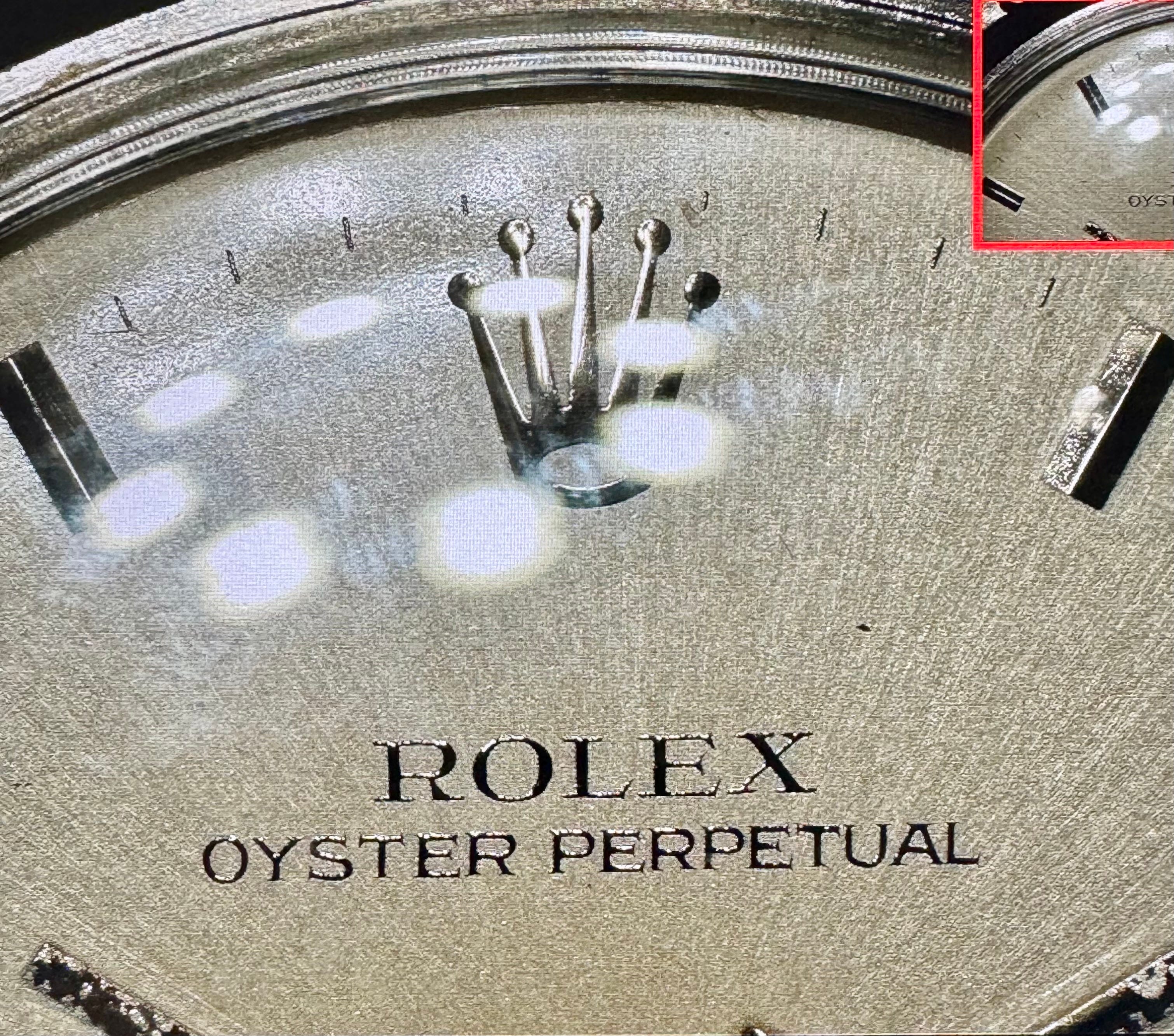
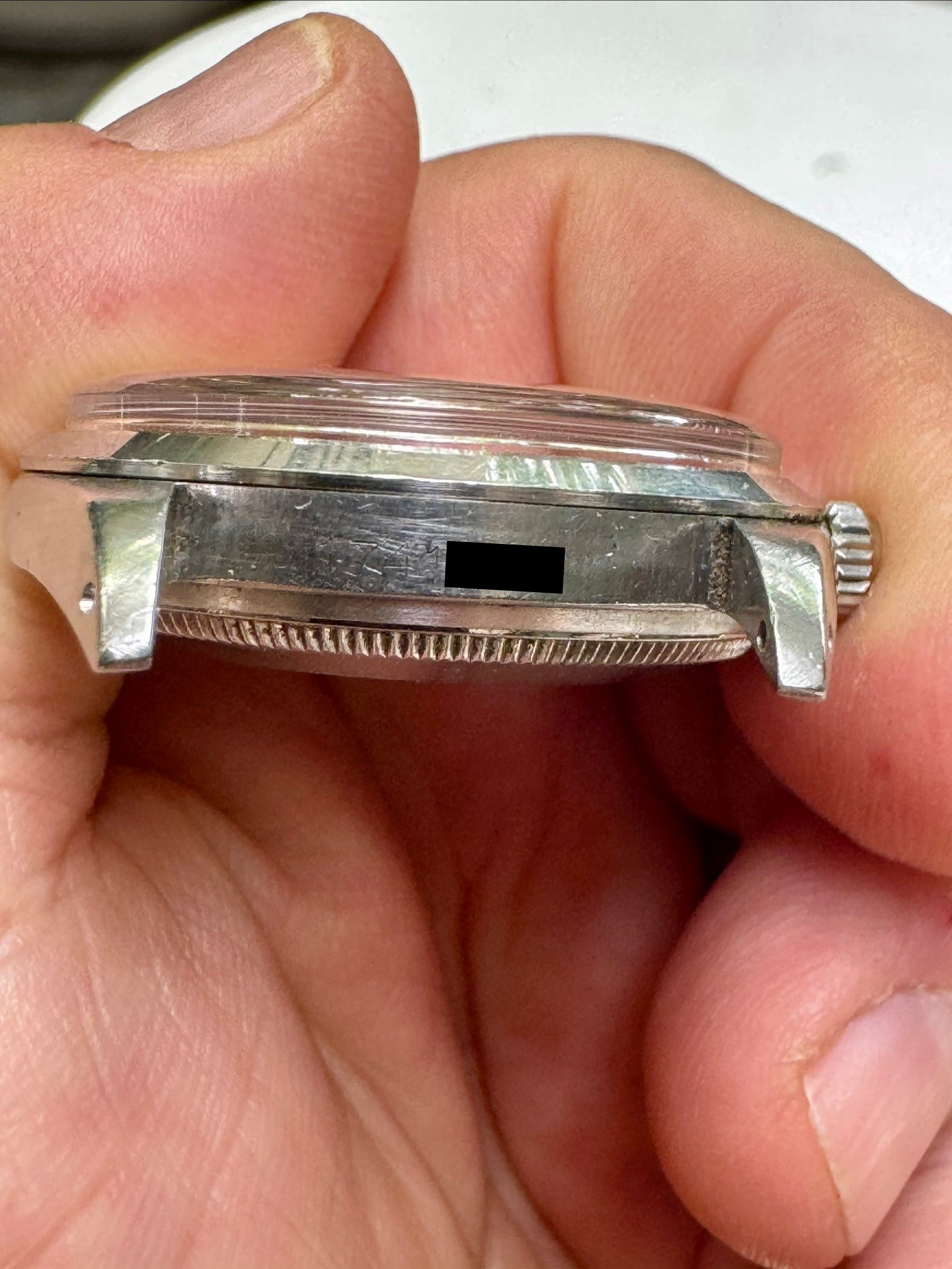
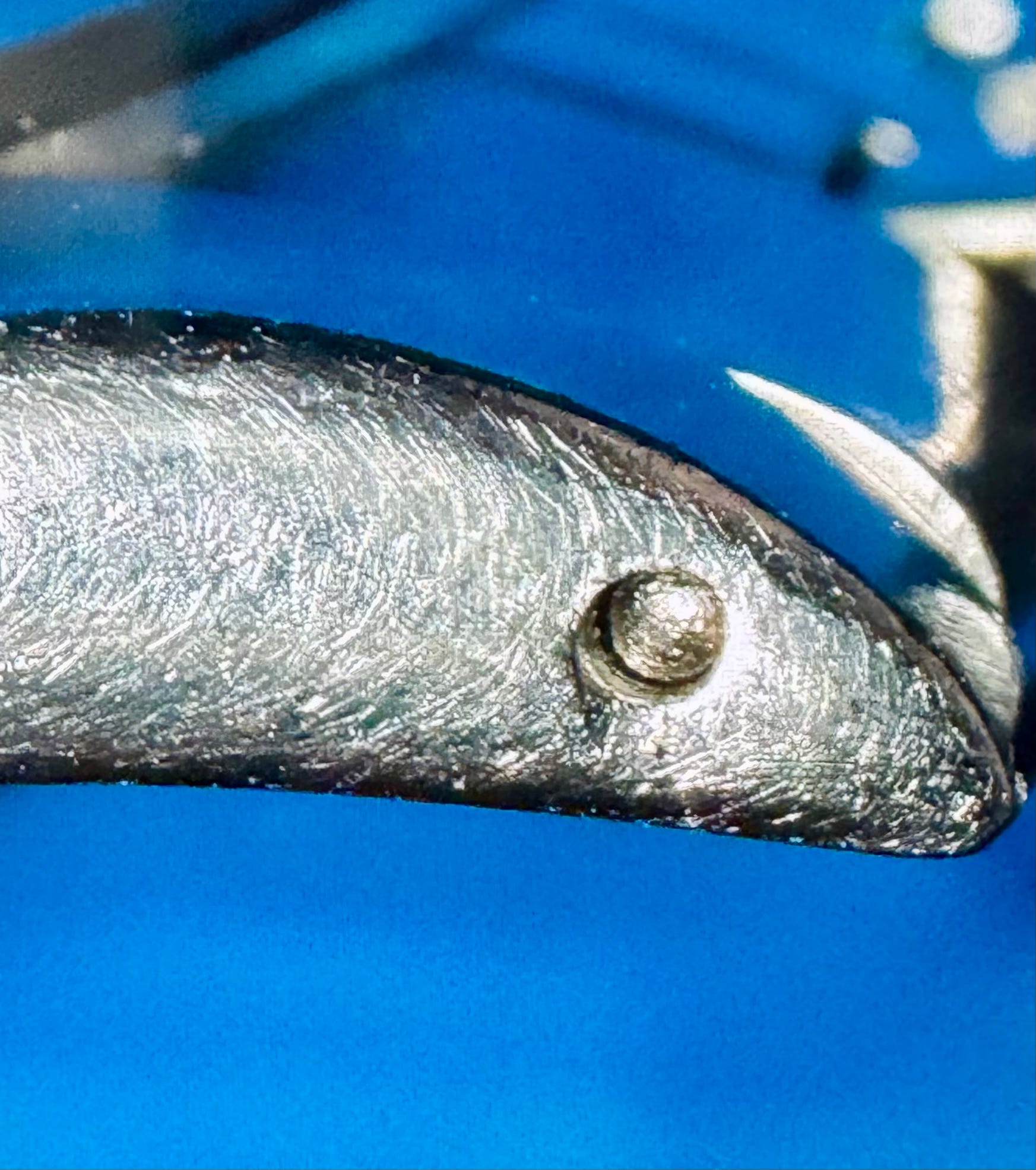
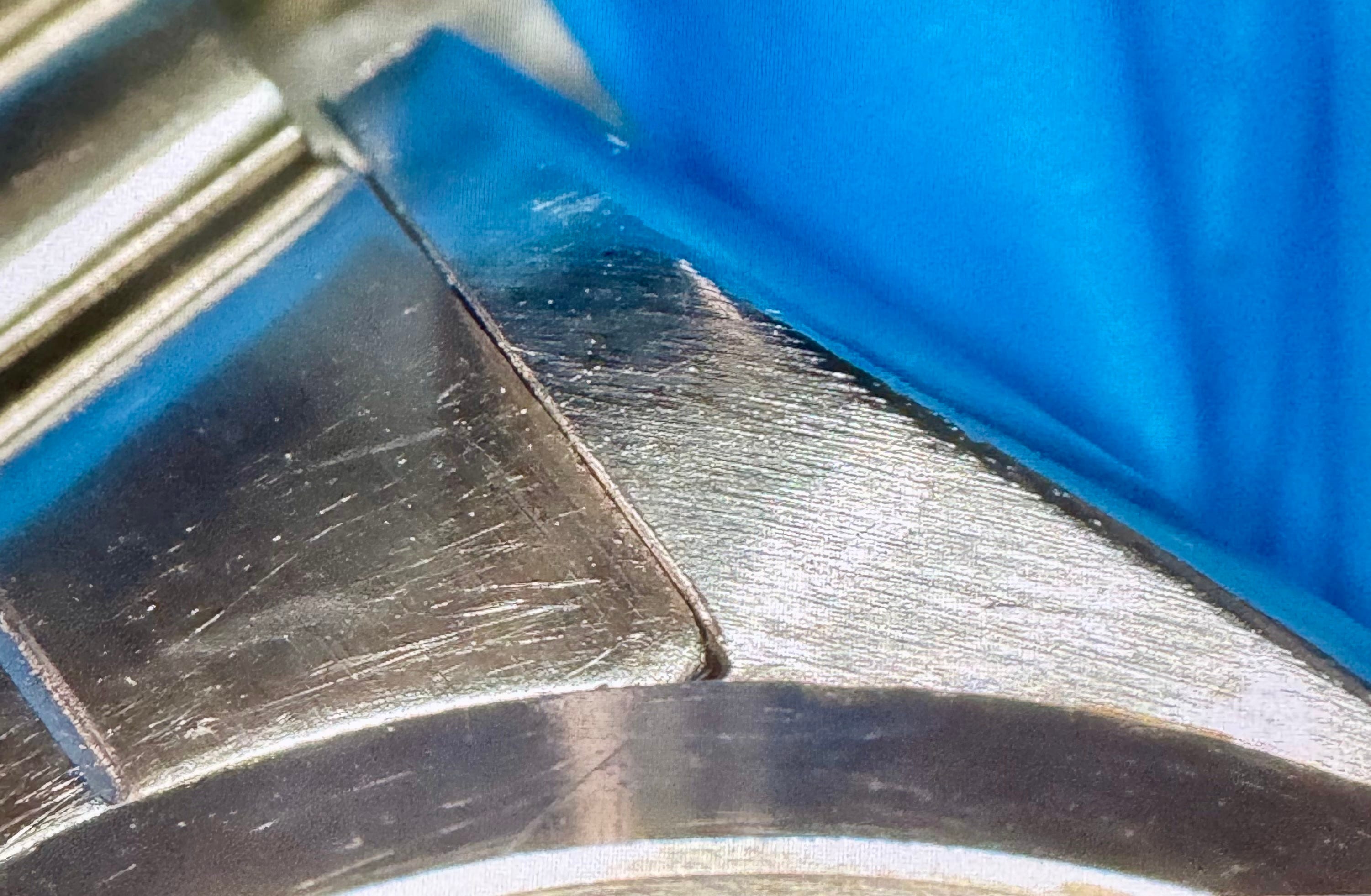
The case retains strong original geometry, crisp lines, and the proportions associated with an example that has avoided mechanical polishing. The overall preservation is unusually honest, with signs of factory finish and no obvious evidence of case work apparent.
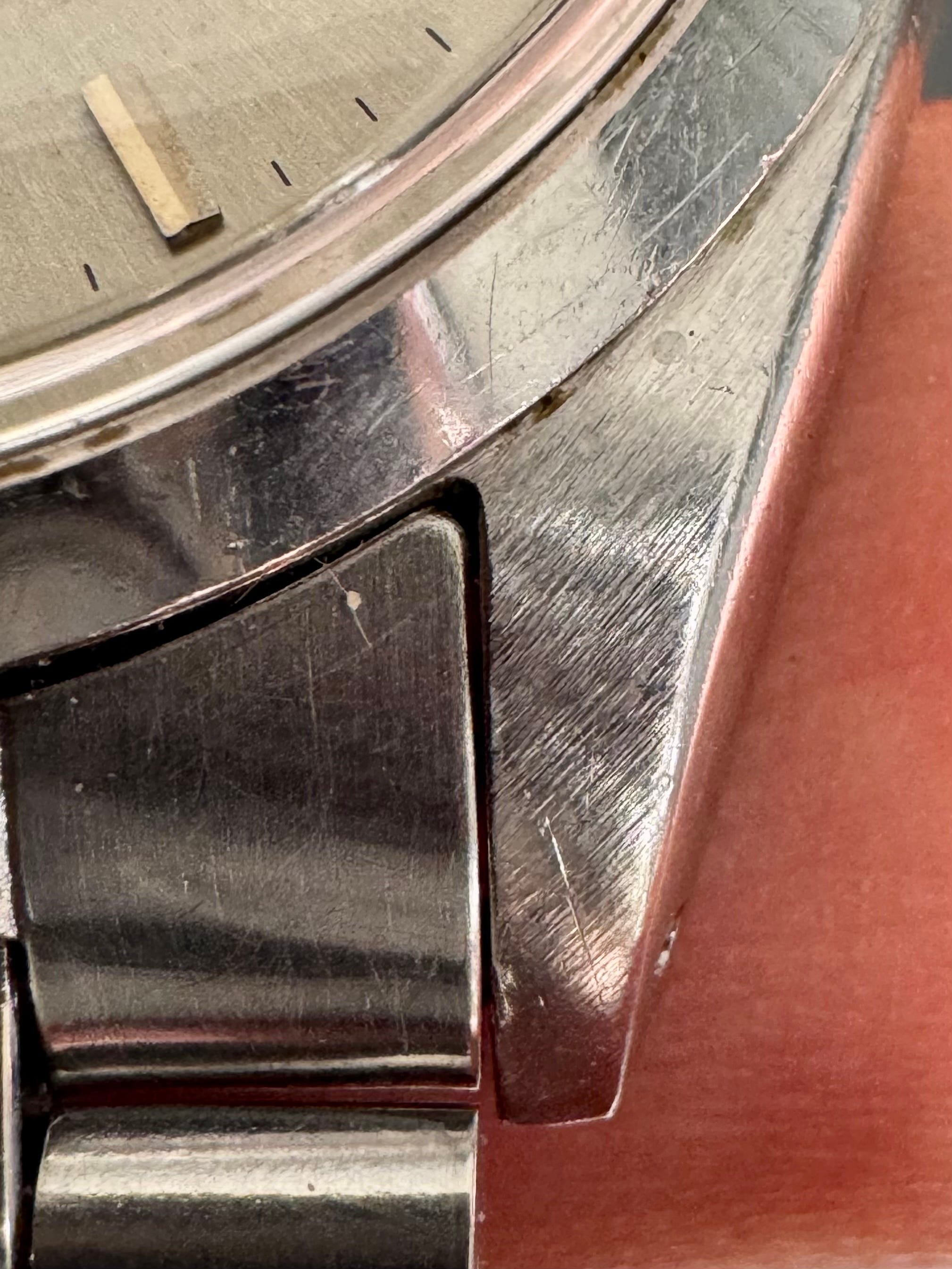
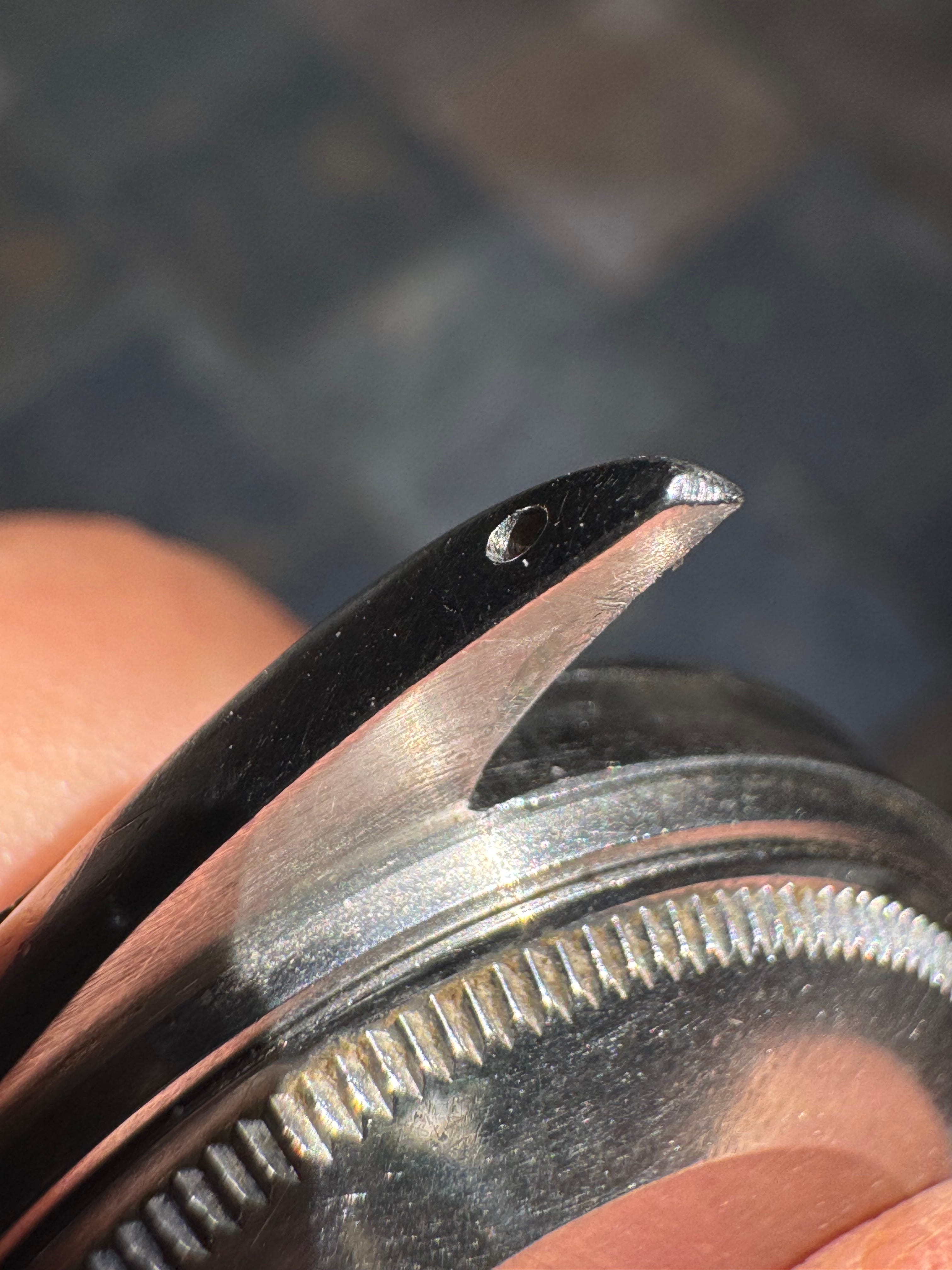
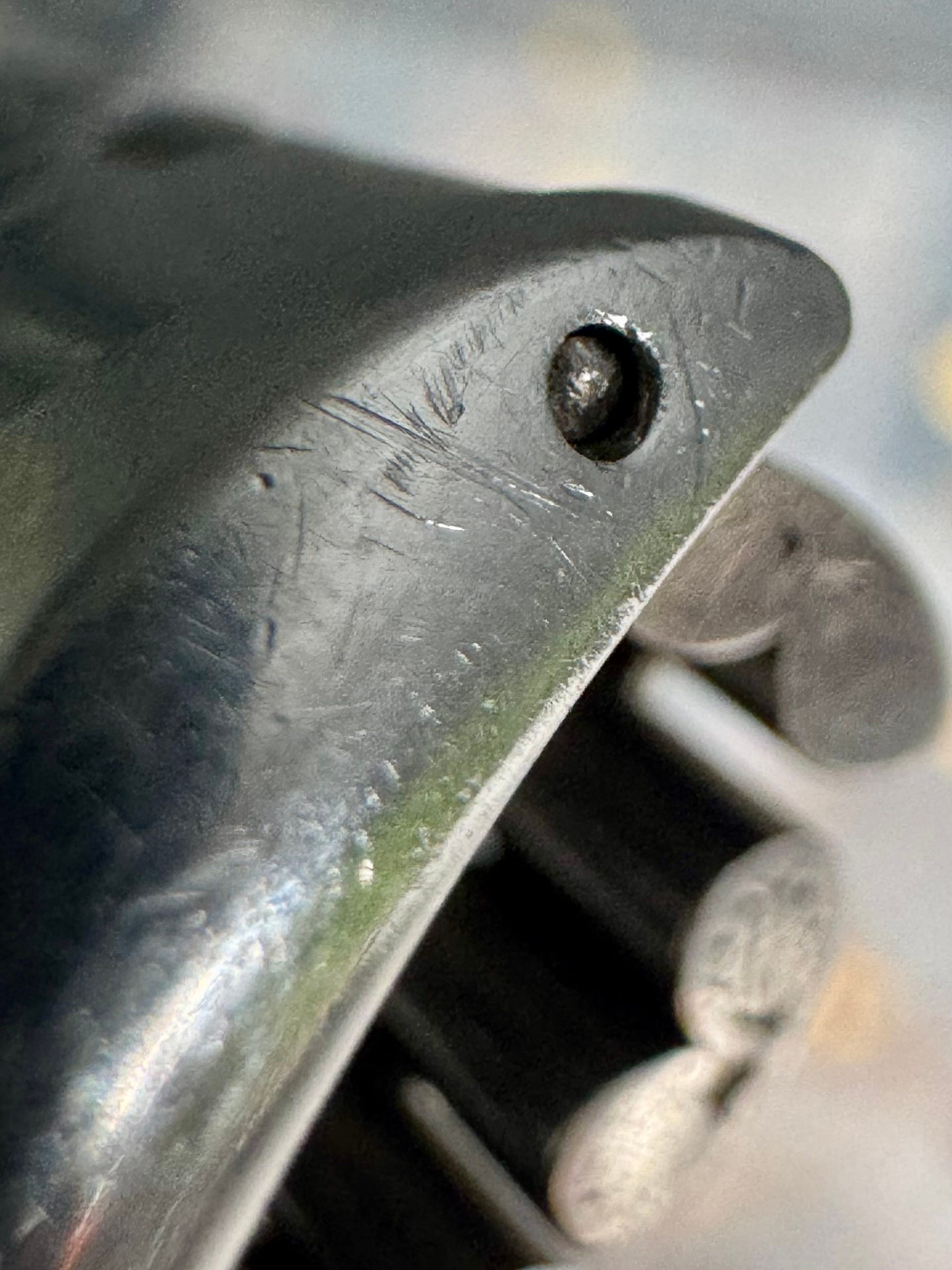
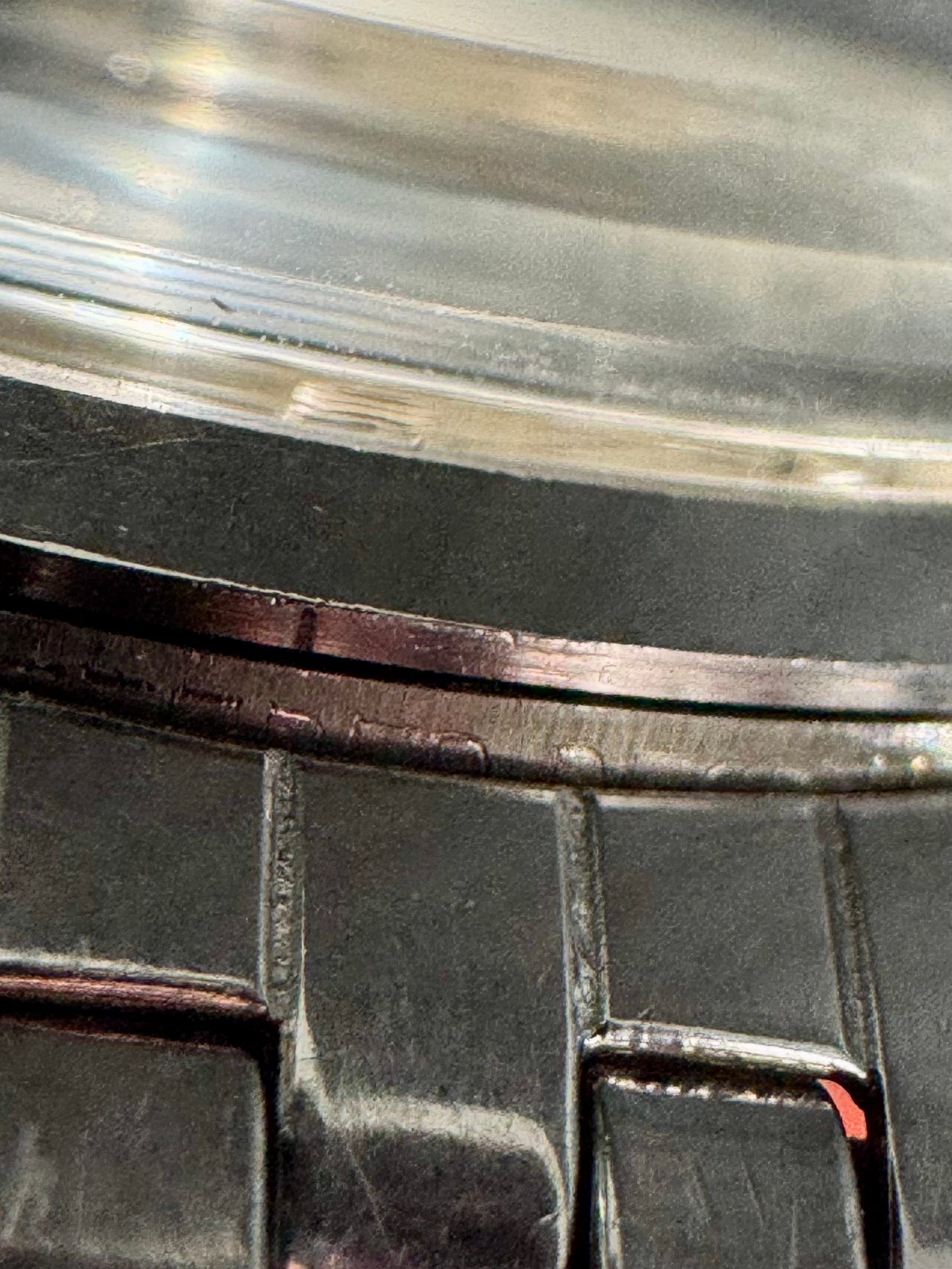
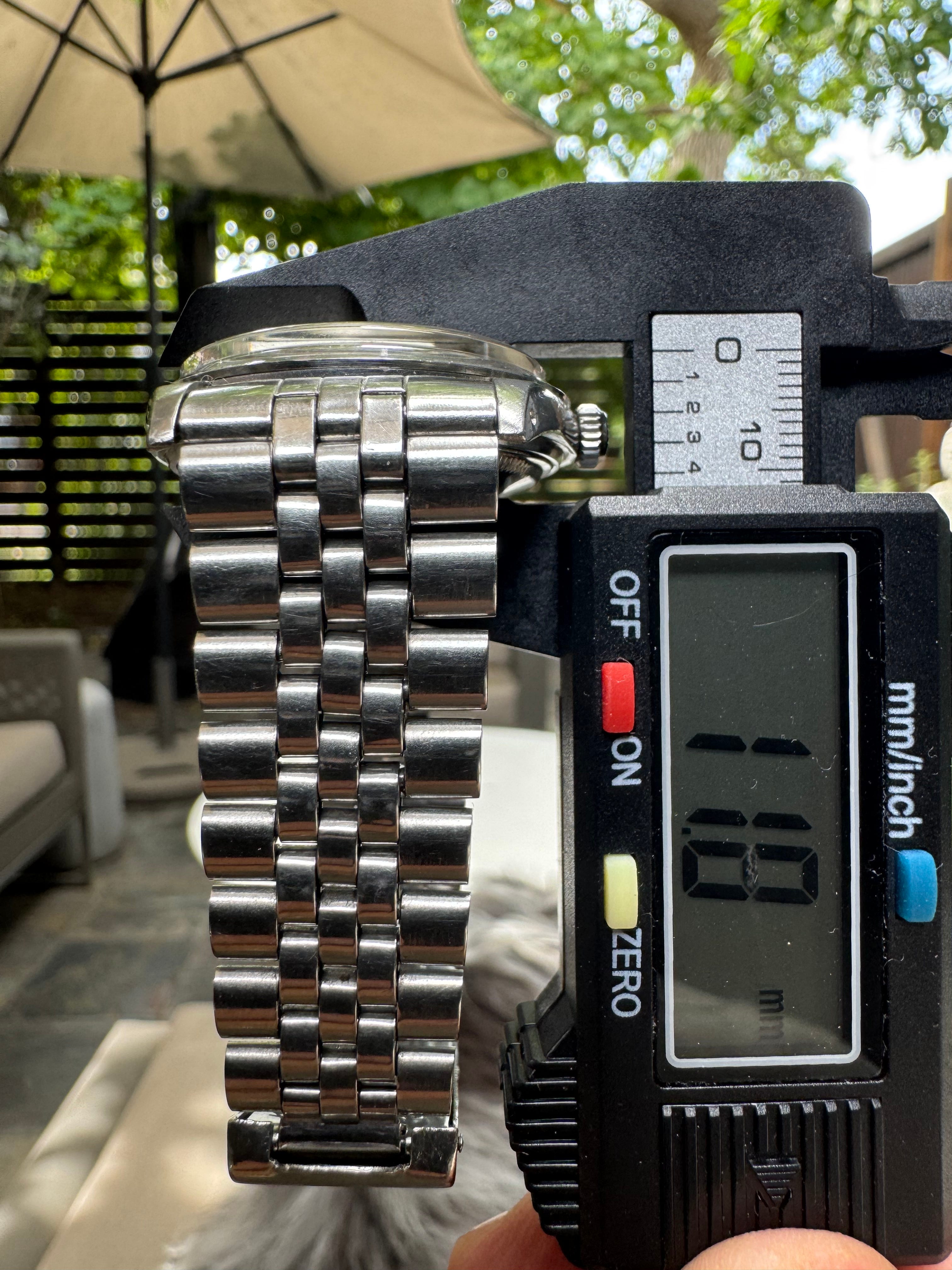
The watch is fitted with a period-correct Jubilee bracelet and 55 end links, giving it the understated presence that makes the 1018 appealing on the wrist without shouting for attention.
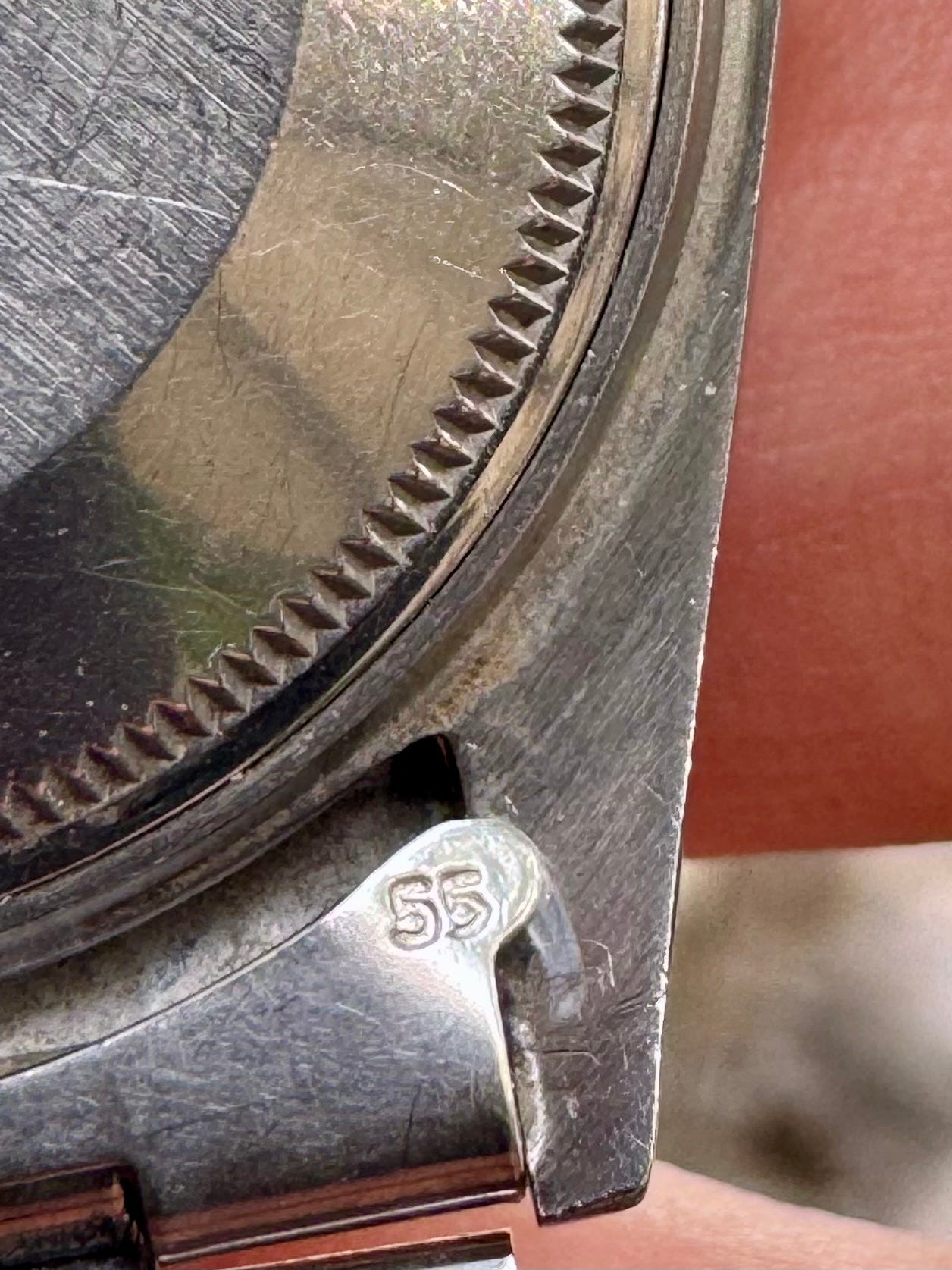
Without luminous plots or inserts, the dial has a clean and minimalist appearance with its faceted markers, simple baton hands (some early examples have alpha or dauphine hands) and warm tone. It is a subtle variation, but one that becomes increasingly compelling the longer you look at it. Devoid of luminous material it leans more toward a sport-elegant look, as opposed to the utilitarian, tool watch appearance of some close relatives.
Final Thoughts
This is exactly the type of vintage Rolex that I find particularly rewarding to discover and research: a relatively overlooked reference in an unusual configuration, where the interest lies not in celebrity provenance or headline-making rarity, but in the finer details.
It is also a good reminder that compelling vintage watches do not necessarily have to be expensive to be intriguing. Knowing what to look for—and being willing to investigate the details—is often what separates an ordinary example from an exceptional one that’s managed to survive decades in honest condition.
The additional images below supplement the video review to document this 1018 in greater detail, including dimension specs, close-up photographic examination of the dial, case, and other components. Enjoy!
Contact me if you would like assistance in your collecting journey:
Aircooltime@gmail.com
@aircooltime


